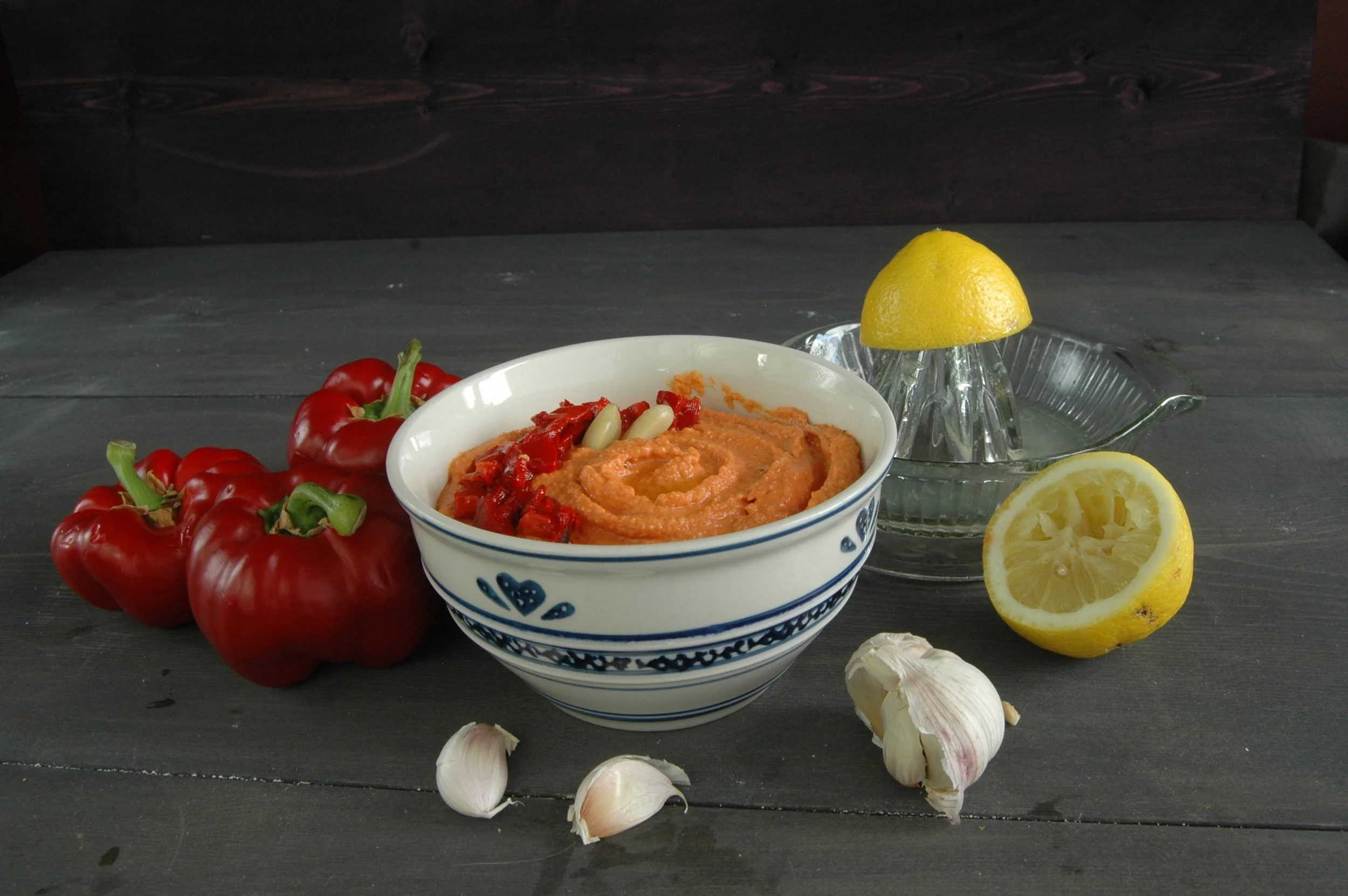
Roasted Red Pepper Hummus
Before hummus became a global staple, it was a simple, nourishing dish rooted in the Levant — a blend of chickpeas, garlic, lemon, and olive oil eaten for centuries across the Eastern Mediterranean.
Chickpeas, one of the earliest cultivated legumes, have long sustained communities in what are now Syria, Lebanon, Palestine, Israel, and Jordan.

Ukrainian Prairie Stories: Recipes and Roots Across the Land
When people speak of Canadian food, it’s often in generalities—maple syrup, poutine, butter tarts. But the real story of Canadian cuisine is one of interwoven legacies. Ukrainian food, especially on the Prairies, is not just a cultural layer; it is a foundational thread in how rural communities fed themselves, celebrated, and built resilience on new soil.

From Baba’s Hands to Bake Sales: Ukrainian Honey Cakes in Rural Alberta
In Ukrainian tradition, medivnyk is a dense, dark honey cake spiced with cinnamon, cloves, and sometimes coffee or cocoa. Though simple in its, ingredients the cake was rich in symbolism and carefully reserved for feast days—especially Christmas, New Year’s, and major weddings. In some regions, it was part of ritual offerings, tied to both the sweetness of life and the warmth of shared gatherings.

Dill in the Boreal: How Ukrainian Herbs Naturalized Along Prairie Fencelines
When Ukrainian immigrants began arriving in Canada in the late 19th and early 20th centuries, many brought more than just tools and textiles. Tucked into coat linings or sewn into satchels were precious seeds from the Old Country—reminders of the land they left behind and essential for the lives they hoped to build. Among the most prized were herbs: dill, caraway, lovage, parsley, and sorrel.

Holubtsi on the Homestead: Cabbage Rolls and Root Cellars in Alberta’s Ukrainian Settlements
Between the late 1890s and the 1930s, thousands of Ukrainians arrived on the Canadian Prairies, seeking land, freedom, and the possibility of a better life. Alberta, with its vast stretches of forest-prairie edge and fertile soil, became home to some of the largest Ukrainian settlements in Canada. Places like Vegreville, Lamont, Mundare, and Andrew emerged as cultural strongholds where faith, language, and food could survive in a new land.

Perogies Across the Prairie: From Hand-Stuffed Dumplings to Freezer Staples in Saskatchewan
Saskatchewan’s landscape—sweeping plains, black soil, and harsh winters—offered both challenge and familiarity to Ukrainian immigrants who began arriving in the 1890s. Many came from agricultural backgrounds in Western Ukraine, regions that shared the open skies and grain-rich horizons of the Prairie provinces. The land promised opportunity but required adaptation.

Rye and Resilience: The Ukrainian Bread Legacy in Manitoba’s Parkland Region
In the late 19th and early 20th centuries, waves of Ukrainian immigrants arrived in the Canadian Prairies, many settling in what is now known as Manitoba’s Parkland Region—especially around Dauphin, Ethelbert, and Sifton. Seeking land, freedom, and survival, these newcomers brought more than just labour and language. They brought food traditions that were deeply tied to the rhythms of the earth—and none more foundational than rye bread.

Indigenous Foodways of Edmonton: Rediscovering Traditional Flavours
Edmonton rests on Treaty 6 territory, the traditional lands of the Néhiyaw (Cree), Niitsitapi (Blackfoot), Métis, Nakoda (Stoney), Dene, Haudenosaunee (Iroquois), and Anishinaabe (Ojibway/Saulteaux) peoples. This place is not just a backdrop for food—it is a living landscape of knowledge, culture, and memory.

A Taste of Italy: Italian Cuisine in Edmonton
Italian immigrants arrived in Alberta in small numbers as early as the 1890s, often settling in mining towns like Coleman and Blairmore. By the 1920s and again after World War II, larger waves of immigration brought families from Calabria, Abruzzo, Sicily, and Veneto to Edmonton.


Sustainable Dining in Edmonton: Green Restaurants Leading the Way
In a prairie city known for long winters and vast distances, sustainable dining might seem like a contradiction. Yet Edmonton’s culinary landscape is undergoing a quiet transformation—one where the values of sustainability, cultural integrity, and community resilience are driving new standards in food service.

Edmonton’s Oldest Restaurants
Edmonton is a city that wears its age quietly. While much of its modern identity has been shaped by oil booms, arts festivals, and growing immigration waves, the story of its food is told in tucked-away diners, enduring bakeries, and family-run restaurants that have outlived trends.

From Railway Kitchens to Banquet Halls: Tracing Chinese Culinary Roots in Edmonton
The story of Chinese food in Edmonton begins not in a kitchen, but along the Canadian Pacific Railway. Chinese immigrants were among the earliest non-European labourers to arrive in Alberta in the late 1800s, often facing harsh working conditions and systemic discrimination. After the railway was completed, many were forced to turn to low-margin industries, including laundries and food service.

First Fruits and Summer Bounty: The Heritage of Seasonal Eating
In many Indigenous cultures across North America, the arrival of the first fruits—especially berries—has long been a time of ceremony, gratitude, and renewal. In particular, wild strawberries were often the first fruit to ripen, marking the beginning of summer and the opening of berry season. For the Haudenosaunee (Iroquois), the Strawberry Festival is a time to give thanks and honour the medicine and joy these berries bring.

Pemmican Power: The Original Energy Bar Returns
Long before protein bars or trail mixes filled store shelves, Indigenous peoples across North America created a food that was rich in calories, nutrients, and meaning: pemmican.

Grains Across Borders: How Bread and Dumplings Built Canadian Communities
Across Canada, grains have played a central role in shaping the country’s food culture, providing sustenance, nutrition, and economic strength for communities throughout the land. From Indigenous grains like wild rice to European grains like wheat and rye, grains have been the backbone of both daily life and celebratory feasts.

The Fish That Built Canada
Fish is not just a food source in Canada—it is integral to the cultural, spiritual, and economic identity of many communities. Indigenous Peoples across the country have relied on fish for millennia, developing complex techniques to fish, preserve, and honour the creatures of the water. From the coastlines of the Pacific to the inland lakes of the Prairies, fish has sustained communities, shaped economies, and maintained deep spiritual connections to the land.

What We Eat on This Land: Reclaiming Canadian Food Stories
Poutine? Nanaimo bars? Barbecue ribs glazed with maple syrup?
Ask five Canadians what defines our national cuisine and you’ll get five different answers—and all of them will be at least partly right. That’s because food in Canada doesn’t come from a single origin or follow one thread. It’s a patchwork of memory, migration, adaptation, and survival.

The Maple Lineage: Syrup, Sugar, and Sweet Traditions
Maple syrup is often taken for granted as a sweet topping for pancakes, but its roots stretch far deeper than weekend brunch. It is one of the most enduring food traditions on this land, with a history that predates the formation of Canada by millennia.

Beyond the Barbecue
Every Canada Day, backyards across the country fill with the familiar scents of grilled meat, corn on the cob, fresh berries, and maple desserts. It feels like a timeless Canadian tradition.
But the foods that appear on those picnic tables tell a much older story.