
Edmonton’s Oldest Restaurants
A Taste of History

Dinner at The Lingnan.
Welcome to Nordic Prairie Life!
Interested in other cities? Check out Calgary’s oldest restaurants and the stories behind some of the city’s long-standing dining institutions.
Our regular focus is looking at Canadian prairie culture and history through a Scandinavian lens. You can read our full collection of regional stories, heritage articles, and seasonal reflections here.
On Jasper Avenue, in Chinatown, and along neighbourhood commercial strips, Edmonton restaurants have outlasted demolished buildings, expired leases, ownership changes, and shifts in the city’s dining habits. Some have served customers from the same address for generations. Others carried their names and menus into new rooms, returned after fires, or reopened after years away.
The dates below mark the earliest documented opening of each restaurant or restaurant business. Where service was interrupted, the entry explains what happened.
Edmonton Restaurants That Continue Today
Commodore Restaurant (1942)
The Gee family has operated the Commodore Restaurant on Jasper Avenue since 1942. The narrow dining room retains the format of an earlier downtown café, serving breakfasts, sandwiches, burgers, lunch plates, and Chinese Canadian dishes. The restaurant describes itself as Edmonton’s oldest continuously operated restaurant owned by one family.
The Lingnan (1947)
The Quon brothers opened The Lingnan in 1947 at the corner of 97 Street and Jasper Avenue. As the business grew, the family moved it to its present location in 1963. Its Cantonese and North American Chinese menu, elaborate interior, and continued Quon family ownership have made it one of Edmonton’s most recognizable dining rooms.
Blue Willow Restaurant (1958)
The original Blue Willow opened at 10041 Jasper Avenue in 1958. Diners crossed a small bridge over an indoor pond before entering a restaurant that served Cantonese and Canadian food, with dancing and live music upstairs.
That restaurant closed in 1980. A new Blue Willow opened at 111 Street and 103 Avenue in December 1983 and continues under the same family restaurant tradition. Its history therefore begins in 1958, although the business did not operate continuously between the two locations.
Saratoga Family Restaurant (1958)
Saratoga Family Restaurant has served Edmonton since 1958. Located on Calgary Trail, it remains a traditional family diner built around breakfasts, hot sandwiches, burgers, roast turkey, liver and onions, and other home-style meals. Its menu and daytime hours preserve a type of neighbourhood restaurant that once appeared throughout the city.
La Ronde (1966)
La Ronde dates to the 1966 opening of the Chateau Lacombe. Located on the hotel’s 24th floor, it remains Edmonton’s only revolving restaurant. The dining room completes one rotation approximately every 88 minutes, giving guests changing views of downtown and the North Saskatchewan River valley during their meal.
Mikado Sushi & Robata (1972)
Mikado began serving Edmonton in 1972 and identifies itself as Alberta’s first Japanese restaurant. Its early menus introduced many local diners to sushi and other Japanese dishes at a time when the cuisine had little representation in the province. The business has since expanded to several Edmonton locations while retaining its connection to the original restaurant.
Bul Go Gi House (1973)
Bul Go Gi House opened in 1973 and remains one of Edmonton’s longest-running Korean restaurants. Its name refers to bulgogi, the marinated grilled beef that became one of its best-known dishes. The restaurant has continued serving Korean barbecue, soups, rice dishes, and shared meals from its long-standing location near the University of Alberta.
Tony’s Pizza Palace (1974)
Tony Mazzotta brought his family’s restaurant business to Edmonton in 1974, opening Tony’s Pizza Palace near 118 Avenue and Fort Road. The restaurant moved to 96 Street and 111 Avenue in 1986.
Known for thin-crust New York-style pizza, Tony’s has remained connected to the Mazzotta family and Edmonton’s Italian Canadian restaurant history.
Coliseum Steak & Pizza (1976)
Coliseum Steak & Pizza opened in 1976 near the former Northlands Coliseum. The family restaurant became known for steaks, ribs, pizza, and the combination plates associated with Alberta’s neighbourhood steak-and-pizza houses. It marked its fiftieth year in business in 2026.
Bistro Praha (1977)
Czech immigrant Frantisek Cikanek opened Bistro Praha in the Kelly Ramsey Building in 1977. The restaurant developed a following for schnitzel, steak tartare, goulash, and European desserts.
A fire destroyed the building in 2009. Longtime employees purchased the business and reopened Bistro Praha in the Empire Building in 2011, preserving its menu and much of the atmosphere associated with the original dining room.
Sorrentino’s (1979)
Carmelo Rago and his father-in-law opened a restaurant called Sorrento in Castle Downs in 1979. The name changed to Sorrentino’s in 1986 as the family expanded the business.
The original restaurant became the foundation of a locally owned group known for Italian dining, garlic-themed events, and several restaurant concepts across the Edmonton region.
Continental Treat Fine Bistro (1982)
Continental Treat opened in 1982 and became a Whyte Avenue destination for schnitzel, dill pickle soup, European baking, and Central European dishes. The family-owned restaurant later developed an entirely gluten-free kitchen.
Its original Whyte Avenue dining room closed in August 2025 after 43 years. The business continues at a temporary Roper Road location while its owners plan their next permanent restaurant.
Highlevel Diner (1982)
Highlevel Diner has operated near the south end of the High Level Bridge since 1982. Its breakfasts, cinnamon buns, burgers, and changing chalkboard specials have made it a gathering place for residents of Garneau and nearby university communities. The restaurant remains an independent neighbourhood diner in a district where many businesses have come and gone.
Normand’s Restaurant (1989)
Normand Campbell opened Normand’s Restaurant in 1989. The restaurant became known for French-influenced cooking and Alberta ingredients, particularly wild game such as bison, elk, and wild boar. It continues in the Oliver area as one of Edmonton’s longest-running independently owned fine-dining restaurants.
Edmonton Restaurants That Have Closed
Some Edmonton restaurants survived for generations before redevelopment, retirement, or financial pressures brought service to an end. Their former buildings and dining rooms still appear in family stories, archival photographs, and conversations about places the city has lost.
Silk Hat Restaurant (Opened 1912; Closed 2007)
The Silk Hat traced its history to 1912 and became one of Edmonton’s best-known downtown diners. During its many decades on Jasper Avenue, it served office workers, theatre audiences, late-night customers, and generations of regulars from its distinctive lunch counter.
The restaurant closed in 2007, ending nearly 95 years of operation. A separate business called The Hat later occupied the location, but it was a successor rather than a continuation of the original Silk Hat.
Sidetrack Cafe (Opened 1981; Closed 2007)
The Sidetrack Cafe opened on February 15, 1981. It combined a restaurant and bar with a live-music room that became central to Edmonton’s music community. Local performers shared its stage with touring Canadian and international artists, while audiences gathered around tables rather than in a conventional concert hall.
The Sidetrack closed on February 15, 2007, exactly 26 years after it opened.
Chicken for Lunch (Opened 1992; Closed 2024)
Amy Quon opened Chicken for Lunch in the Rice Howard Place food court in 1992. The weekday counter became known for its dry spicy chicken and for the lunch-hour lineups that regularly formed through the downtown food court.
Chicken for Lunch served its final customers on February 29, 2024. Its closure ended 32 years of operation and Amy Quon’s familiar practice of organizing orders by calling regular customers forward from the line.
Hardware Grill (Opened 1996; Closed 2019)
Larry and Melinda Stewart opened Hardware Grill in 1996 in the historic Goodridge Block east of downtown. The restaurant earned a national reputation for contemporary Canadian fine dining and became a destination for anniversaries, business dinners, and special occasions.
Hardware Grill closed abruptly in September 2019 after 23 years. The closure removed one of the major restaurants associated with the redevelopment of Edmonton’s warehouse district during the 1990s.


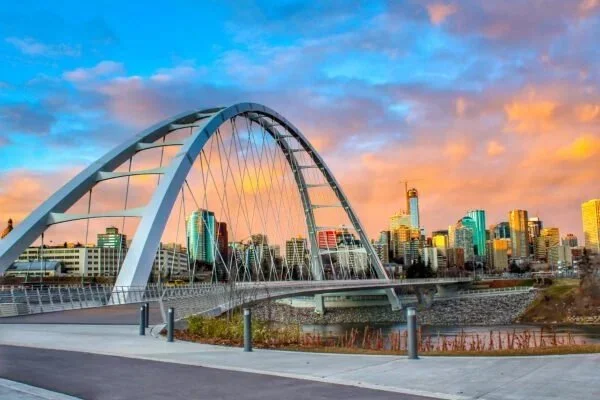



Winter in Edmonton is long and decisive. Snow settles early and remains for months. Daylight shortens. Temperatures drop well below freezing, and the ground becomes inaccessible for much of the year. These conditions shape daily life in ways that are both practical and familiar.