What Is Sourdough?
A Complete Beginner's Guide to the World's Oldest Bread
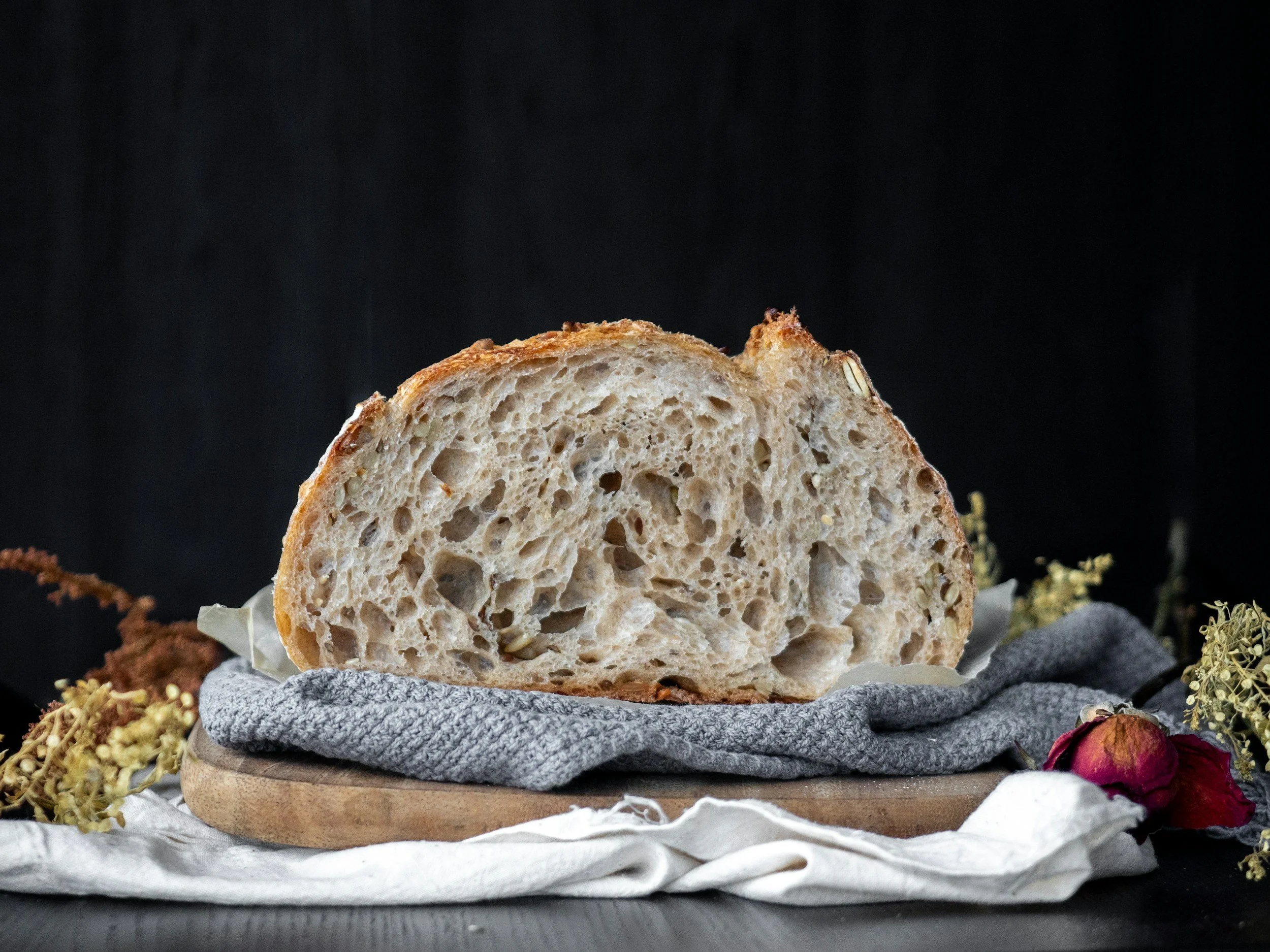
A picture of sourdough’s crumb.
If you've spent any time around baking websites or social media, you've probably seen beautiful loaves with blistered crusts, airy crumb, and dramatic scores opening like flower petals in the oven. Those loaves are often called artisan sourdough, but the term "sourdough" describes much more than a style of bread.
Sourdough is one of humanity's oldest methods of making bread. Long before packets of instant yeast appeared on grocery store shelves, bakers relied on naturally occurring microorganisms living on flour, grain, and in the surrounding environment. Those wild yeasts, working alongside beneficial bacteria, transformed simple mixtures of flour and water into bread that was lighter, more flavourful, and longer lasting.
Thousands of years later, the process remains remarkably similar.
Whether you're planning to bake your first loaf or simply want to understand what makes sourdough different from other breads, this guide explains the terminology, the science, and how sourdough compares with other fermentation methods.
What Exactly Is Sourdough?
Sourdough is bread made using a naturally fermented starter instead of commercial baker's yeast as the primary leavening agent.
That starter contains a living community of:
wild yeasts
lactic acid bacteria
flour
water
When fed regularly with fresh flour and water, these microorganisms multiply and produce carbon dioxide, organic acids, alcohol, and hundreds of flavour compounds.
The carbon dioxide creates the bubbles that allow bread to rise.
The bacteria produce acids that contribute the characteristic flavour many people associate with sourdough, although not every sourdough loaf tastes particularly sour. Fermentation time, flour choice, hydration, and temperature all influence the finished flavour.
What Is a Sourdough Starter?
A sourdough starter is a living culture made from nothing more than flour and water.
During several days of regular feeding, naturally occurring microorganisms establish a stable ecosystem.
The starter becomes the engine that powers every loaf.
Many bakers give their starter a name or keep it for years, even decades. Some bakeries maintain cultures that have been passed from one generation to the next.
Although romantic stories often describe a starter as capturing yeast from the air, modern research suggests that most microorganisms originate from the flour itself, with additional contributions from the surrounding environment and the baker's hands.
Why Is It Called "Sourdough"?
The name comes from the organic acids produced during fermentation.
Lactic acid bacteria create primarily:
lactic acid
acetic acid
These acids contribute flavour while also influencing dough strength, keeping qualities, and crust colour.
The balance between those acids varies considerably.
Some loaves have a mild, buttery flavour.
Others develop a pleasant tang similar to yogurt or cultured dairy products.
Very sour bread is only one possible outcome.
How Does Sourdough Rise Without Commercial Yeast?
Wild yeast performs the same basic job as commercial yeast.
Both convert sugars into:
carbon dioxide
alcohol
The difference lies in the organisms involved.
Commercial yeast usually consists of a carefully selected strain of Saccharomyces cerevisiae bred for speed, predictability, and consistency.
A sourdough starter contains multiple species of wild yeasts living alongside lactic acid bacteria.
These organisms coexist in a balanced community, each contributing something different to the dough.
The bacteria create acids that strengthen gluten, influence flavour, and help suppress unwanted microorganisms.
The yeasts provide much of the gas responsible for rising.
The result is fermentation that generally proceeds more slowly but produces considerably more flavour complexity.
Is Sourdough Healthier?
This question has become increasingly common, and the answer deserves some nuance.
Research has shown that sourdough fermentation can:
improve flavour development
reduce phytic acid, making some minerals more available
alter starch digestion characteristics
extend shelf life naturally
improve texture
Some studies also suggest sourdough bread may produce a lower glycemic response than comparable commercially yeasted bread under certain conditions.
However, the finished bread still contains carbohydrates and gluten unless it is made from gluten-free ingredients.
Understanding Leavening Methods
The baking world uses several terms that are sometimes confused with one another.
Let's untangle them.
Commercial Yeast
Commercial yeast is cultivated specifically for baking.
It is sold as:
active dry yeast
instant yeast
fresh yeast
Advantages include:
predictable performance
rapid fermentation
long shelf life
consistent results
Commercial yeast became widely available during the nineteenth and twentieth centuries and transformed commercial baking by dramatically reducing fermentation times.
Wild Yeast
Wild yeast refers to naturally occurring yeast species found on grains, flour, plants, and throughout the environment.
Unlike commercial yeast, wild yeast exists as part of a much larger microbial community.
Wild yeast alone can leaven bread, but in sourdough it works together with beneficial bacteria.
What Is a Preferment?
A preferment is any portion of dough prepared before mixing the final dough.
Its purpose is to improve flavour, dough handling, and fermentation.
Several common preferments exist.
Sourdough is one type.
Poolish is another.
Biga is another.
Pâte fermentée is yet another.
They all serve similar goals while using different methods.
Poolish
A poolish is a liquid preferment made with:
flour
water
a very small amount of commercial yeast
Equal parts flour and water create a batter-like consistency.
Poolish usually ferments for 12 to 18 hours before being incorporated into the final dough.
Because it uses commercial yeast, a poolish is not sourdough.
However ...
Both improve flavour.
Both create stronger gluten development.
Both produce lighter bread.
Both require advance planning.
The major distinction is biological.
A poolish depends on commercial yeast added by the baker.
A sourdough starter maintains a self-sustaining ecosystem of wild yeast and bacteria that can continue indefinitely with proper care.
You could think of poolish as a temporary preferment, while a sourdough starter is an ongoing living culture.
Biga
Biga originated in Italy.
Unlike poolish, it contains less water, producing a stiffer dough.
It also uses commercial yeast and generally develops nutty, wheaty aromas while strengthening the dough.
Many ciabatta recipes rely on a biga.
Pâte Fermentée
French bakers often refer to pâte fermentée as "old dough."
Rather than mixing a fresh preferment, the baker saves a portion of yesterday's dough and incorporates it into tomorrow's batch.
Since the saved dough already contains salt and yeast, it behaves somewhat differently from both poolish and biga.
Levain
One of the most misunderstood baking terms is levain.
A levain is not necessarily a different organism from a sourdough starter.
Instead, a levain is a portion of mature starter that has been freshly fed specifically for one bake.
Think of it this way.
Your starter lives in the refrigerator or on the counter.
When you're ready to bake, you remove a small amount, feed it according to your recipe, and allow it to mature.
That freshly prepared culture is your levain.
After baking, the original starter continues living for future loaves.
Many books use "starter" and "levain" interchangeably, but professional bakers often distinguish between the permanent culture and the portion prepared for a particular batch of bread.
Natural Leaven
The word leaven is broader than levain.
A leaven is simply anything that causes dough to rise.
Examples include:
commercial yeast
sourdough starter
baking powder
baking soda under appropriate conditions
levain
The word describes a function rather than a specific ingredient.
Comparing Common Leavening Methods
Commercial yeast: No
Wild yeast: Yes
Lactic acid bacteria: Yes
Long-term: Yes
Commercial yeast: No
Wild yeast: Yes
Lactic acid bacteria: Yes
Long-term: Fresh from starter
Commercial yeast: Yes
Wild yeast: No
Lactic acid bacteria: No stable culture
Long-term: No
Commercial yeast: Yes
Wild yeast: No
Lactic acid bacteria: No stable culture
Long-term: No
Commercial yeast: Yes
Wild yeast: No
Lactic acid bacteria: Minimal
Long-term: No
Why Bakers Choose Sourdough
Many home bakers discover sourdough because they enjoy the challenge.
They continue because they appreciate the bread.
Natural fermentation develops aromas that are difficult to achieve in breads fermented over only a few hours.
Many bakers also enjoy the rhythm of maintaining a living culture and adapting recipes according to the seasons.
Temperature, flour selection, hydration, and fermentation time all become tools for shaping the final loaf.
Every bake becomes a small experiment.
That balance of science and craftsmanship explains why sourdough continues to attract new bakers even in an age of instant yeast and bread machines.
Final Thoughts
Sourdough may seem mysterious at first, but its foundation is remarkably simple: flour, water, and time.
What makes it fascinating is the living community that develops within those humble ingredients. Wild yeasts and beneficial bacteria have been helping people bake bread for thousands of years, and the same partnership continues in kitchens around the world today.
Understanding how sourdough relates to commercial yeast, poolish, biga, levain, and other preferments removes much of the confusion surrounding artisan baking. Each method has strengths, and each produces excellent bread when used well. Sourdough simply follows a different path, relying on natural fermentation to build flavour, structure, and character over time.
In the next article, we'll look at the microscopic world living inside a sourdough starter and explore why those tiny organisms have such a remarkable influence on every loaf.
Further Reading
The following books and publications are widely respected within the baking and food science communities and provide accurate, well-documented information on sourdough fermentation.
Jeffrey Hamelman. Bread: A Baker's Book of Techniques and Recipes. 3rd ed. Wiley, 2023.
Ken Forkish. Flour Water Salt Yeast. Ten Speed Press, 2012.
Ken Forkish. Evolutions in Bread. Ten Speed Press, 2020.
Chad Robertson. Tartine Bread. Chronicle Books, 2010.
Emily Buehler. Bread Science: The Chemistry and Craft of Making Bread. 3rd ed., Two Blue Books, 2022.
Marco Gobbetti & Michael Gänzle (eds.). Handbook on Sourdough Biotechnology. 2nd ed. Springer, 2023.



Vivamus pellentesque vitae neque at vestibulum. Donec efficitur mollis dui vel pharetra.