
Why Do Different Cultures Celebrate Harvest Differently?
How environment, social structure, and belief systems shape the way harvest is marked across cultures
Welcome to Nordic Prairie Life!
This specific article covers general harvest history, but our regular focus is looking at Canadian prairie culture and history through a Scandinavian lens. You can read our full collection of regional stories, heritage articles, and seasonal reflections here.
Across the world, harvest appears in many different forms. In some places it is marked with festivals and public gatherings. In others it is expressed through family meals, seasonal foods, or periods of preparation and reflection. The outward expressions vary widely, but they all sit on top of the same agricultural reality: the moment when food is gathered after a season of growth.
This variation raises a question.
If harvest is rooted in the same basic process everywhere, why do the celebrations surrounding it look so different from one culture to another?
The answer begins with the fact that harvest is never only about food. It is shaped by how food is produced, how communities are organised, and how people understand their relationship to land and time. The agricultural process may be similar in structure, but the social and environmental conditions around it are not.
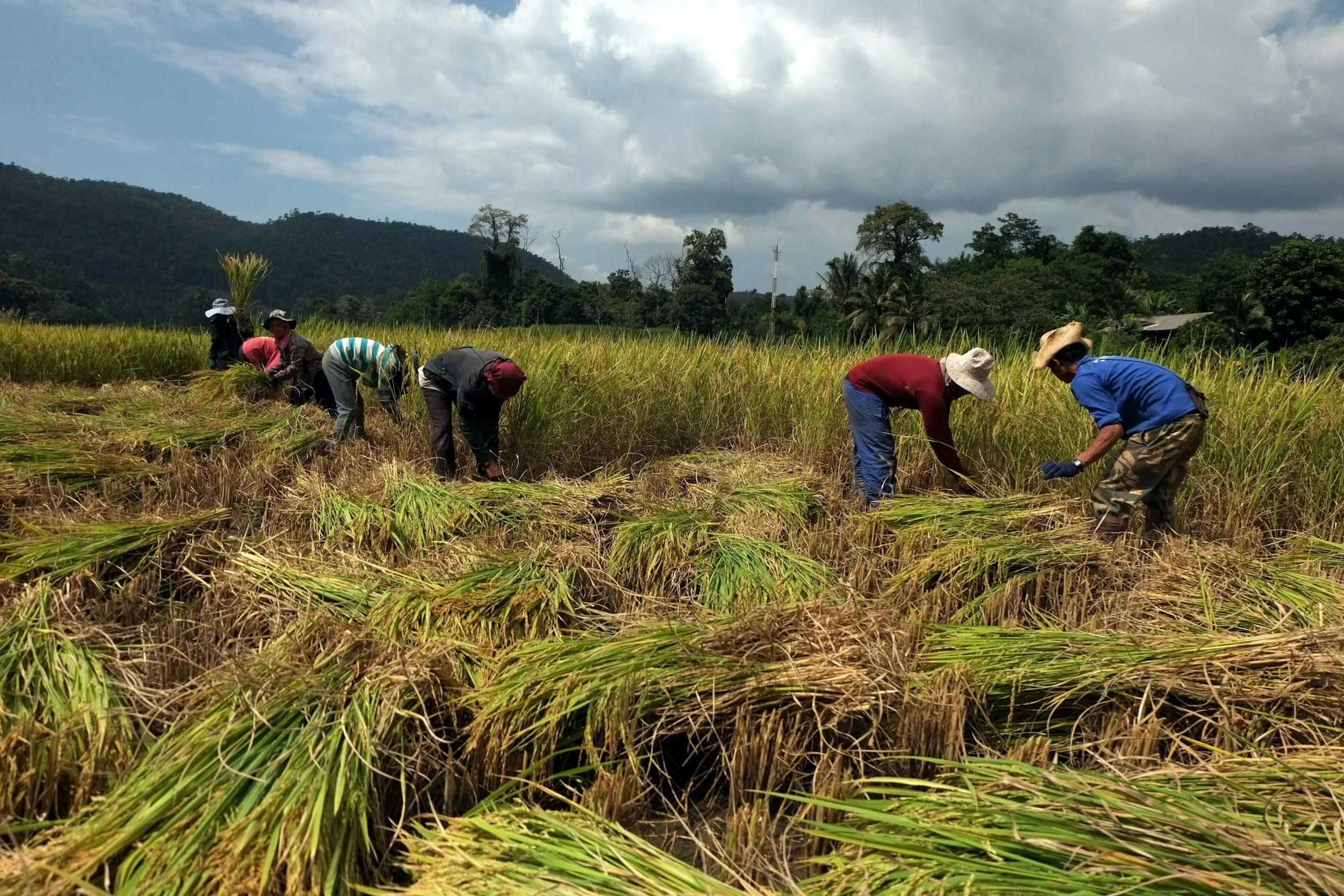
In some regions, harvest develops in settings where farming depends on tightly coordinated community labour. Fields are worked collectively, and the timing of harvest is shared across groups. In these contexts, celebrations often become large communal events. The completion of harvest is visible at the same time for many people, which naturally leads to shared gatherings, feasts, and public rituals. The cultural expression grows out of that shared timing.
In other regions, agricultural systems are more dispersed, with smaller household-based production or varied harvest periods across different crops. Here, harvest is less likely to appear as a single collective moment. Instead, it may be marked through household practices, seasonal foods, or smaller local traditions. The cultural expression follows the structure of the agricultural calendar itself.
Climate and environment also shape how harvest is experienced. In areas with short growing seasons, harvest becomes compressed into a narrow window of time, creating a sense of intensity and urgency around gathering food. In regions with longer or multiple growing cycles, harvest may appear in stages. These differences affect how communities mark the moment, and whether it becomes a single event or a series of smaller ones.
Religious and historical frameworks add another layer. In some cultures, harvest is interpreted through belief systems that connect agricultural success to divine forces or seasonal order. In others, it is framed more through civic or family traditions. These frameworks influence not only how harvest is celebrated, but what it is understood to represent. The same agricultural event can be seen as blessing, responsibility, renewal, or continuity depending on the cultural lens surrounding it.
Even in modern food systems where most people are no longer directly involved in farming, these patterns remain visible. The structure of harvest still appears in seasonal festivals, food traditions, and communal meals. The connection to land is less direct, but the rhythm of accumulation and recognition still shapes how food is culturally experienced.
What changes across cultures is not the underlying agricultural pattern, but the way that pattern is organised into meaning. Where labour is shared, celebration tends to be collective. Where production is dispersed, celebration tends to be more local or domestic. Where belief systems are central to agricultural life, harvest becomes symbolic in religious terms. Where food systems are more industrialised, harvest shifts into seasonal cultural memory rather than direct experience.
These patterns connect directly to how harvest functions within food systems and cultural meaning in:
What is the significance of harvest in culture?
The variety of harvest celebrations across cultures therefore reflects different ways of living within the same fundamental cycle. Food is grown, gathered, and secured, but the social structure surrounding that process determines how it is marked. Harvest takes different forms because human relationships to food production take different forms.
At the centre of these differences is a shared pattern. Every culture responds to the moment when effort becomes outcome and when seasonal labour turns into stored food. The expressions differ, but the underlying structure remains consistent across time and geography.
This idea sits within the broader history of seasonal food traditions and agricultural meaning explored in The History and Evolution of Harvest Celebrations.
Further Reading
Sidney W. Mintz — Sweetness and Power: The Place of Sugar in Modern History (1985)
Jack Goody — Cooking, Cuisine and Class: A Study in Comparative Sociology (1982)
Carole Counihan & Penny Van Esterik (eds.) — Food and Culture: A Reader (multiple editions, first 1997)
Marvin Harris — Good to Eat: Riddles of Food and Culture (1985)
Tim Ingold — The Perception of the Environment (2000)
Rachel Laudan — Cuisine and Empire: Cooking in World History (2013)
Warren Belasco — Meals to Come: A History of the Future of Food (2006)



Lorem ipsum dolor sit amet, consectetur adipiscing elit. Vestibulum id ligula porta felis euismod semper.