The Root-Cutters
How Wild Plant Knowledge Entered Books
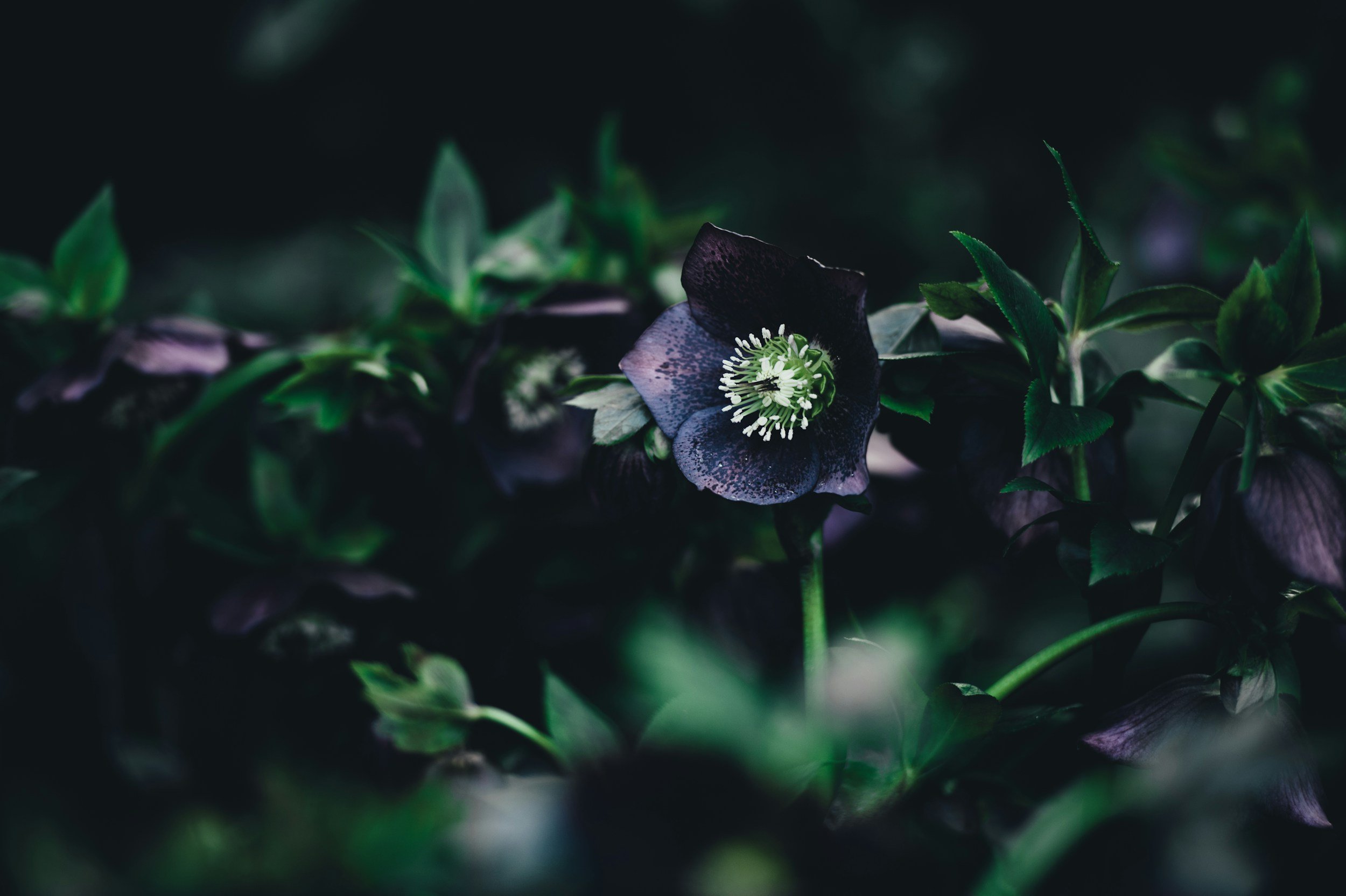
Hellebore
Draw a circle around the plant. Stand facing east. Pray. Watch the sky, right side and left, for an eagle — if the bird comes near while the root is cut, the cutter will die within the year.
These are the instructions preserved in Book Nine of Theophrastus's Enquiry into Plants, in a medicinal-plant treatise probably composed around 324 or 323 BCE. He does not say who told him this, only that it belonged to a body of practice attributed to druggists and root-diggers, the latter known in Greek as rhizotomoi. He lists the circle, the eastward stance, the prayer, and the eagle-watching together, in the same breath, then delivers his verdict: these things, he writes, seem to be irrelevant.
That single word — his judgment on a ritual he did not invent and does not claim to have practised himself — is nearly all that survives of his response within a chain of transmission linking a philosopher trained in Aristotle's school to the anonymous specialists whose knowledge of roots, names, and dangers entered his work. The surviving text does not identify the practitioner or earlier source from which the hellebore instructions came. What remains is his report, his selection, and his opinion, layered over whatever it was they actually said.
What the Druggists and Root-Cutters Said
The hellebore passage sits inside a longer catalogue, where Theophrastus works through a set of instructions attributed to "druggists and root-diggers" for handling various plants. Some, he says, cut thapsia only while facing windward, first rubbing themselves with oil, because facing the other way was said to cause the body to swell. The fruit of the wild rose had to be gathered to windward as well, to protect the eyes. Certain roots were dug at night, others by day, and one plant translated as honeysuckle had to be taken before the sun struck it.
Theophrastus does not treat all of this as equally credible, but he also does not dismiss it wholesale. Some instructions, he allows, are reasonable, because the plants involved genuinely harm the people who handle them — they "burn like fire," in his phrase, and hellebore itself makes the head heavy so quickly that diggers cannot stay at the work for long, which is why they eat garlic and drink undiluted wine beforehand. That is a practical precaution grounded in an occupational hazard, not a superstition invented for its own sake.
Other instructions he calls far-fetched. Peony, he reports, was supposed to be dug only at night, because a woodpecker that spotted someone gathering the fruit by day would cause blindness, and one that saw the root being cut would cause the digger to suffer a prolapse. Anyone cutting feverwort had to watch for a buzzard-hawk. Theophrastus separates these from the practical precautions not because one plant is more dangerous than another in a way modern readers could verify, but because he judged the causal claim itself — a bird's glance producing physical harm — to be unconvincing. He preserves the belief while doubting the mechanism, and the surviving text keeps that distinction rather than collapsing it.
Circles, Swords, and Cakes
Elsewhere in the same passage, the instructions grow more elaborate, and each plant carries its own separate protocol. Gathering the plant called gladwyn required leaving cakes made from meal of spring-sown wheat in the ground as a kind of payment, cutting the root with a two-edged sword only after drawing a circle around it three times, and holding the first severed piece up in the air before continuing. Mandrake had its own circle, drawn three times with a sword, and had to be cut facing west, with dancing and talk of sex accompanying the work — a practice Theophrastus compares to the custom of hurling abuse while sowing cumin. A different plant, the all-heal associated with Asclepius, required burying an offering of every kind of fruit along with a cake in the hole left by the root.
Theophrastus is careful, in his own text, to keep these rituals distinct from one another. He does not say that the same cutters performed all of them, or that hellebore's eastward prayer belonged to the same ceremony as mandrake's westward one, or that the cake offerings for gladwyn and the Asclepian all-heal were interchangeable. Each plant's protocol stands on its own in the text. What unites them, in his framing, is only that prayer itself did not strike him as unreasonable — it is the additions to prayer, the offerings and the circling and the specific compass directions, that he flags as absurd or irrelevant.
The Rhizotomoi Behind the Text
Modern scholarship on Book Nine — much of it built around Suzanne Amigues's edition of the text — treats it as a composite work: chapters 8–19 belonged to a separate medicinal-plant treatise composed by Theophrastus and attached to the Enquiry after his death. Amigues also notes that the line between the pharmakopolai, the drug-sellers, and the rhizotomoi, the root-cutters, was often blurred even in antiquity. Theophrastus names no individual root-cutter in the hellebore passage. He gives no account of how any cutter learned the eastward stance or the eagle-watching, whether from a parent, a teacher, or accumulated trial, and the text does not support inventing one. What he offers instead is a collective attribution — "they say," "they enjoin" — that flattens an unknown number of individual practitioners, with unknown degrees of agreement among themselves, into a single reported voice.
Knowledge associated with those practitioners formed one of the medicinal treatise's major sources. Theophrastus drew on physicians, drug-sellers, and root-cutters, but the text rarely reveals whether a particular report reached him orally, through an earlier work, or through another intermediary. The written account that resulted — organized and passed down under his name — rests in part on information he did not originate and could only partially verify.
Dioscorides and the Eagle
Nearly four centuries later, the physician Pedanius Dioscorides compiled De Materia Medica, a pharmacological work describing roughly six hundred plants and numerous other medicinal substances. It remained a major reference across Europe and the Middle East for well over a thousand years. Among its entries, the same precaution reappears: black hellebore, Dioscorides notes, was dug with particular care so that an eagle would not observe the act, since that was believed to bring death to the digger. The detail had travelled, in some form, from the gathering lore reported in the fourth century BCE into a first-century medical reference compiled for an entirely different purpose. Whether Dioscorides encountered it through Theophrastus, another written source, or a continuing gathering tradition cannot now be determined. Dioscorides's work was not a continuation of Theophrastus's argument or classification — the two authors organized their material differently and Dioscorides shows little interest in Theophrastus's more philosophical concerns — but the underlying dependence on field-gathered plant lore persisted regardless of who was doing the writing.
The surviving textual tradition preserves the plant, the circle, the eastward stance, the prayer, the eagle, and Theophrastus's own verdict on all of it. It does not preserve the source from which the hellebore instructions reached him, how the practice developed, or whether other cutters gathering the same roots followed the same rules at all.
Further Reading
Theophrastus. Enquiry into Plants, translated by Arthur Hort, Loeb Classical Library (London: William Heinemann, 1916).
Amigues, Suzanne, ed. and trans. Théophraste, Recherches sur les plantes, Tome V: Livre IX (Paris: Les Belles Lettres, 2006).
Scarborough, John. "Theophrastus on Herbals and Herbal Remedies," Journal of the History of Biology 11, no. 2 (1978): 353–385.
Lloyd, G. E. R. "Theophrastus, the Hippocratics and the Root-Cutters: Science and the Folklore of Plants and Their Use." In Science, Folklore and Ideology: Studies in the Life Sciences in Ancient Greece, 119–135. Cambridge: Cambridge University Press, 1983.
Totelin, Laurence. Hippocratic Recipes: Oral and Written Transmission of Pharmacological Knowledge in Fifth- and Fourth-Century Greece (Leiden: Brill, 2009).
Dioscorides, Pedanius. The Greek Herbal of Dioscorides, translated by John Goodyer, edited by Robert T. Gunther (Oxford: Oxford University Press, 1934).