Seasonal Eating in Edmonton Winter
How climate shapes what we grow, store, and eat
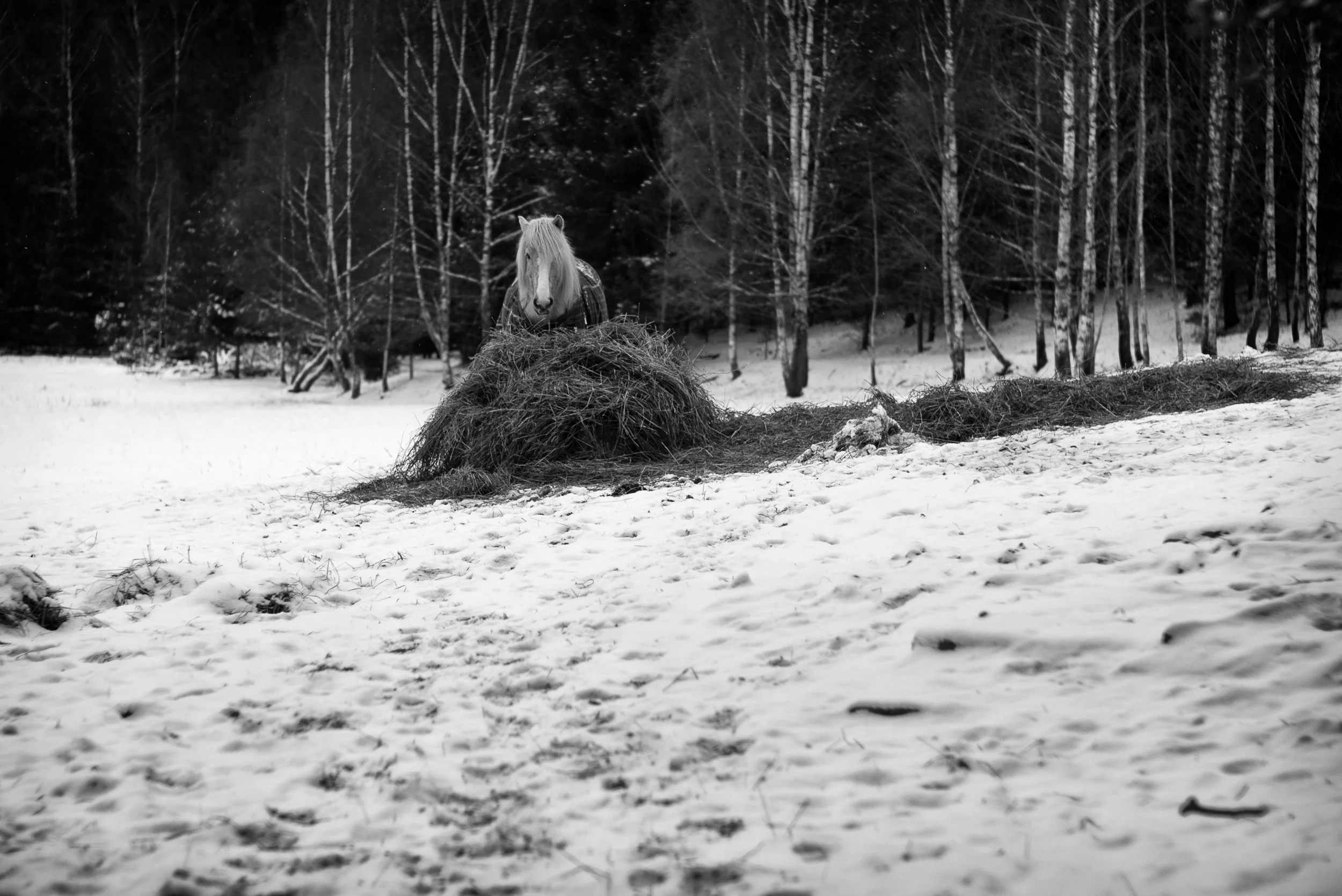
A horse wears its winter coat as it eats from a pile of hay.
Photo credit: Lars Milliberg.
Winter in Edmonton affects how food is grown, stored, purchased, and prepared. Snow arrives early and remains for months. Daylight hours shorten, temperatures regularly fall below freezing, and outdoor growing slows to a halt.
During this season, local food systems shift. Farmers’ markets operate on reduced schedules or close entirely. Fields surrounding the city sit dormant beneath frozen soil and snow. Grocery stores continue to offer fresh produce, but much of it has travelled from regions with different growing conditions.
The winter food supply depends on systems built throughout the year. Storage facilities, transportation networks, and preservation methods allow communities to maintain access to food when local harvests are no longer available. Root vegetables, grains, preserved fruits, and stored crops become especially important during the colder months.
Seasonal Eating Takes Different Forms Across Climates
The phrase “seasonal eating” is often used in conversations about local food, sustainability, and agriculture. In many regions, it is closely associated with eating foods that are freshly harvested nearby as the growing season unfolds.
That understanding developed in places where agriculture can continue through much of the year or where several harvest periods create a steady supply of fresh produce. Seasonality in those regions is often experienced through changing availability at markets, farms, and gardens.
Edmonton’s climate creates a different relationship with the seasons. Winter limits what can be harvested outdoors, and the foods available in January often reflect decisions made months earlier. A carrot stored in a cellar, grain harvested in autumn, or berries preserved during summer are all part of a seasonal food system shaped by prairie conditions.
Seasonal eating is connected to the environments where it takes place. Climate, geography, agriculture, and storage practices all influence what seasonal food means in a particular region.
Prairie Food Traditions and Winter Preparation
Before “seasonal eating” became a modern food term, prairie households organized their food supplies around the realities of the growing year. Harvest time was followed by months of storage, preservation, and careful use of resources.
Crops were gathered when conditions allowed and prepared for the winter ahead. Root vegetables were stored in cool, dark spaces. Grain provided a dependable source of food through the colder months. Fruits were dried, canned, or turned into preserves. These practices allowed households to maintain a varied diet long after fields and gardens stopped producing.
Indigenous communities across Canada developed food systems based on detailed knowledge of local landscapes, including the timing of harvests, animal movements, plant cycles, and preservation methods. Seasonal food practices incorporated harvesting, storage, sharing, and trade. Winter was considered within the yearly food cycle, with preparation taking place long before snow covered the land.
Storage and Preservation as Part of the Seasonal Cycle
Historical records from Edmonton and surrounding regions show how households adapted food practices to long winters. Archives and community collections document the importance of storage spaces, preserved foods, and careful planning through the cold season.
Cellars, pantries, and storage buildings supported everyday cooking by extending the usefulness of autumn harvests. Preservation methods such as drying, fermenting, smoking, and canning helped maintain food supplies when fresh harvesting was limited.
Provincial records also provide insight into prairie food systems and the connections between rural producers and urban communities. Grain storage, root cellaring, and transportation networks allowed food to move across both distance and time.
These systems shaped how winter eating developed across the Prairies. Food availability depended on preparation, preservation, and the ability to work with seasonal limits.
Indigenous Food Systems and Seasonal Knowledge
Indigenous food systems provide important context for understanding seasonality in northern and prairie environments. Across Canada, communities developed food practices based on observation of local ecosystems and the relationships between land, plants, animals, and seasonal change.
These traditions include harvesting and preserving foods for use throughout the year. Knowledge of plants, animals, and landscapes continues to inform conversations about food sovereignty, sustainability, and climate adaptation.
Resources such as Traditional Indigenous Foods in Canada provide further context on the diversity of Indigenous food traditions across the country. Prairie examples of seasonal harvesting and preservation are also explored in Crabapples in Prairie Food History.
Rethinking Seasonal Eating in Edmonton
Seasonal eating in Edmonton winters is shaped by the realities of a northern prairie climate. Foods available during the coldest months often reflect the work of previous seasons: crops harvested in autumn, foods preserved during summer, and supplies moved through established networks.
This approach places value on storage, preservation, and adaptation. Grains, root vegetables, preserved fruits, and imported foods all form part of a food system designed around winter conditions.
Edmonton’s seasonal food traditions are connected to a longer history of prairie adaptation. They reflect how communities have responded to climate, geography, and the changing availability of food throughout the year.
Understanding seasonal eating through this lens allows winter itself to become part of the story. The season influences what is grown, what is stored, and how food connects people to the landscapes around them.