
Finding Norway in Red Deer
A Day at the Laft Hus Festival
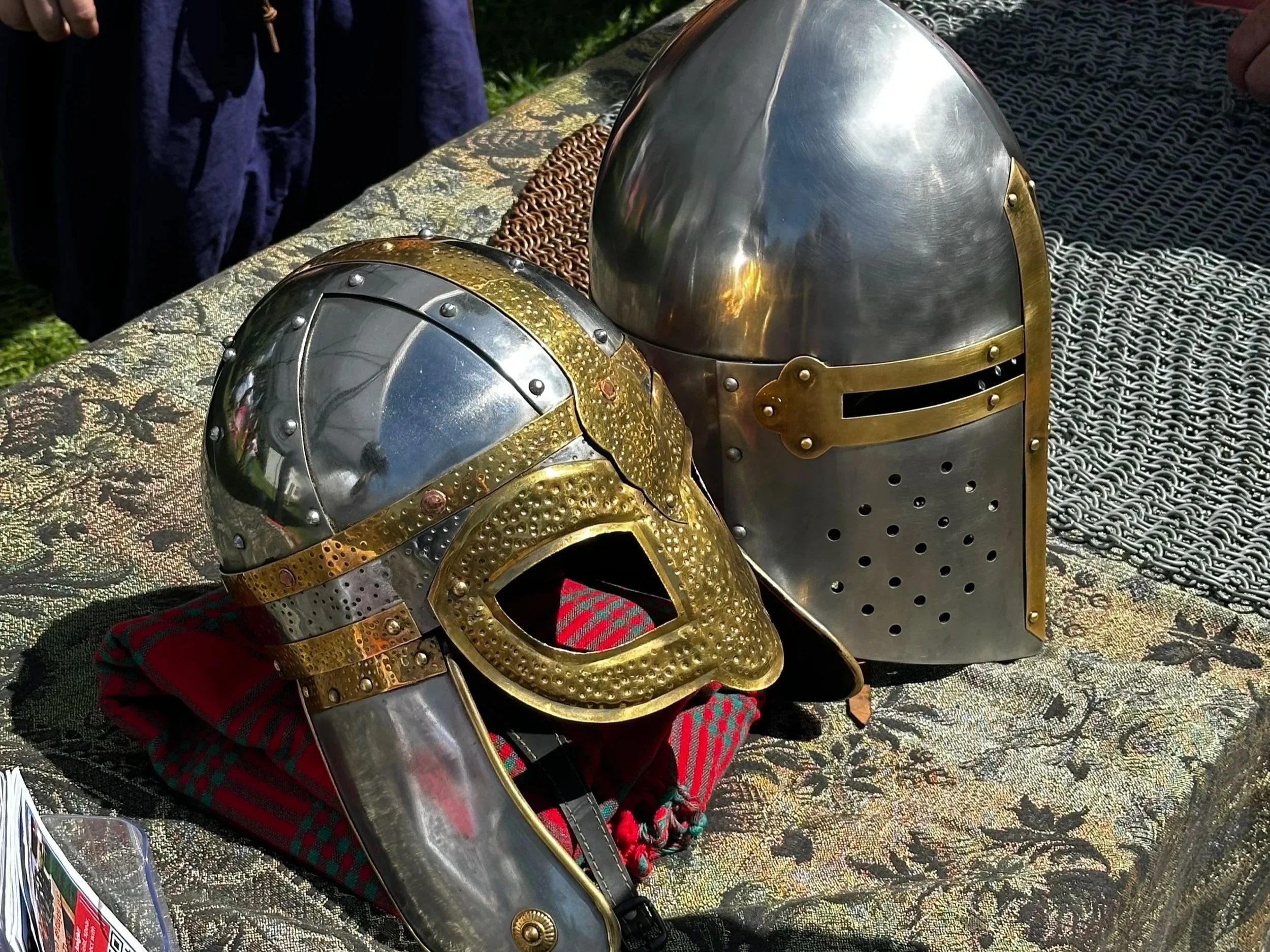
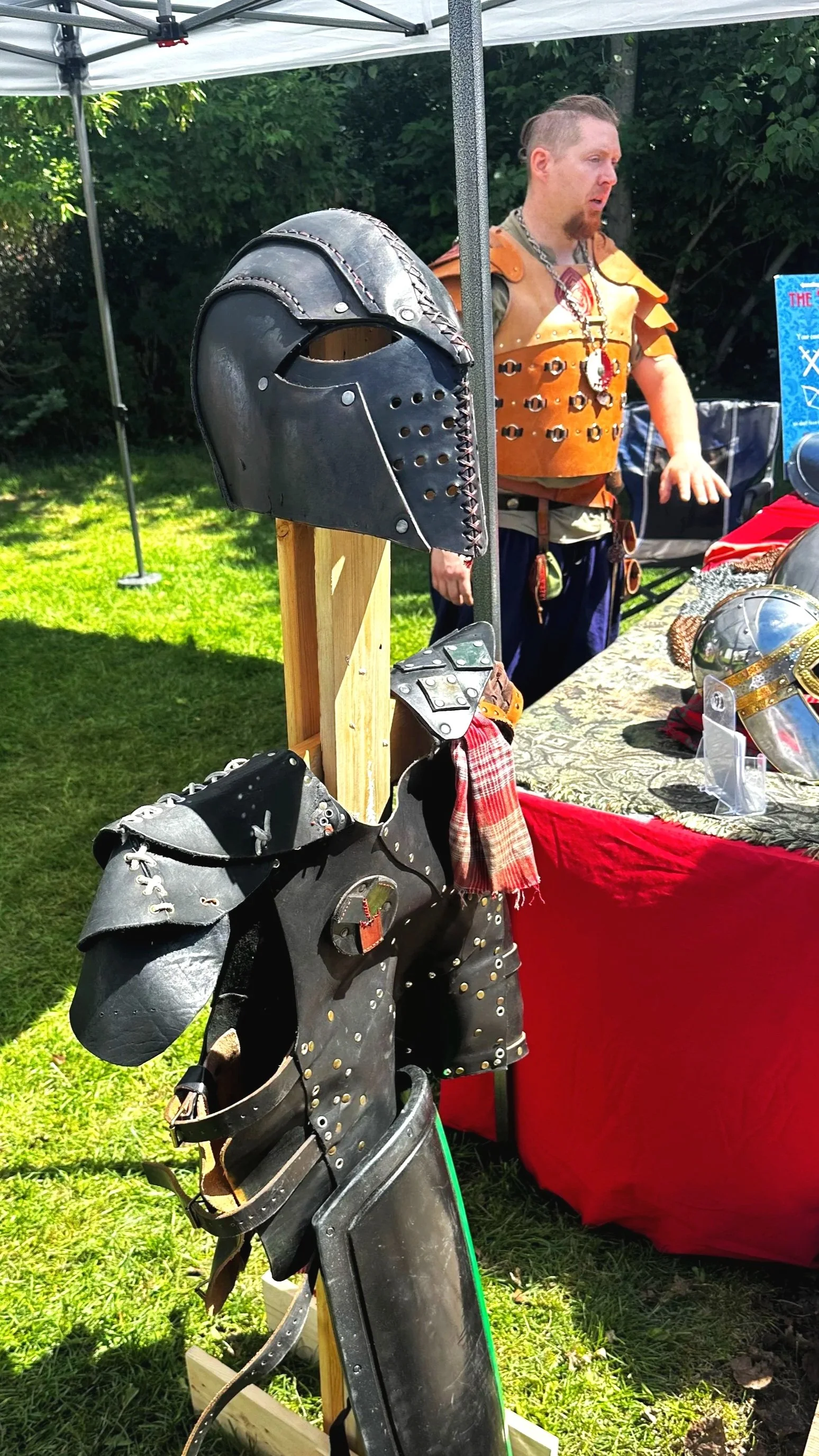
Awesome Viking-style helmets and chainmaille by Heimdall's Spears (part of The Vikings Vinland Society).
Last week I went to the annual Norwegian festival in Red Deer, Alberta with my two teenage daughters and my uncle.
Red Deer is where I grew up, yet I only discovered the Norwegian Laft Hus a few years ago. Tucked into the downtown core, it can easily disappear from view if you don’t already know to look for it. I remember frequently going to the pool next door when I was a child and never knowing what was tucked into the bushes behind it.
The little log building has a traditional grass-covered roof and is filled with artwork, books, historical displays, and information about Norwegian culture. Throughout the year they also host workshops and other events, but their annual festival is probably their biggest one. This year I made a point of going.
Part of the reason was that my mom passed away in May, and I've been looking for little ways to feel connected to her. The other part is that I've been spending more time learning about the genealogy on both my biological and adoptive sides of the family.
Being adopted complicates the idea of inheritance; I’ve never fully felt entitled to claim heritage as something fixed or given. My mom insisted her lineage was mine as well, and she meant it sincerely, but it never settled into certainty. My biological ancestry exists mostly as information—traced through personal research rather than lived memory. Norwegian heritage, for me, functions like a bridge: something I can stand on from multiple sides, claimed through both lineage and intention. Regardless it was a good excuse to spend a day learning about a part of my family history that I didn't grow up knowing very much about.
My uncle came with us. Like my mom, he's half Norwegian and half Finnish.
Growing up, it always felt like the Finnish side of the family got most of the attention. My grandpa still spoke Finnish and had Finnish friends that he regularly visited with, so those traditions stayed alive. I asked my mom why she gravitated so much to her dad’s side of the family. Mom just shrugged. With each generation, my grandmother’s Norwegian side seemed to recede further into the background. She knew a few Norwegian words, but she'd very much embraced being Canadian. As a result, I grew up hearing far more about Finland than Norway.
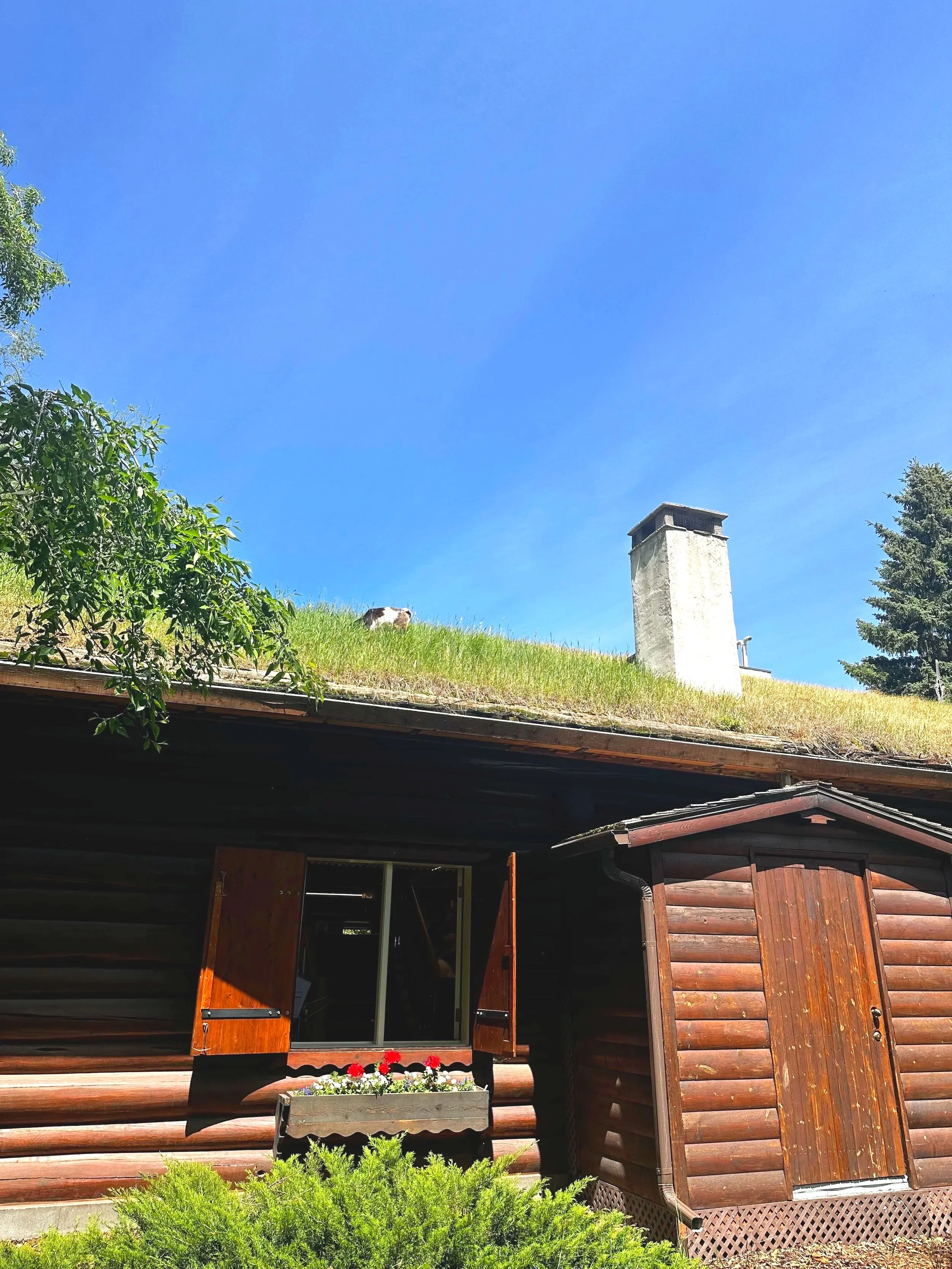
Grazing goats on the roof
Goats on the roof doing goats on the roof things at the Norwegian Laft Hus.
One thing I didn't realize until this visit was that the Laft Hus (log house) put goats on the roof. Living grass roofs is a traditional structure in Scandinavia with birch bark roofs topped with sod and grass offering insulation and a strong structure. As I understand it, goats would occasionally wander up from nearby hills to “mow” the roofs, though this was never a method of housing them in any formal sense.
I'd noticed the grass roof before, but apparently during the festival they bring in a couple of goats who happily spend the day grazing up there. The only other place I've seen goats on a roof is in Coombs, BC (which is absolutely worth visiting if you're ever nearby), and until now I hadn't realized there was a Nordic connection behind the idea.
I think I'm lucky in the type of teenagers I have because they genuinely enjoyed the festival. There weren't any rides or flashy attractions. It was just a small community festival with booths, demonstrations, music, crafts, and food. That's all we needed!
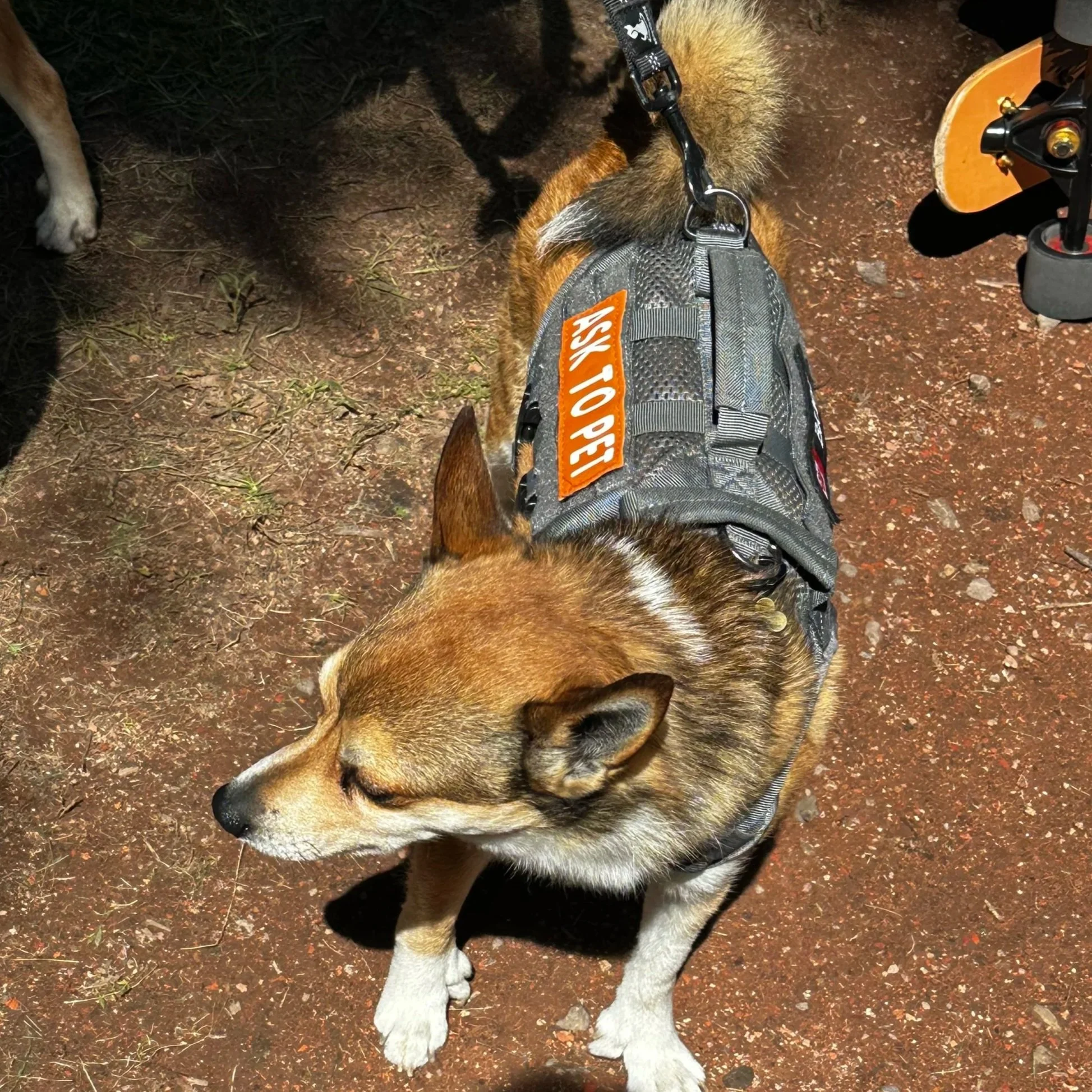
One of the gateway greeters. (Solkanata Norwegian Lundehunds)
The very first thing we saw when we walked in were Norwegian Lundehunds bred by Solkanata Norwegian Lundehunds in Lacombe. They're a fairly rare breed (apparently less than 500 in Norway). Their owners were incredibly friendly as were the dogs — who have six toes, incredibly bendy necks, and were bred to retrieve puffins of all things.
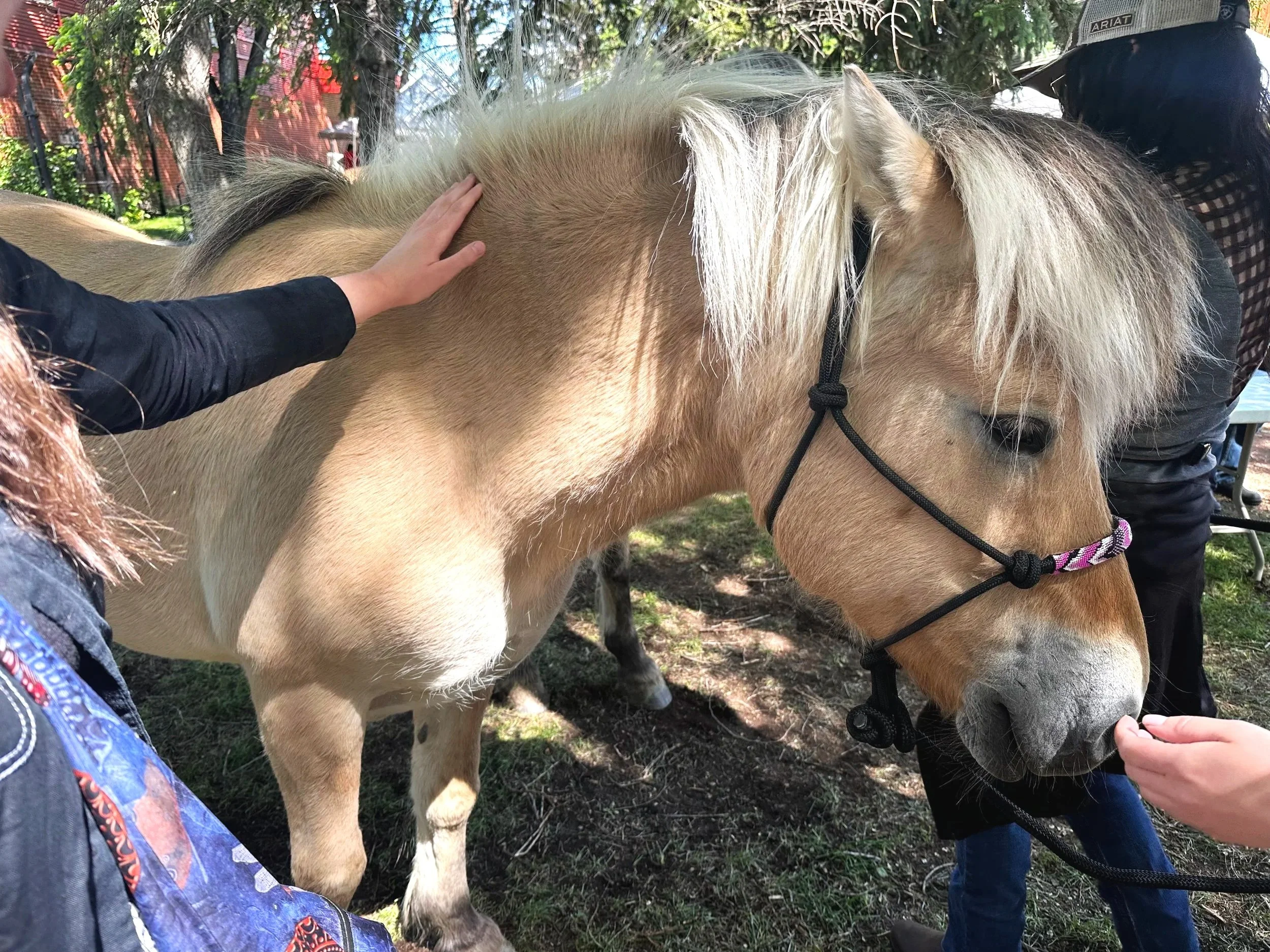
I did not catch the farm/breeder name (please update me, if you know!) but these little horses are built of hardy stock!
A few minutes later we wandered over to the Norwegian Fjord horses — also considered an endangered breed. They are strong, compact, hardy little horses. I remember riding them years ago in the wilds of Northern BC and being impressed with their strength.
Between the dogs, the horses, and all the Norwegian artwork, my daughters were sold on the festival immediately.
We wandered through all kinds of booths throughout the afternoon. One of them had Norwegian trivia, which I only did moderately well on. I was happy with the questions I knew, though.
When I mentioned that I'd been learning Norwegian on Duolingo, one of the volunteers smiled and started speaking Norwegian to me. Unsurprisingly, Duolingo did not prepare me for sustained conversation in the real world. I recognized the occasional word, but following an actual conversation was another matter entirely.
We also got incredibly lucky with the weather. It had rained for days beforehand and started raining again afterward, but Saturday was sunny without being too hot. You really couldn't ask for a better day to spend outside.
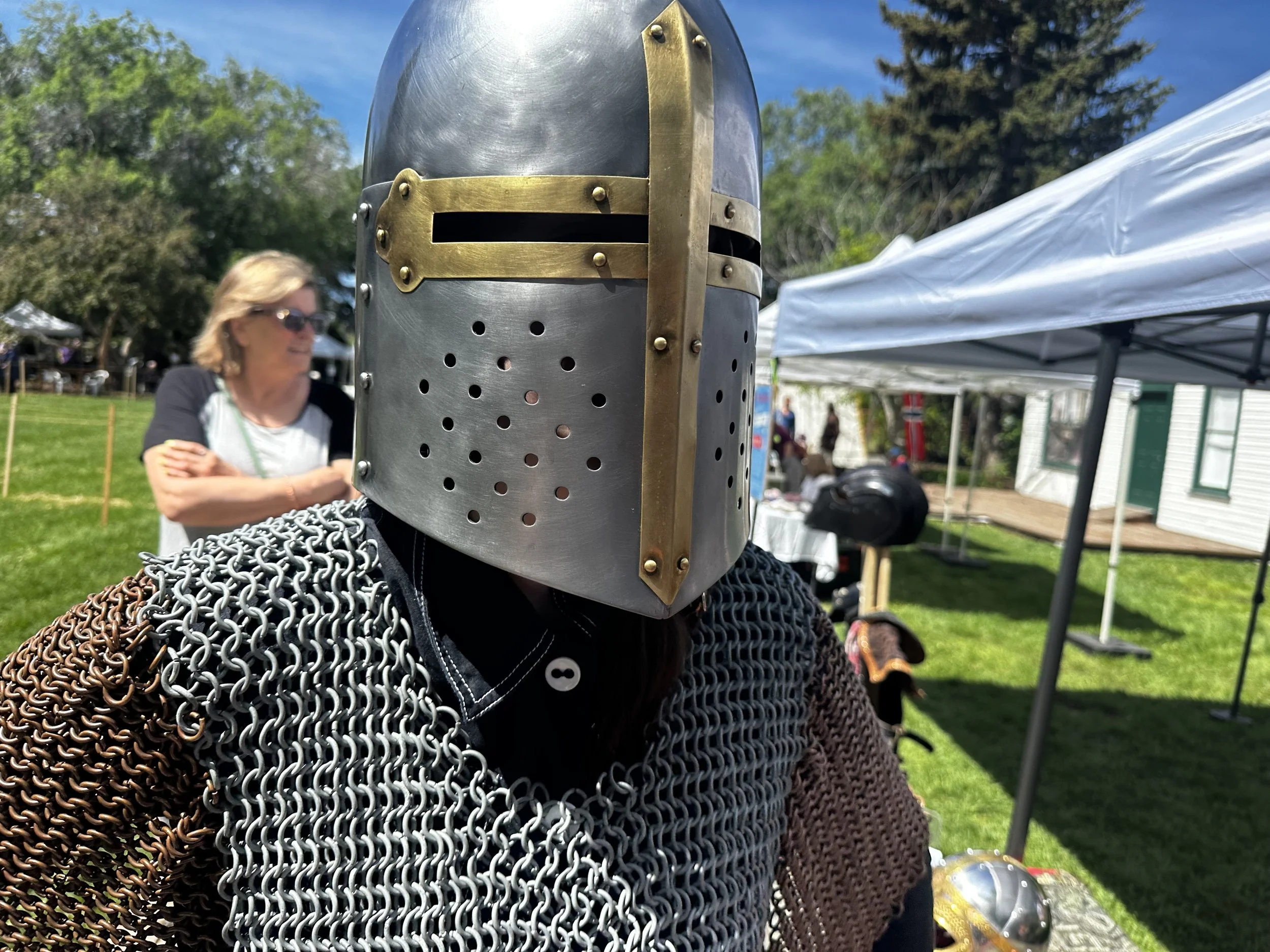
Fiona trying out some Viking gear. It’s quite heavy, was the verdict. (thanks to Heimdall's Spears part of the Vikings Vinland Society)
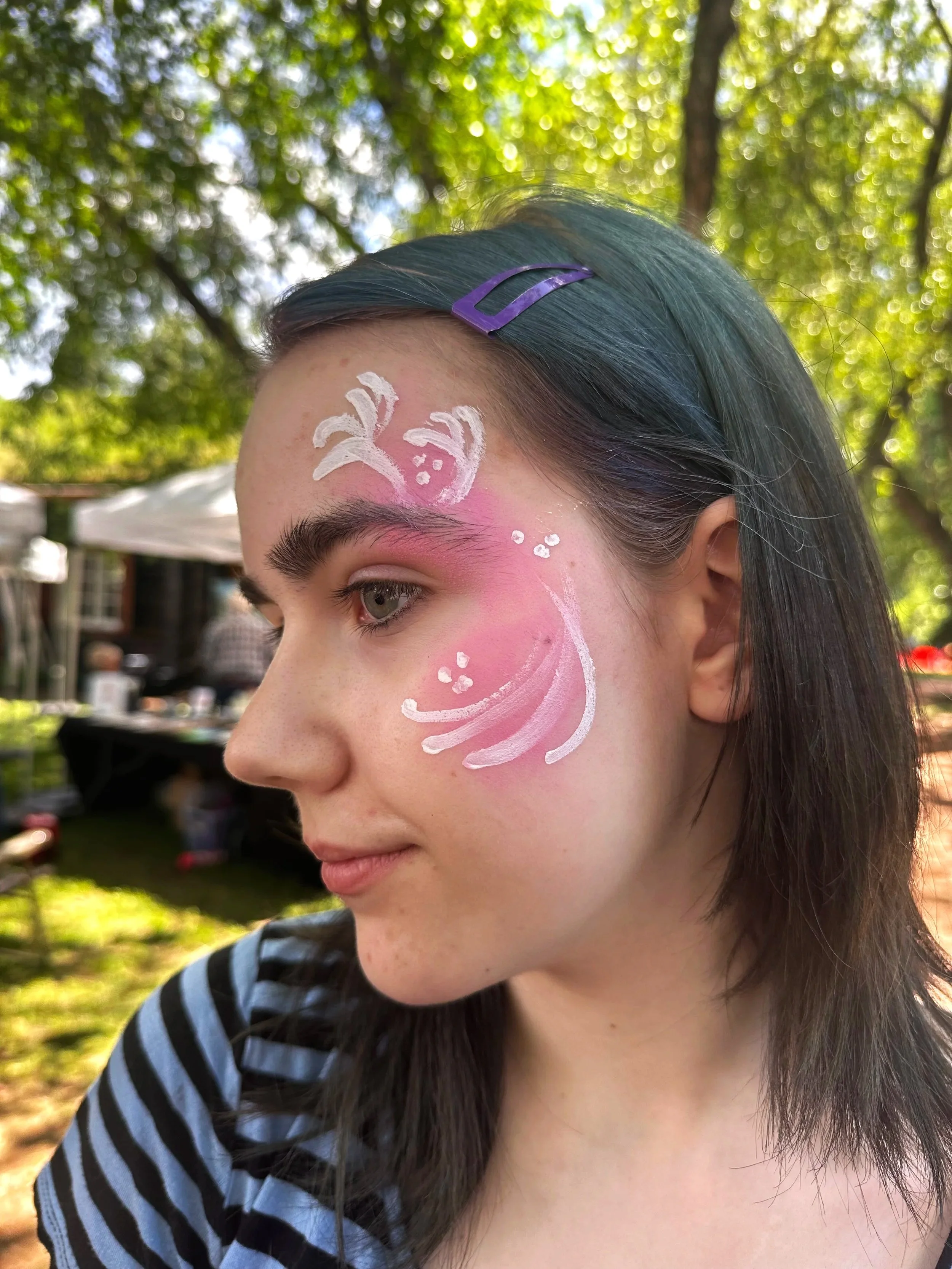
There was plenty to see throughout the festival. People could try on Viking clothing, there were demonstrations and music, and lots of traditional food.
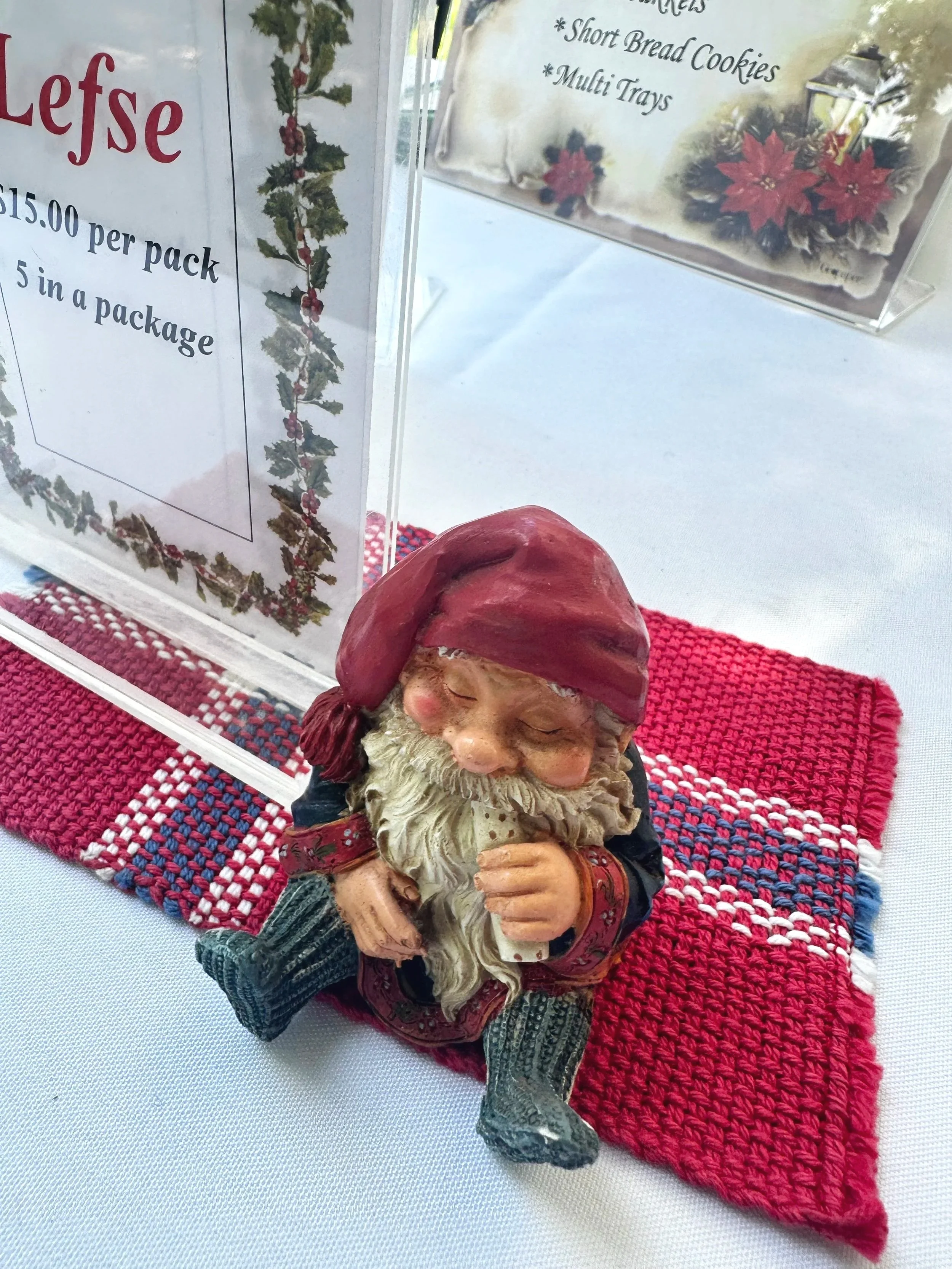
We bought some lefse and almond cake, sampled krumkake, and I've now added "learn to make lefse" to my ever-growing list of things I want to try (stay tuned)..
One of my favourite parts of the afternoon was watching the folk dancers.
Many had come from Norway, but there were also dancers from Finland, Sweden, and (I think) Denmark. Their traditional outfits were beautiful. One of the presenters explained that the silver decorations often represent particular regions and the embroidery was detailed and rather ornate. .
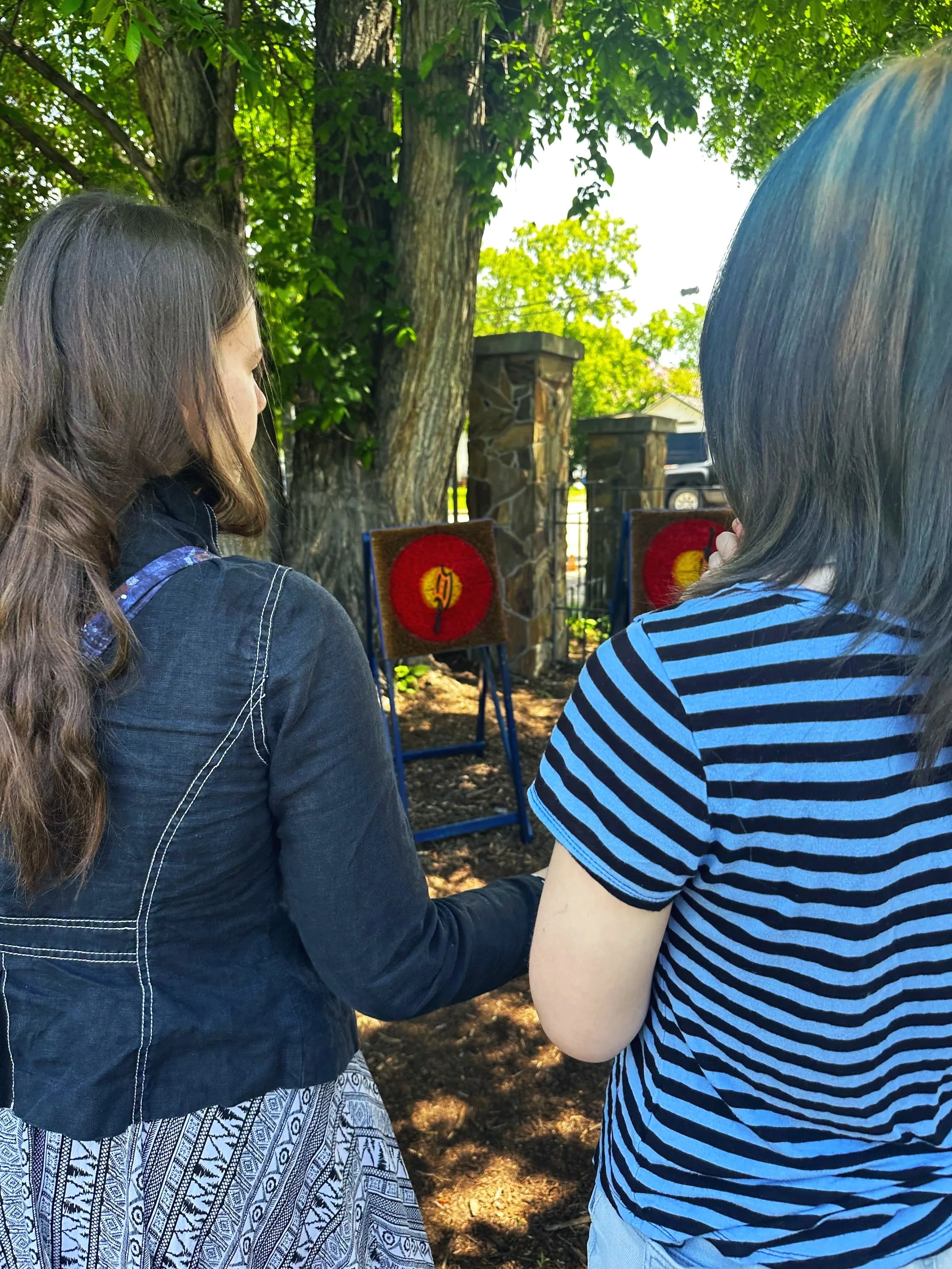
One thing I wasn't expecting was the age of many of the dancers. I'm used to dance recitals being mostly children and teenagers, but many of these performers were older adults and they danced with joy! Several of the dances were introduced as traditionally being performed by both men and women but no men made their way onto the dance floor. Were they all practicing their axe throwing?
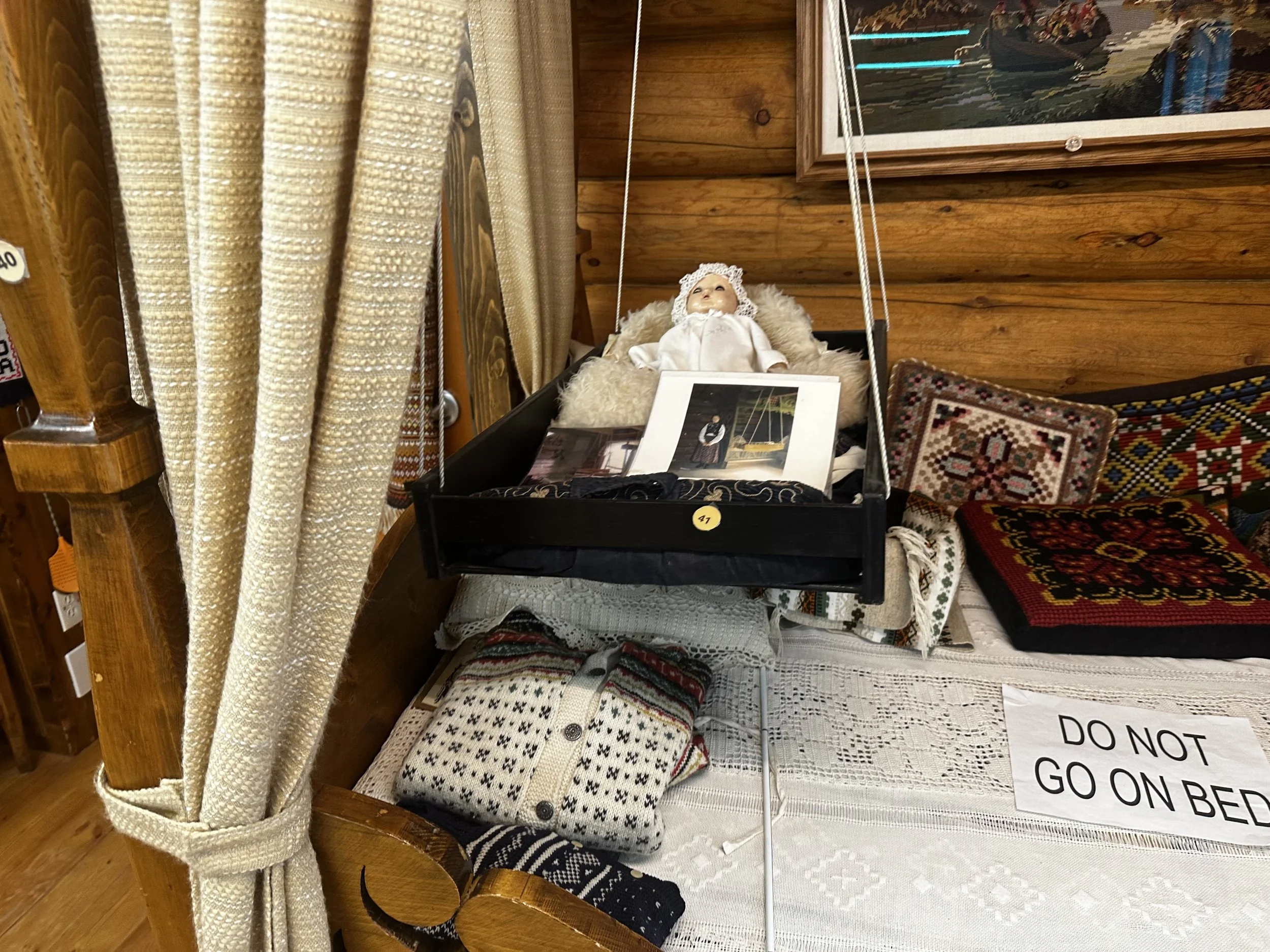
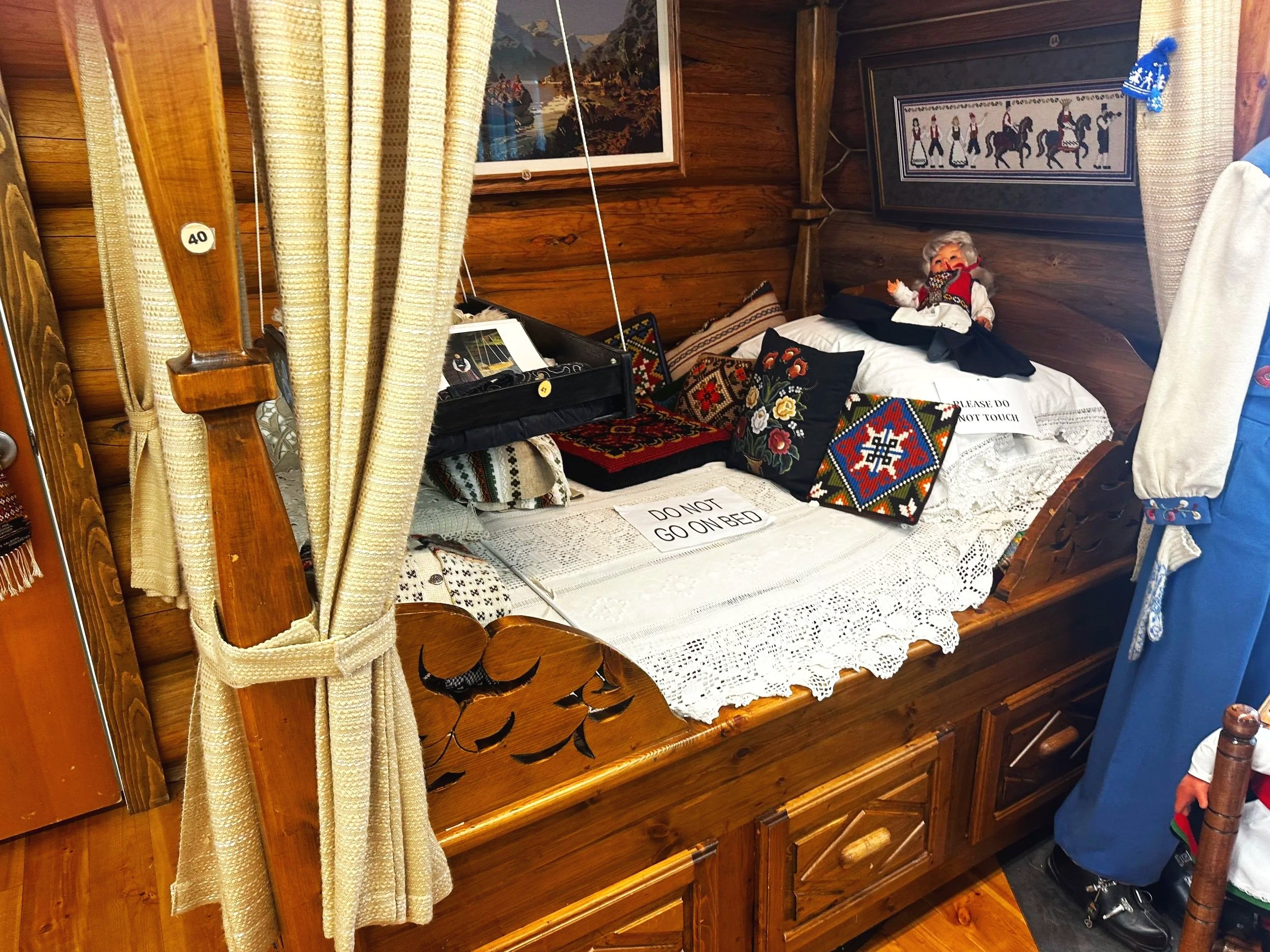
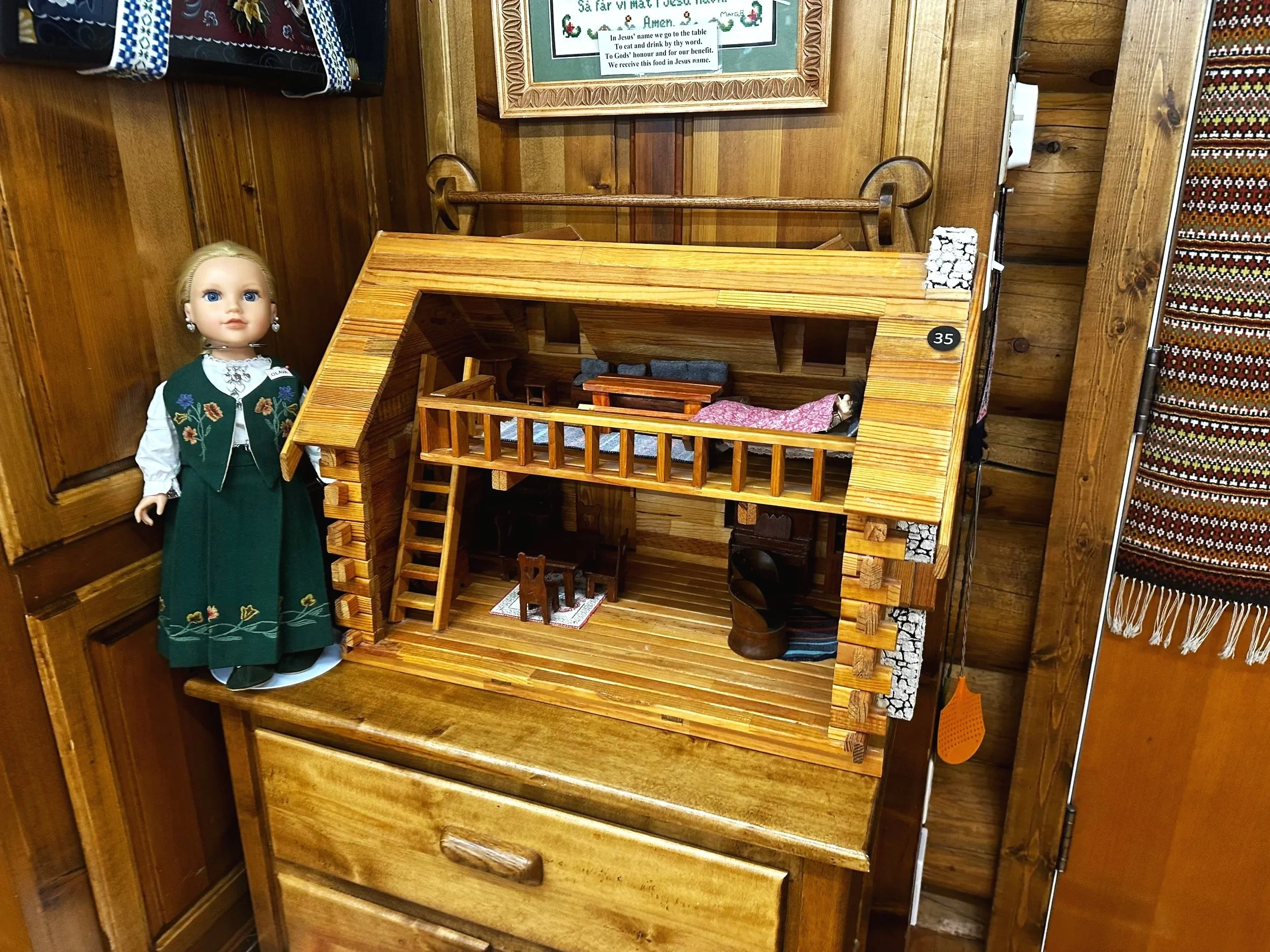
Inside the Norwegian Laft Hus is a shop, (occasional) demonstrations and relics from the old country.
Before we left, we spent some time inside the Laft Hus itself. One thing that really caught my attention was a baby's cradle hanging from the ceiling above a bed.
I'd only ever seen that before in a Doukhobor museum, and I immediately wondered if there was some cultural overlap or if people in different places had simply come up with the same practical solution. Either way, I think it's brilliant. I raised my kids during the era when co-sleeping was very common, and this seems like such a clever compromise. The baby stays close to the parents but still has its own space, and if the rope somehow broke, the cradle would simply fall onto the soft mattress below..
Looking back, I think I got more out of the day than I expected. I went because I missed my mom and wanted to learn a little more about the Norwegian side of my family. I came home with good food, a few new books to follow up on, and more threads of inquiry than I can reasonably pursue. More importantly, I left with a clearer sense of a heritage I am still learning how to approach.
Check out what the Norwegian Laft Hus has much to offer throughout the year.
If this interests you, you might like…



By the time Lord Dufferin left Gimli in September 1877, New Iceland had already spent months governing many of its local affairs under rules its residents had adopted themselves.