
Can You Inherit a Culture You Weren’t Raised In?
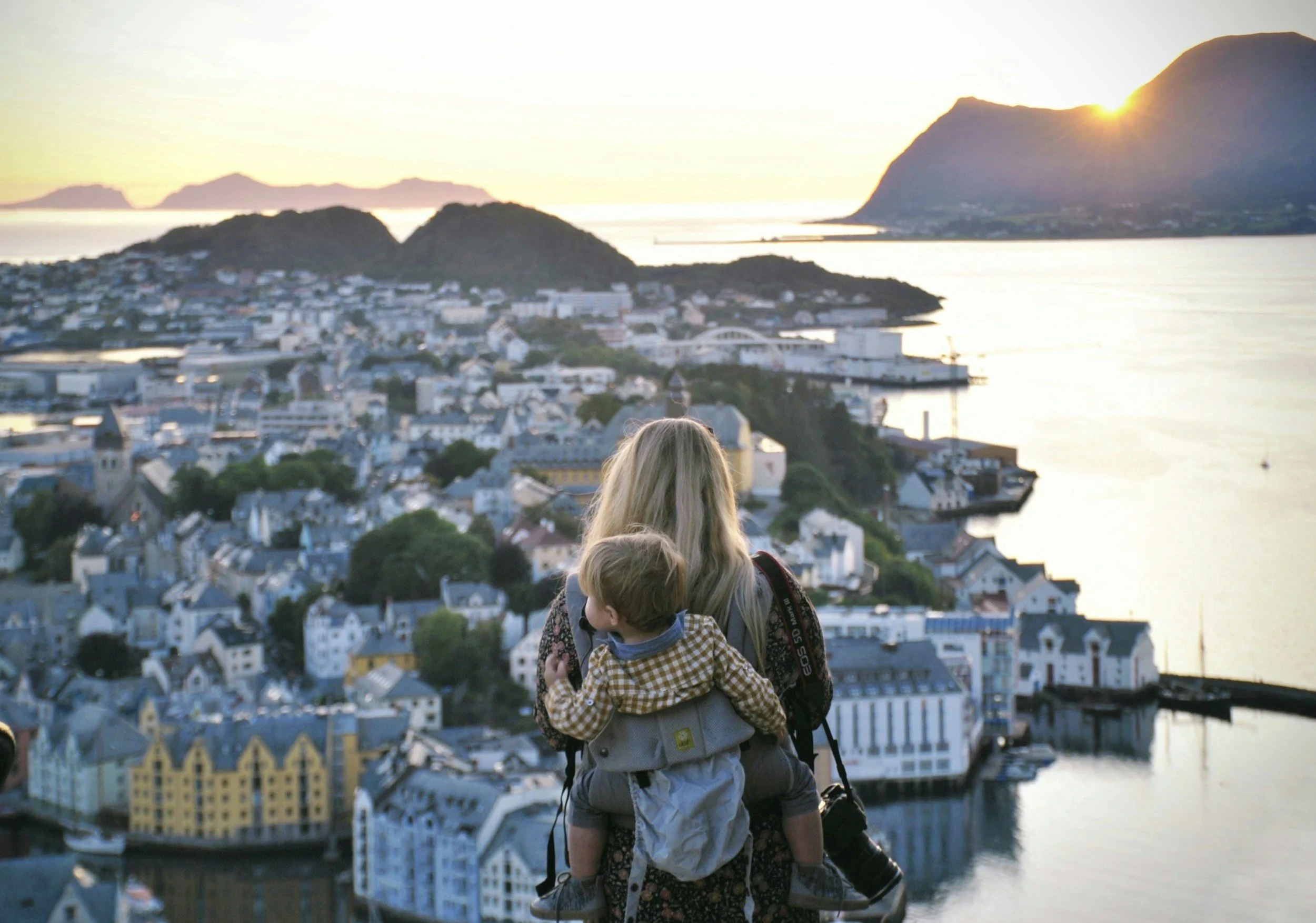
Submitted photo.
I grew up in Alberta with a Nordic connection already present in my family. My maternal adoptive grandmother was of entirely Norwegian ancestry, while her husband, my adoptive grandfather, was of entirely Finnish ancestry.
I was close to my grandparents, but Nordic heritage never felt like it was something I could claim, no matter how much my mom claimed it was. It belonged to the family background. I knew where my grandparents came from. My grandpa’s Finnish culture was especially tangible as he still spoke Finnish and regularly chatted with family members using language I didn’t understand. I did not yet understand how much those origins would matter to me later.
Years afterward, genealogy and commercial DNA estimates suggested that roughly one-quarter of my biological ancestry was Norwegian or more broadly Nordic. I was thrilled. The discovery gave me a biological connection to a heritage that had already reached me through my adoptive family. I felt like it gave me a stronger claim to the heritage I had been raised with.
It also raised a larger question. Can a person inherit a culture when much of the knowledge attached to it was never passed down?
Inheritance without instructions
Ancestry and culture do not travel through families in quite the same way. While ancestry describes descent and can be traced through birth records, census documents and genetic relationships, cultural knowledge usually has to be practised or taught, even when the teaching happens so casually that nobody notices it.
Children learn which foods belong to holidays because those dishes keep appearing. They hear family expressions and absorb household expectations. By adulthood, many of those habits feel ordinary rather than cultural and they wonder when others do things differently.
UNESCO defines intangible cultural heritage as practices and knowledge that communities recognize as part of their heritage. That heritage is transmitted between generations, but it is also continually recreated as people respond to their surroundings and history. Its survival depends on people continuing to practise and share it.
When transmission is interrupted, descendants may inherit family origins without the knowledge that once accompanied them.
A person can have Norwegian ancestry without having had a Norwegian cultural upbringing. Someone raised with Norwegian family customs may have a strong cultural connection even if the biological relationship is more distant or absent.
For adoptees, those different forms of inheritance can overlap in unexpected ways and as conversations of pretendians and falsified identities continue to arise, I find it increasingly important to be clear about who I am and how I exist in this world.
Adoption can delay ordinary family knowledge
Many people grow up knowing where their grandparents were born. They hear which relative they resemble and learn the family medical history through ordinary conversation. Little ticks are inherited. In my adoptee groups, other adoptees talk mannerism they never thought would be genetic — a way of tucking the hair behind the ear or a specific lilt in a laugh.
Adoptees may receive some of that ancestral information later, or never receive it at all.
Researchers studying 169 emerging adults who had been adopted as infants examined the difference between what adoptees knew about their birth parents and what they wanted to know. They called that difference an “adoption information gap.” The study did not suggest that every adoptee experiences the same need to search, but it documented how questions about biological family can continue into adulthood.
That description feels familiar to me. Genealogy has often meant discovering information that might have been routine knowledge in another family. A maiden name or birthplace can feel significant when it was not available during childhood. For me, it wasn’t until my 40s that I realized I was afraid that exploring my biological side would hurt my parents. They assured me it did not.
The search is not always driven by a desire to replace an adoptive family. It often comes from wanting to understand how the different parts of a life fit together. I was something, someone, before paperwork was signed and before that, I existed all the back to being an ovum, in my grandmother’s belly as she carried my mother.
“Do you realize how many events and choices that had to occur since the birth of the universe, leading to the making of you just exactly the way you are?”
~ A Wrinkle in Time (movie)
What a DNA test can reveal
Commercial DNA testing has made biological connections easier to investigate, although ancestry estimates have clear limits.
Genetic ancestry is inferred by analysing patterns of DNA variation. The populations available for comparison influence how a person’s ancestry is categorized, which means estimates can shift as reference data and methods change.
A result suggesting that roughly one-quarter (possibly slightly more) of my biological ancestry is Norwegian or broadly Scandinavian cannot measure how I was raised. It cannot tell me which customs my ancestors practised or how closely I belong to a present-day Nordic community.
The result still carried personal meaning.
I had grown up loving a Norwegian grandmother and her and my Finnish grandfather were also part of my family story. Learning that I had Scandinavian ancestry within my biological family gave that existing connection another dimension.
Somethings I can place, and others I can’t. My grandpa used to drink buttermilk and I was the only grandchild who would join him, happily cracking fresh black pepper into it first. After he’d make a satisfied sound like “axxx.” How much of that was just him, and how much was Finnish?
A 2025 review of direct-to-consumer genetic testing among adults with adoption or out-of-home-care experience found that people use these services to seek information about heritage and biological relatives. The review also noted that discoveries can have lasting emotional effects and that users may need help interpreting what the results mean.
DNA can provide evidence. It does not provide a complete family history, and it cannot supply the cultural upbringing that someone did not receive.
The Nordic connection was already there
My interest in Nordic heritage did not begin with a percentage on a screen. It began with my grandparents.
My grandmother’s Norwegian ancestry and my grandfather’s Finnish ancestry gave Nordic history a place within my family long before I investigated my biological background. That connection came through relationships rather than genetics and was further enhanced by my mom’s strong interest in her Nordic ancestry.
The later DNA discovery reinforced something that had already mattered to me.
In ideal situations, adoptive families pass down traditions and family stories. They shape how a child understands home and belonging. That does not feel in all the gaps, but it offers an opportunity to strengthen the sense of self.
Biological ancestry can matter greatly to an adoptee who has lived with missing information. Learning that Scandinavian ancestry also existed on my biological side brought two parts of my history closer together.
The overlap between my adoptive upbringing and biological ancestry felt like confirmation and a sense of completion, although it also created more questions. Which traditions survived in either family? Which ones disappeared before they reached my generation? How much can be recovered through records, and how much disappeared with the people who once knew it? And, because both my grandparents were born in Canada, how much of there culture had already been lost?
Sometimes when I am watching TV late at night, I will flick through my two family trees and try to find some place where they intersect — a common ancestor, maybe the fourth, great-uncle of my mom is my biological cousin, five times removed.
When ethnicity becomes symbolic
Sociologist Herbert Gans introduced the term symbolic ethnicity in a 1979 study of later-generation white ethnic identity in the United States. He described an attachment to ancestral culture that could be expressed through selected symbols and occasional practices without shaping everyday behaviour in the way it had for immigrant generations.
The concept helps explain why later descendants may feel connected to a country while knowing little of its language or daily customs.
It can also sound dismissive when used to suggest that an attachment is superficial. A holiday meal or inherited object may carry real family meaning, even when the wider cultural framework has faded.
Assimilation often leaves fragments — a recipe survives but the language disappears. A family remembers that a grandparent was Norwegian but forgets the name of the community that person came from.
An adult descendant may then have to work backward from the fragments.
Learning a heritage in adulthood
Reconnection can begin with genealogical records. It may lead to immigration history, family cooking or language study. For some people, it includes contact with relatives who know parts of the story that were never written down, although in my experience, this is a disappointing dead end for many adoptees.
The process requires honesty about the difference between ancestry and upbringing.
I can say that I grew up with Norwegian and Finnish heritage in my adoptive family. I can also say that genealogy and DNA estimates later revealed Norwegian or Scandinavian ancestry in my biological family. I cannot claim that I was raised with a complete understanding of either culture.
Nordic Prairie Life grew partly from my effort to understand it. Researching Nordic migration to Alberta and the wider Prairies helps explain how people arrived and what happened to their traditions after settlement. It also shows how quickly family knowledge can become difficult to recover.
When my mom, sister, and I went to Finland a decade ago, my mom had a hard time pinning down the exact community where her father’s family had come from. In one generation that information slipped away.
Heritage after interruption
Heritage found later may always feel different from culture absorbed from birth. The learner has to study practices that another person understands instinctively. She may discover the name for a custom only after recognizing that her family once followed it.
That does not make the connection meaningless. It makes the process of carrying it forward more deliberate.
For me, Nordic heritage began with my grandparents. My grandmother gave Norway a human face, while my grandfather placed Finland beside it in our family history. The later discovery of Scandinavian biological ancestry brought an unexpected sense of continuity.
The DNA results did not create my interest but it did help explain why reclaiming that part of my history felt so personal.
Have you ever had to learn part of your own family culture as an adult? What first led you back to it?
Further reading
Gretchen Miller Wrobel and Harold D. Grotevant, “Minding the (Information) Gap: What Do Emerging Adult Adoptees Want to Know About Their Birth Parents?” Adoption Quarterly, 2019.
Jeanette Conrick, Megan Prictor, Dilshad Zarine and Ralph Hampson, “The Use and Impacts of Direct-to-Consumer Genetic Testing for Adults with an Adoption or Out-of-Home Care Experience: A Scoping Review,” Adoption & Fostering, 2025.
Herbert J. Gans, “Symbolic Ethnicity: The Future of Ethnic Groups and Cultures in America,” Ethnic and Racial Studies, 1979.
UNESCO, Convention for the Safeguarding of the Intangible Cultural Heritage, 2003.


Before the candles could be dipped, everyone at Överby parsonage had work to do.
Edvard Ström spent part of his childhood there, on Sweden’s west coast, between 1814 and 1825. In recollections recorded late in the nineteenth century and published by Bohusläns Museum, he remembered the household twisting cotton and tow yarn into wicks while his aunt Anna Lisa prepared for candle making. A tall copper vessel was carried into the servants’ room, wrapped in blankets and mats to retain its heat, more than half-filled with boiling water and topped with melted tallow.