
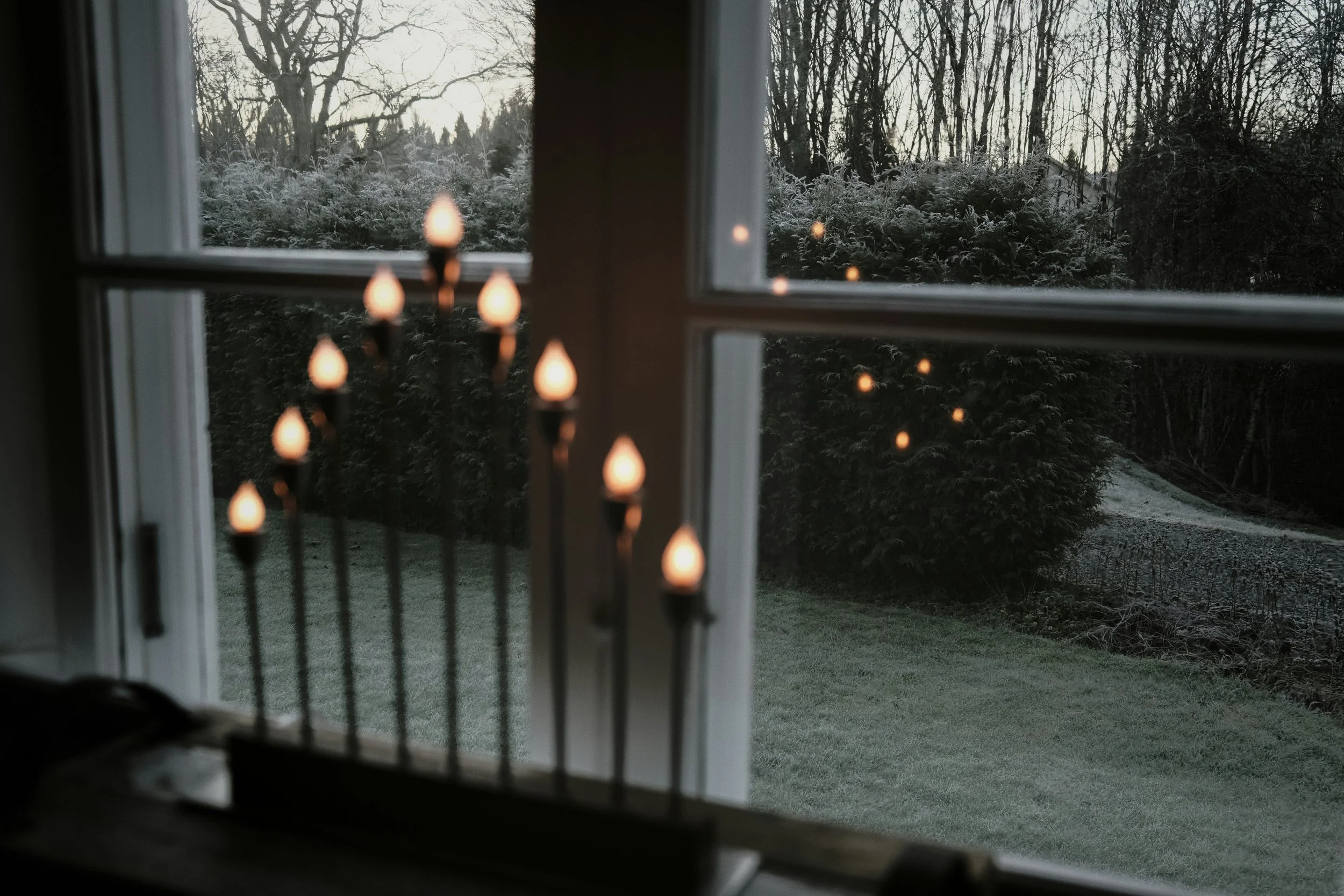
An Advent candlestick lights a window in Dalsjöfors, Sweden.
Photo credit: Magnus Jonasson
In a poem attributed to the Norwegian poet Þorbjǫrn hornklofi, King Harald has already grown tired of sitting beside a fire. Warm rooms and down-filled mittens hold no appeal for the warrior described in the verse. Given the choice, he would rather fight and spend Yule outdoors.
The poem is Haraldskvæði, traditionally dated to around 900. Úti vill jól drekka, it says: Harald wishes to “drink Yule” outside. In the later saga preserving the verse, he is campaigning aboard warships, so a modern scholarly translation places his preferred Yule “at sea.” The expression meant celebrating Yule, without establishing what anyone drank or describing a particular feast. The poem survives in manuscripts copied long after Harald’s lifetime.
The word in that verse, jól, was already an old Germanic name for a midwinter observance. As Christianity became established in the Nordic region, the name came to designate the Christian Christmas celebration. Swedish, Danish and Norwegian still use jul; Icelandic uses jól. Finnish borrowed joulu from an earlier Scandinavian form. English ordinarily says Christmas, although a related word survives in Yule.
Nearly two centuries before the poem’s traditional date, the English monk Bede recorded the month names once used by his predecessors. In his Latin book on reckoning time, written around 725, he explained that the older English calendar followed the moon. The month corresponding to January was Giuli; December bore the same name. Bede connected the pair with the sun’s turn toward longer days: one month fell before that turning, the other after.
Another trace survives in a Gothic calendar fragment preserved in Codex Ambrosianus A. The words fruma jiuleis appear in the surviving text, a relative of Giuli and jól in a different Germanic language. But scholars disagree about the damaged line around them. A neighbouring word was long read as “November.” In 2006, linguist David Landau argued, using digital images of the manuscript, that the supposed month name was not there at all. The fragment records a related word, although it cannot establish the date or the ceremonies of an ancient Scandinavian Yule.
In Snorri Sturluson’s account, King Hákon the Good ordered a change to the Yule calendar. The celebration was to begin when Christians observed Christmas. Everyone was to have a measure of ale or pay a fine, and the holiday would continue as long as the ale lasted. Snorri was writing in Iceland in the early thirteenth century, long after Hákon’s tenth-century reign.
According to Snorri, Hákon was a Christian king among people attached to older religious practices. He initially kept his faith private, although he observed Sundays and Friday fasts. When he thought he had enough backing from powerful men, he sent to England for a bishop and religious teachers. Later, when he proposed Christianity to farmers assembled in Trøndelag, they postponed a decision until the larger Frostathing gathering.
Before the change, Snorri says, Yule had begun on hökunótt, a night he identifies as midwinter, and lasted three nights. Denmark’s national dictionary places the pre-Christian festival around January 12, while Norway’s dictionary associates it with the winter solstice. Those later descriptions cannot establish a fixed date for every community in Viking-age Norway.
The Swedish word hjul means “wheel.” Its resemblance to jul has encouraged explanations involving the turning sun at midwinter, but the Swedish Academy’s historical dictionary rejects that derivation. Sweden’s Institute for Language and Folklore also dismisses a proposed connection to French joli, meaning “pretty.” Scholars can trace the related Germanic words, although the original literal meaning remains disputed. Nor does the survival of the name establish when particular Christmas customs, including trees and gift-bringers, first appeared.
Finnish belongs to the Uralic language family, yet borrowed joulu from an older Scandinavian form. Another related Germanic word entered Finnish earlier as juhla, which usually means “feast” or “celebration” today. In the dialects of South Ostrobothnia, juhla could also mean Christmas. December is joulukuu, literally “Christmas month.” Finland’s Institute for the Languages preserves a dialect example from Kortesjärvi that uses juhulana—“at Christmas”—while describing a decorated spruce bush and candles placed in windows.


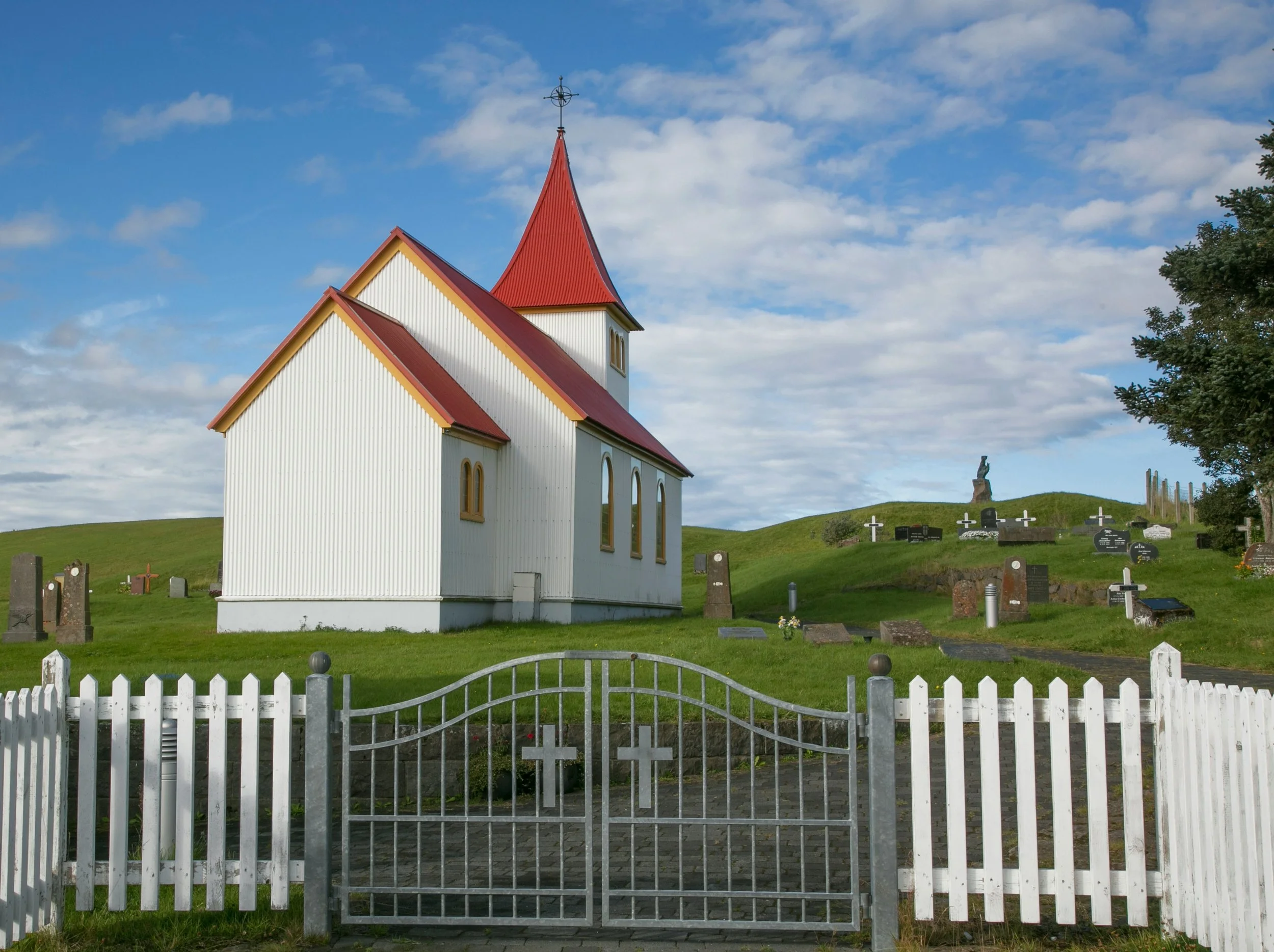



In a poem attributed to the Norwegian poet Þorbjǫrn hornklofi, King Harald has already grown tired of sitting beside a fire.