

A Viking Age picture stone from Tängelgårda, Gotland, Sweden, dating to approximately 800–1100 CE. Its carved imagery does not document a specific Winter Nights or Halloween ceremony.
Photo credit
Ola Myrin / Historiska museet
In an early-eleventh-century poem, an Icelandic traveller describes being turned away from a farmhouse on a journey towards Sweden. The woman who refused him entry said her household was holding an álfablót, an offering associated with the álfar, often translated as elves. She told him they were pagan and feared the anger of Odin. The traveller was the Christian poet Sigvatr Þórðarson, whose verses survive in later medieval manuscripts.
There is a house closed against a stranger, a religious observance and a reference to beings whose place in Norse belief remains difficult to define. Yet Sigvatr never tells us what happened inside. The verse supplies no costumes, wandering dead or October 31 celebration. What it offers historians is an unusually early account of a seasonal religious practice amid Scandinavia's conversion to Christianity.
So did the Vikings celebrate Halloween? No evidence identifies a Viking Age festival as Halloween, and no documented line connects a particular Norse observance directly to the modern holiday. There were, however, gatherings associated with the beginning of winter, including feasts and religious offerings. The challenge is knowing how much we can say about them from sources written at very different times.
A season called Winter Nights
In Old Norse, vetrnætr means “Winter Nights.” The term marked the beginning of the winter season, a consequential point in a northern agricultural year. It appears in Icelandic literature as both a date in the calendar and an occasion for gatherings. Modern descriptions frequently present Winter Nights as a single ancient festival with fixed ceremonies, but the surviving accounts are less orderly.
One of the clearest passages appears in Gísla saga Súrssonar, a story set in tenth-century Iceland but written down in the thirteenth century. The saga says it was the custom of many people to welcome winter with feasts and veturnáttablót, or offerings associated with Winter Nights. It then makes a telling distinction. Gísli, its central figure, had given up making sacrifices after spending time in Denmark, yet he continued to host feasts as he had before.
Another passage describes Þorgrímur planning an autumn gathering at Winter Nights to welcome winter and make an offering to Freyr, a god associated in Norse tradition with prosperity and fertility. Guests are invited, and drinking is anticipated. It does not give us permission to reconstruct a standard ceremony across Viking Age Scandinavia.
That caution matters because the saga was composed centuries after the events it describes. Its authors drew on inherited stories, local traditions and literary conventions. Historians can use it as evidence that medieval Icelanders understood the opening of winter to have carried both social and religious significance. They cannot treat every scene as a transcript of tenth-century practice.
Snorri Sturluson, another thirteenth-century Icelandic writer, offers a broader seasonal scheme in Ynglinga saga, part of his Heimskringla. He attributes to Odin the institution of offerings at winter's approach for a good year, in midwinter for a good crop and in summer for victory. Odin's supposed lawgiving belongs to a legendary account, however, and does not establish a universal Viking calendar.
We should also be wary of a precise date. Later Icelandic calendars placed the beginning of winter in October, but that does not make Winter Nights an ancient name for October 31. A nineteenth-century Icelandic-English dictionary, for instance, records October 24–26 for Winter Nights in an 1872 almanac. Those are dates from an almanac printed many centuries after the Viking Age, not proof of a fixed pre-Christian Halloween.
What was an álfablót?
Sigvatr's encounter is unusually compelling because the poet lived close to the events he described. His Austrfararvísur, or “Verses on a Journey to the East,” is generally associated with travel in the early eleventh century. The poem itself survives through later manuscript transmission, so even here we are reading an early voice preserved by medieval scribes.
The word álfablót combines álfar with blót, a term used for religious offerings or sacrifice. The poem associates the observance with a household and tells us that a Christian visitor was not welcome. It does not describe the offering, identify its participants beyond the people encountered or explain precisely what the álfar meant to those taking part. Popular accounts sometimes turn the word into evidence of an autumn festival devoted to ancestors. That interpretation goes further than the testimony allows.
Even the reason for Sigvatr's rejection is disputed. The encounter has often been taken to mean that an álfablót was a private domestic rite, closed to outsiders. In a 2022 study of the poem, Old Norse scholar Jonas Wellendorf argues that the household's hostility may instead be understood in the context of conflict and change as Christianity spread. Whether privacy, religious opposition or both explain the refusal remains uncertain.
Other Norse sources mention the dísir, a category of female supernatural beings whose roles vary across the surviving literature, and rites called dísablót. These traditions sometimes enter discussions of winter observances and ancestors. Yet the sources do not establish that álfar and dísir were interchangeable, or that people across Scandinavia gathered on one night to welcome the spirits of the dead.
Where Halloween enters the calendar
The name Halloween comes from All Hallows' Eve, the evening before the Christian feast of All Saints on November 1. All Souls' Day, associated with the remembrance of the dead, follows on November 2 in traditions that observe it. These Christian commemorations became part of Scandinavian religious life as conversion and church institutions took hold, with local calendars and practices changing over time.
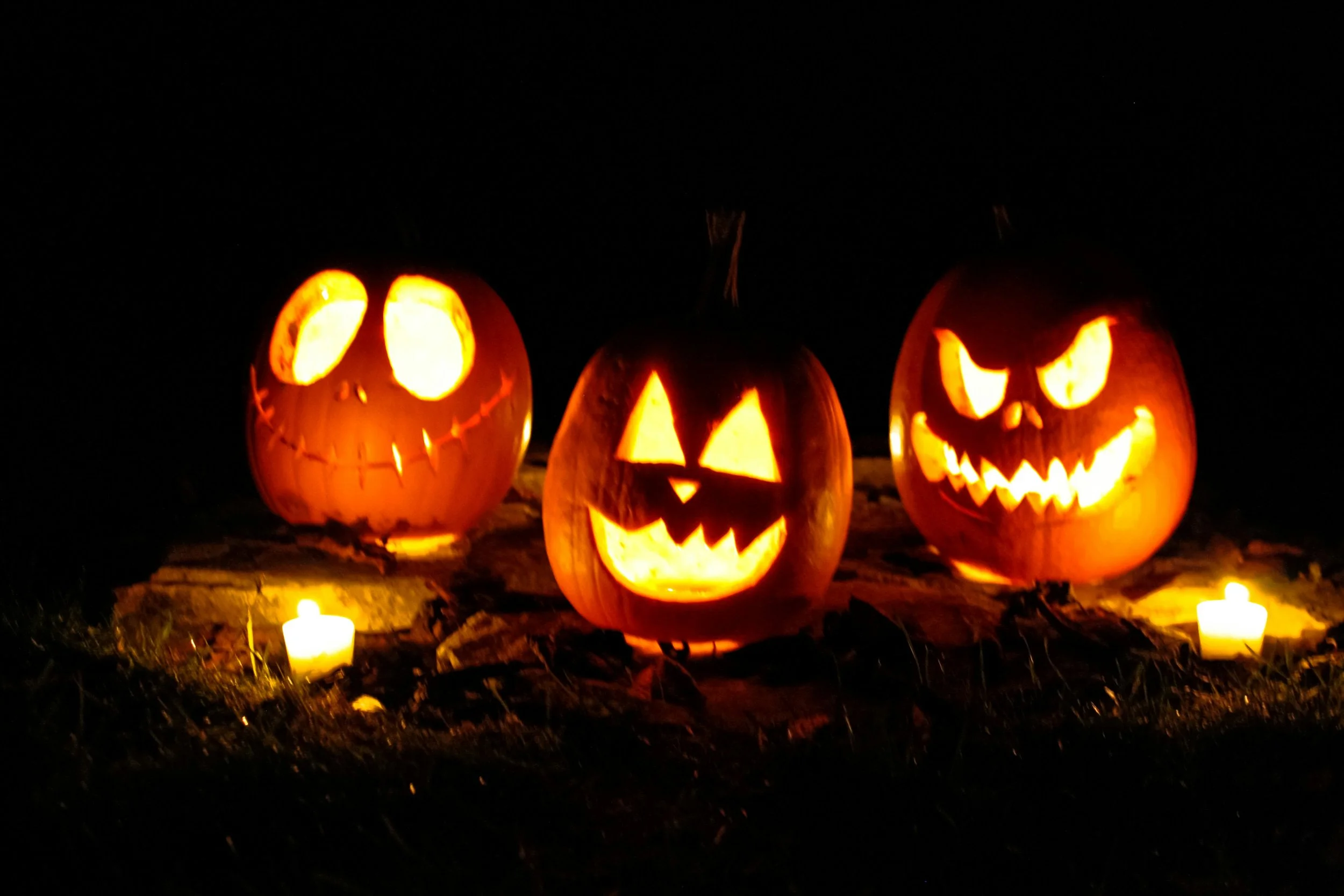
Their dates fall near the seasonal turning point described in older Norse literature. That proximity invites comparison, particularly because many societies have associated autumn with the harvest, approaching winter and the dead. But a resemblance in theme is not a documented genealogy. There is no sound basis for saying the Church simply renamed one universal Viking festival Halloween, or that Scandinavian Winter Nights became the North American custom of costumes, trick-or-treating and carved pumpkins.
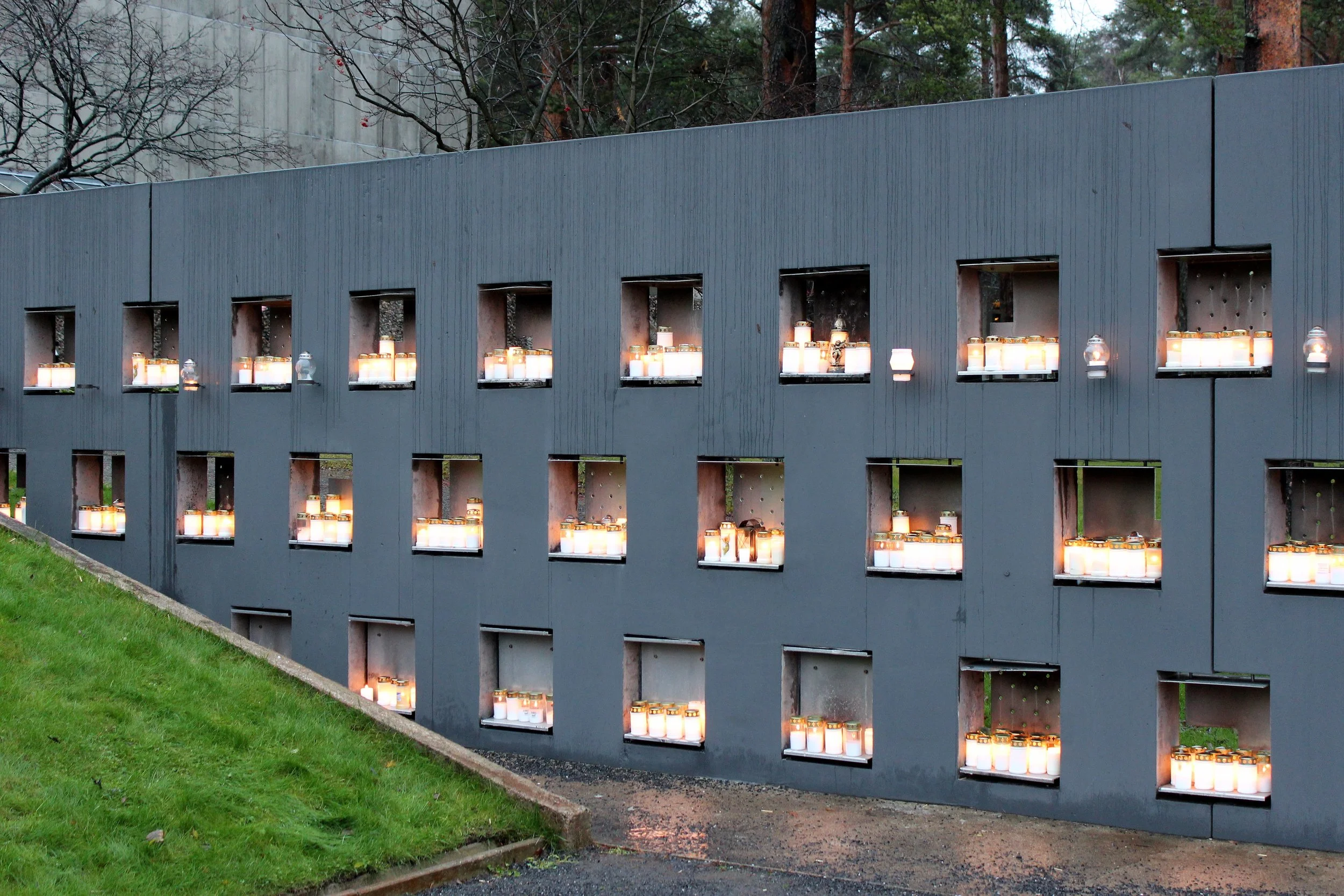
The history of Halloween involves the Christian calendar, customs associated with Ireland and Britain, and later developments in North America. Its adoption in parts of the Nordic world is relatively recent. Sweden's Nordiska museet traces the broader popularization of Halloween there to the late 1980s and 1990s, influenced by American culture. The museum separately documents how lighting candles on graves for All Saints became widespread in Sweden after the Second World War.
An eleventh-century poem describes a household observing an álfablót. Medieval Icelandic writers remembered feasts and offerings at the beginning of winter. Their accounts do not settle every question about belief, ritual or timing, and they cannot be combined into a single festival observed uniformly from Iceland to Sweden.
The Vikings lived with winters whose arrival mattered to work, food and community life. They had religious practices through which they approached that changing season. Calling those practices “Viking Halloween” makes the past seem familiar, but it replaces the surviving evidence with a celebration historians cannot actually document.



In an early-eleventh-century poem, an Icelandic traveller describes being turned away from a farmhouse on a journey towards Sweden.