
The Draugr: When the Dead Refused to Stay Buried
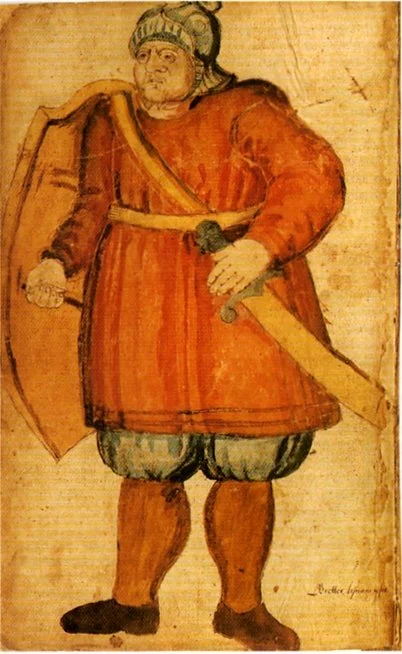
Grettir, the central figure of Grettis saga, in a seventeenth-century Icelandic manuscript illustration. (AM 426 fol., Árni Magnússon Institute.)
Photo credit: Árni Magnússon Institute, AM 426 fol.
When neighbours opened Þórólfr Halt-Foot’s grave, they found a corpse that had neither decayed nor become any easier to move. The body was blue and as bulky as an ox, so heavy that the men had to work levers underneath it. They rolled Þórólfr down to the shore and built a pyre. Even then, he was slow to burn.
This is how a haunting reaches its apparent conclusion in chapter 63 of Eyrbyggja saga, a medieval Icelandic account of families and feuds around the Snæfellsnes peninsula. By this point in the story, burial has been tried more than once. Moving the dead man farther from the living has also failed.
Þórólfr belongs to a varied company of returning dead in Old Norse-Icelandic literature, often discussed under the name draugr (plural draugar). The word can mean a ghost or revenant, although its uses are not confined to one sort of supernatural creature. Some saga dead have substantial bodies that can wrestle, kill and be exhumed. Others enter a house despite having been lost at sea. The scholar Ármann Jakobsson has cautioned against treating these figures as a single neatly defined species. Modern descriptions of them as “Viking zombies” can be convenient, but they flatten some of the most interesting stories.
There is another distinction to keep in mind. Eyrbyggja saga was probably composed in the mid-thirteenth century, though it describes Iceland’s settlement period and subsequent generations, chiefly in the tenth and early eleventh centuries. Grettis saga, which contains another famous revenant, was written later, probably in the fourteenth century, with its precise dating disputed. Their authors worked with remembered places, genealogies, religious change and storytelling traditions. The sagas tell us what medieval Icelandic narratives made of the dangerous dead; they cannot be read as eyewitness testimony from the Viking Age.
In Eyrbyggja saga, Þórólfr dies seated in his high seat after quarrelling bitterly over property and falling out with his son, Arnkell. His face is so disturbing that Arnkell approaches him from behind, forces the rigid body down and covers its head. Rather than carrying the corpse through the usual doorway, the household takes down part of the wall to remove it.
People and animals die near his mound. A herdsman is found with broken bones and a blue body; farms are abandoned; those who die are said to join Þórólfr’s company. Arnkell eventually organizes a second burial. Men dig the corpse out, place it on a sledge and haul it toward a headland, where they bury it behind a wall. As long as Arnkell lives, the haunting stops. After his death, Þórólfr returns, and the district once again becomes dangerous to inhabit.
That brings the story to the funeral fire. The men manage to burn the body and scatter some of its ashes into the sea, but the narrative does not leave matters entirely settled. A cow later licks stones where ashes have blown ashore and gives birth to a strange, exceptionally large bull. An elderly woman recognizes something threatening in its voice. The saga invites an association between the burning and the animal without providing a tidy explanation of what, exactly, has survived.
Another saga revenant is more directly entangled with the fate of a living hero. In Grettis saga, Glámr is a Swedish shepherd employed on an Icelandic farm already troubled by hauntings. He is strong and surly, refuses to attend church and defies the household’s Christmas Eve fast. After disappearing in a winter storm, he is found dead where the ground suggests a violent struggle. Bringing his body to consecrated ground proves almost impossible.
Glámr attacks livestock and men, damages the farmhouse and makes work there perilous. Grettir Ásmundarson, a young man eager to test his strength, comes to stay. On the third night, Glámr forces his way into the hall. What follows is a wrestling match that tears through the fittings of the building and out across its doorway. When Grettir throws him backward, the moon emerges from cloud and catches the dead man’s eyes. Grettir, previously fearless, falters.
Glámr uses that moment to pronounce a curse. Grettir will never grow stronger; misfortune and outlawry await him, and solitude will become unbearable. Grettir finally draws his sword, cuts off Glámr’s head, and has the remains burned. The immediate danger is over, but the saga gives the dead shepherd an influence that survives the destruction of his body. Grettir becomes afraid of darkness and of being alone.
Eyrbyggja saga offers a stranger solution at the farm of Fróðá. A shepherd dies and returns, followed by other members of the household. Then Þóroddr, the farm’s master, and his companions drown on a voyage. Their bodies are never recovered, yet they appear at their own funeral feast, soaked with seawater. They take seats beside the fire, ignoring the people who greet them. When the feast ends, they keep coming back. Other dead members of the household arrive covered in earth, and the living begin to lose their place by their own hearth.
The survivors seek advice from Snorri goði, a local chieftain. He tells them to burn bedding that had belonged to a deceased woman named Þórgunna and to summon the unwanted visitors before a court at the doorway. In the saga’s account, the living conduct proceedings much as they would at an assembly: charges are brought, judgments delivered, and each dead person departs when the sentence is pronounced. A priest then carries holy water and sacred objects through the building, and Christian services and Mass bring the hauntings to an end.
Icelandic ghost stories continued to be told and collected in later centuries, but continuity of an image or word does not establish an unchanged belief. A nineteenth-century folktale, a thirteenth-century saga and a modern fantasy creature have their own audiences and purposes. In the sagas, the returned dead are often people the living already know: a difficult father, a hired shepherd, neighbours lost at sea. They come back to familiar farms and fires, where their former place among the living has become impossible to manage.

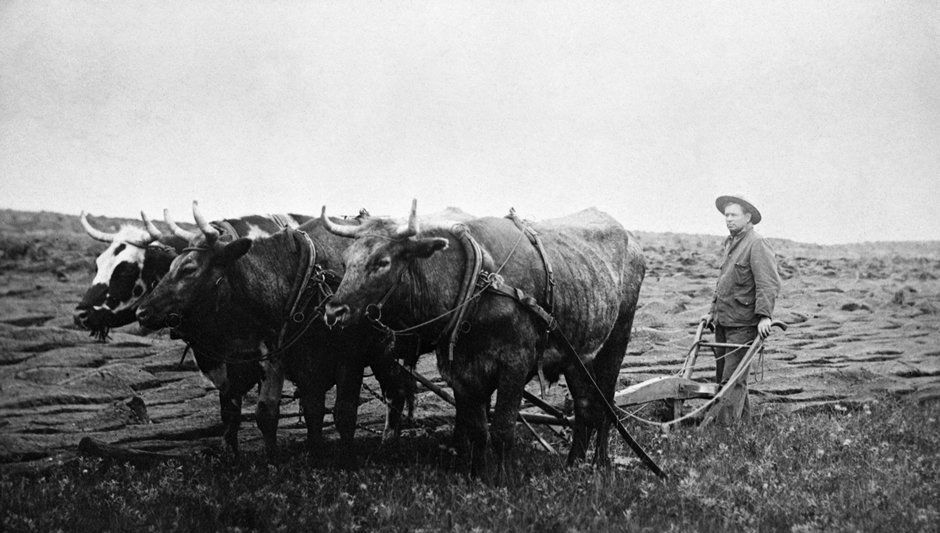


In the spring of 1893, Martin Finseth, Nels Jevning, Andrew Malmberg and John Wallerbeck travelled north from Minnesota to inspect Canadian farmland.