
Three Nordic Ghost Stories to Tell on Halloween Night
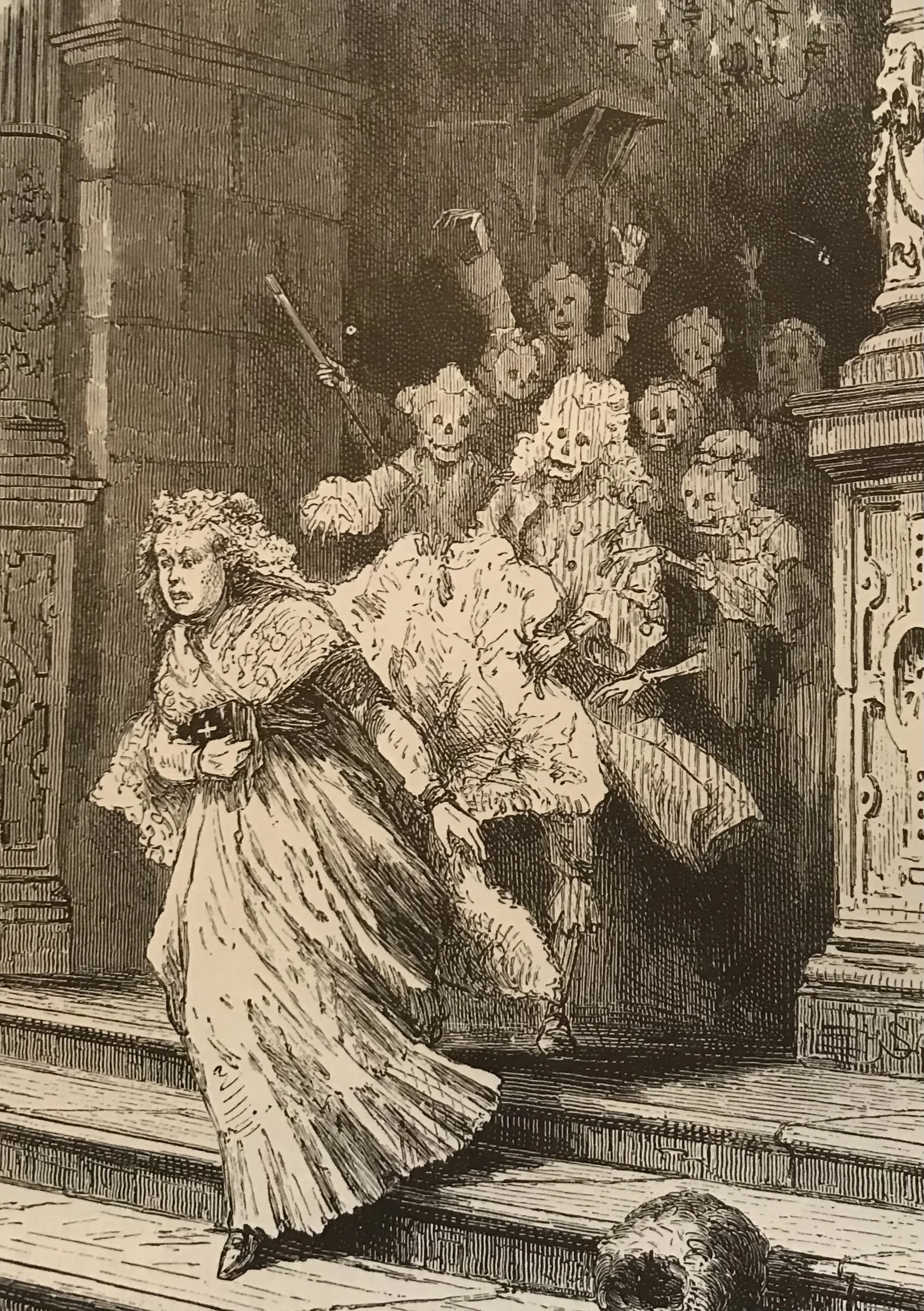
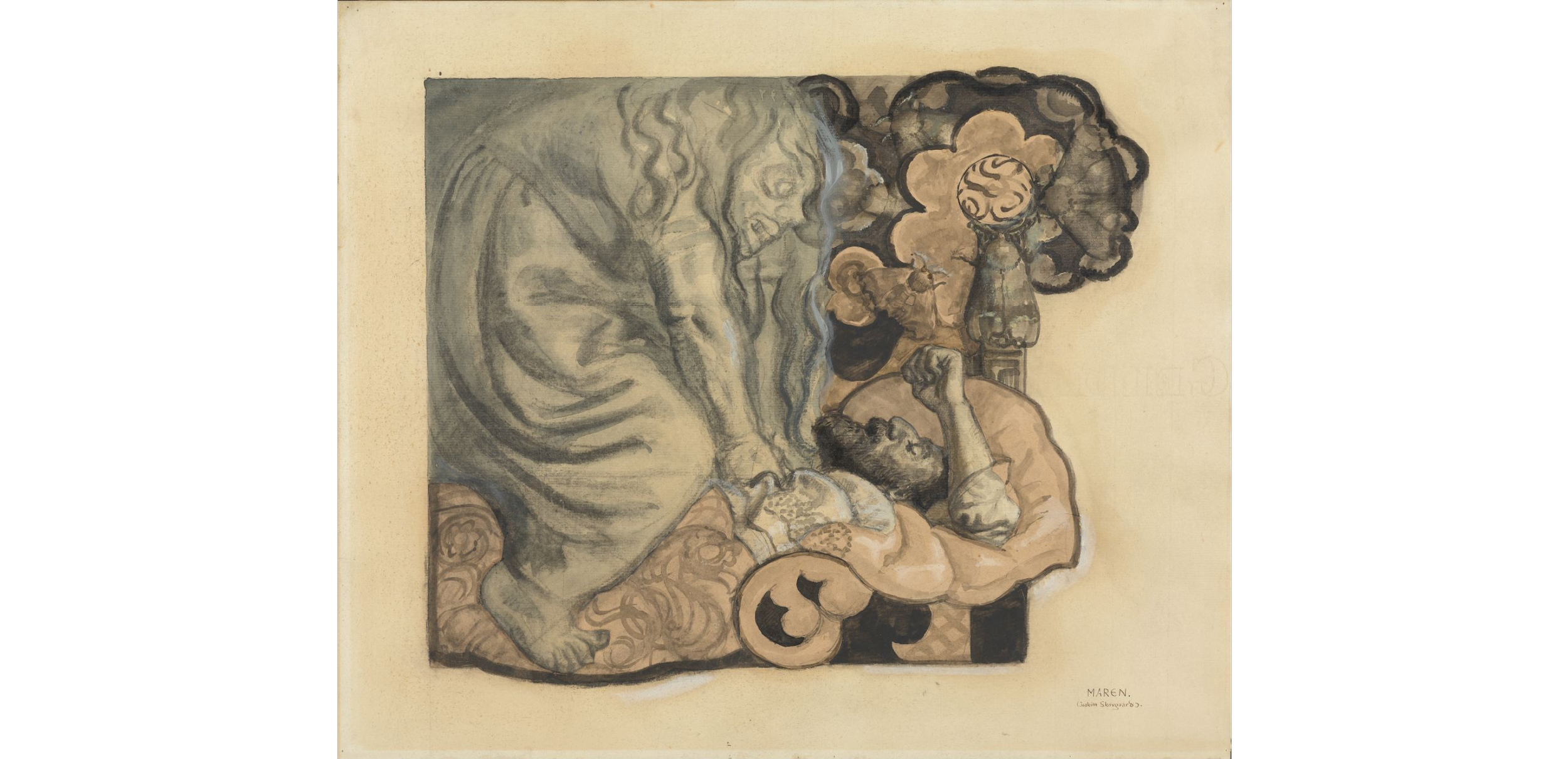
Vincent Stoltenberg Lerche’s nineteenth-century illustration De dödas julotta evokes the legend of the dead attending a Christmas church service. It represents the wider folklore tradition rather than the specific Swedish account retold here.
Photo credit
Vincent Stoltenberg Lerche
In a Norwegian folktale, a bridegroom has promised his closest friend a place at his wedding. There is one complication: his friend is dead.
That sort of difficulty seldom puts an end to a promise in a ghost story. The dead in Nordic folklore might honour an old agreement, attend a church service or demand the return of something that belongs to them. The three tales that follow were preserved in historical collections from Norway, Sweden and Iceland. These are fresh retellings of those printed versions. They belong to different storytelling traditions and calendar settings, though all three are well suited to Halloween night.
The Wedding Guest Who Came from the Grave
Norway — after “Venner i Liv og Død” (“Friends in Life and Death”)
Two young men had been such good friends that they promised to stand beside each other at their weddings, whether they were alive or dead when the day arrived.
One of them died young. When the survivor became engaged to a farmer’s daughter, he remembered the agreement. While inviting guests to his wedding, he went to the churchyard and knocked on his friend’s grave. He called the dead man by name, but received no answer.
He tried a second time and got no answer. On the third attempt he knocked and called louder. At last he heard a rustling from the grave, and his friend appeared.
The dead man explained that he had been a long way off and had not heard the earlier calls. Once reminded of the wedding, he agreed to come, although he needed a little time to make himself presentable. His clothes were hardly suitable for a celebration. The bridegroom was already late, but he waited.
The dead friend accompanied the wedding procession to church and joined the festivities afterward. When the bride’s crown had been removed and the celebration was well under way, he announced that he must leave. The bridegroom offered to walk him back to the churchyard.
On the way, the living man asked what his friend had seen since his death. The answer made him curious enough to ask for a glimpse himself. His companion warned that he might be away for some time, but the bridegroom went with him into the grave.
The dead man placed a piece of churchyard turf on the bridegroom’s head. They travelled through a dark country, past woods and marshes, until a heavy gate opened before them and the light grew stronger.
They came to green hills where cattle stood thin and hungry despite the abundant grass. Farther on, cattle grazed among stones, yet were fat and healthy. His friend explained that the first herd represented people who never had enough, however much they possessed; the second represented those content with little.
Eventually they reached a lake so bright the bridegroom could scarcely look at it. The dead man asked him to sit and wait while he went away on an errand. The bridegroom fell asleep.
When his friend returned, the sleeper was covered with moss and tangled in brambles. They made their way back to the grave, said goodbye, and the bridegroom went looking for his wedding.
He could find neither the house nor his bride. Nobody knew his family. The priest searched the parish registers and found the marriage, but it had taken place four hundred years earlier.
An enormous oak had grown in the priest’s yard. The bridegroom climbed it to look around, but his body was now that of a very old man. On the way down he lost his footing, fell and broke his neck.
The Woman Who Attended the Wrong Christmas Service
Sweden — after “Yuletide Specters”
Two neighbouring women in the Swedish countryside agreed to ride together to Christmas mass. They had no watches, so whichever woke first would call for the other.
Near midnight, one of the women believed she heard her neighbour calling through the window. She hurried into her clothes and left without breakfast, taking a piece of bread to eat on the way. The bread had been baked in the shape of a cross.
She rode hard but never caught up with her companion. At a bridge over a stream flowing toward Lake Vidöstern, she encountered two troll-women washing. One of them threatened to attack her, but the other said that the cross-shaped bread she carried protected her.
The woman continued to the church at Hånger. It was lit for worship, and the congregation appeared to be assembled already. She tied her horse outside, entered and took her customary seat. Only then did she properly look at the people around her. None of the worshippers had heads, and neither did the priest standing at the altar.
A voice spoke near her. It told her that because the speaker had once stood as her godfather at her baptism, she would be spared. But she had to leave at once.
She fled through the church and out into the churchyard, where the dead crowded around her. They seized the broad white woollen mantle she wore. She pulled free by abandoning it and ran to the poorhouse, where she woke the occupants and remained until the proper early service.
When daylight came, the people of Hånger discovered what had become of her mantle. There was a small piece of its cloth on every grave in the churchyard.
This was a telling of the Swedish tradition often called de dödas julotta, the Christmas service of the dead. The historical version places the apparition during the Christmas season, when arriving at the wrong hour could mean joining a congregation that belonged in the grave.
The Girl Who Stole a Ghost’s Cap
Iceland — after “White Cap”
A boy and a girl lived near a churchyard. The boy enjoyed frightening her and had played so many tricks that she stopped taking any strange sight or sound seriously. Whatever happened, she assumed he was responsible.
One washing day, her mother sent her to gather linen that had been laid out to dry in the churchyard. The girl was nearly finished filling her basket when she noticed a figure dressed entirely in white, sitting on a tomb.
She took it for the boy in another disguise. Instead of running away, she approached the figure and snatched the white cap from its head. She then finished collecting the linen and went home.
The boy was waiting there. If he had been the figure in the churchyard, she would have seen him pass her on the way home.
When the linen was sorted, the family found the cap. It was old and mouldy, with earth packed into it.
The following morning, the figure was still sitting on the same tomb, now bareheaded. Nobody dared approach it. The villagers sought advice, and an older man told them that the girl must return the cap in front of witnesses. Everyone present had to remain completely silent.
A group gathered in the churchyard. The girl stepped forward, placed the cap back on the ghost’s head and then made one mistake. She asked whether it was satisfied.
The ghost struck her. She fell dead, and the figure sank into the grave and disappeared.
About the stories
These retellings follow three historical English-language editions: George Webbe Dasent’s 1874 translation of Peter Christen Asbjørnsen’s Norwegian “Friends in Life and Death”; Frederick H. Martens’s version of “Yuletide Specters” in Clara Stroebe’s The Swedish Fairy Book (1921); and “White Cap” in the 1864 Icelandic Legends associated with Jón Árnason, translated and adapted by George E. J. Powell and Eiríkur Magnússon. The last edition’s translators acknowledged altering some material, so its English wording should not be mistaken for a literal record of an individual Icelandic storyteller.




In a Norwegian folktale, a bridegroom has promised his closest friend a place at his wedding. There is one complication: his friend is dead.