
Why Sweden’s Cemeteries Glow with Candles on All Saints’ Day
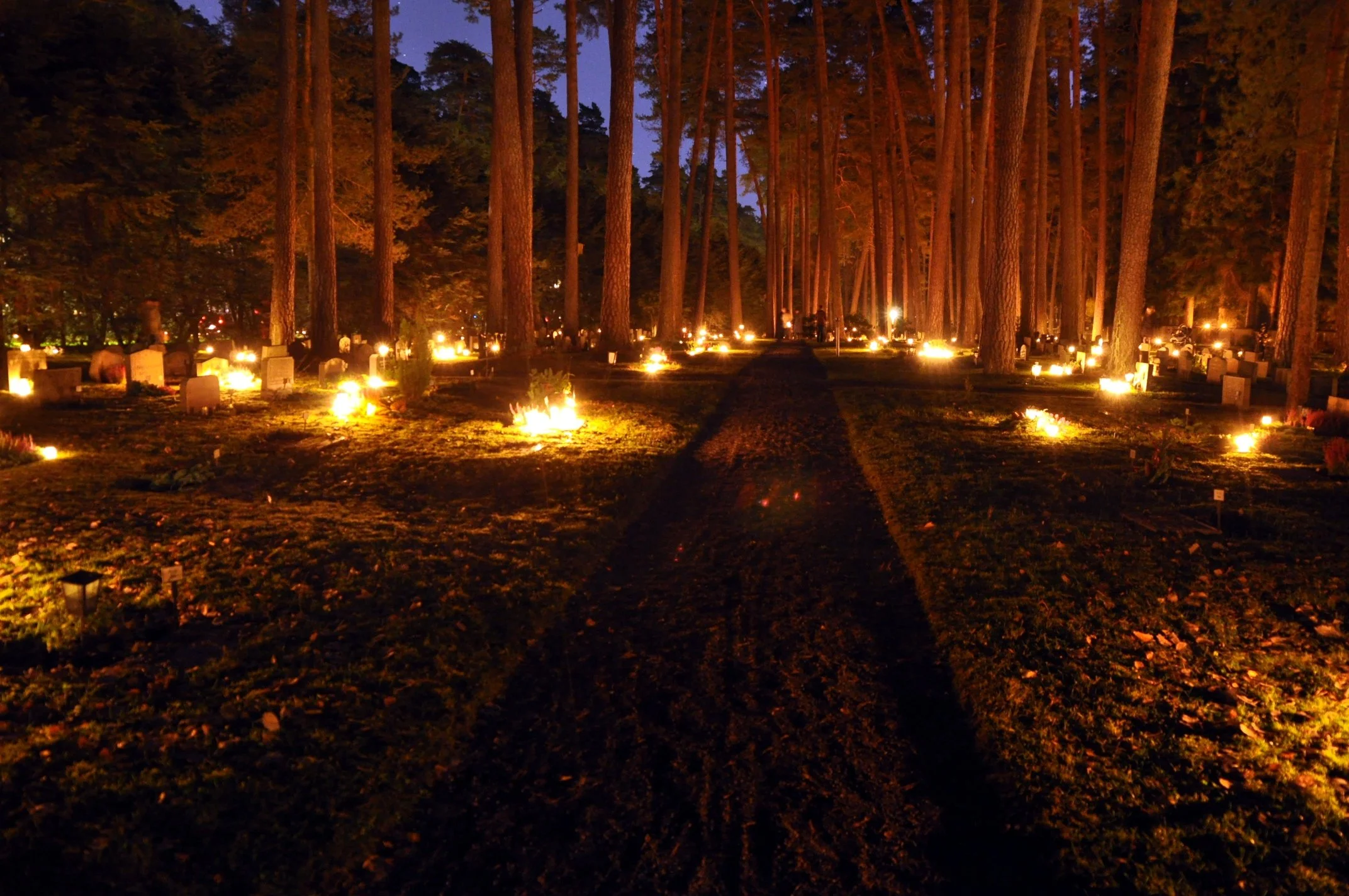
Grave candles illuminate Stockholm’s Skogskyrkogården on All Saints’ Day, November 6, 2010.
Photo credit: Holger Motzkau
In the late nineteenth century, when candles began appearing on graves in some Swedish towns, they were more likely to be lit at Christmas than in November. Some of the recorded examples were at children’s graves. Today, grave candles are a familiar sight during All Saints’ weekend, when cemeteries across Sweden fill with small lights — a change took place largely in the twentieth century.
At Stockholm’s Skogskyrkogården, a photograph taken on November 6, 2010, shows the candles beneath the trees, scattered among graves and along the cemetery grounds. It is an image of allhelgonahelgen, Sweden’s All Saints’ weekend. People visit graves, leave flowers and light candles in remembrance of those who have died. The occasion has roots in medieval Christianity, although the illuminated cemeteries now associated with it are a much more recent development.
The cultural-history museum Nordiska museet traces Swedish grave candles to the late 1800s, principally around Christmas. Candle lighting at All Saints’ time appeared in the early twentieth century; by the 1930s, candles were being marketed for that purpose. The practice spread widely after the Second World War, with the Church of Sweden’s Skara diocese describing further growth into the 1970s. By then, the November lights were becoming part of the way many Swedish families marked the season.
Exactly how the practice made that transition is difficult to establish. Grave visits and candle lighting in early November were already familiar in Catholic parts of Europe. Swedish ethnologist Mats Rehnberg also suggested that the war graves of Normandy may have influenced Sweden’s postwar adoption of the custom. The Skara diocese records other possibilities, including Italian workers at Gustavsberg and Swedes returning from southern Europe. These are retrospective explanations, and none establishes who first introduced grave candles to Swedish All Saints’ observances.
By the time grave candles spread after the war, Sweden’s All Saints’ holiday had already undergone several changes. All Saints’ Day was observed in medieval Catholic Sweden, and the Reformation altered the country’s religious calendar. November 1 lost its status as a public holiday in 1772. Sweden established the present movable All Saints’ public holiday in 1953, assigning it to the Saturday that falls between October 31 and November 6. That older church calendar explains the occasion's date, but it does not establish an ancient origin for the modern grave candles.
In the Church of Sweden, that Saturday is Alla helgons dag, a day associated with the saints and the Christian community across generations. The following Sunday is Alla själars dag, All Souls’ Day, when particular attention is given to those who have died. Cemetery visits are not restricted to Sunday. The candles are lit throughout the weekend, and the people carrying them may attend church services, visit graves with family or come on their own. For some, the visit accompanies a church service. Others come to mark a death privately, without belonging to a congregation.
In some parishes, the names of people who have died are read aloud during memorial services. At S Staffan, the congregation plans a Saturday service with candles for those who died during the year; in Höganäs, Sunday’s remembrance service will feature Fauré’s Requiem. The schedules vary, while families can visit graves throughout the weekend.
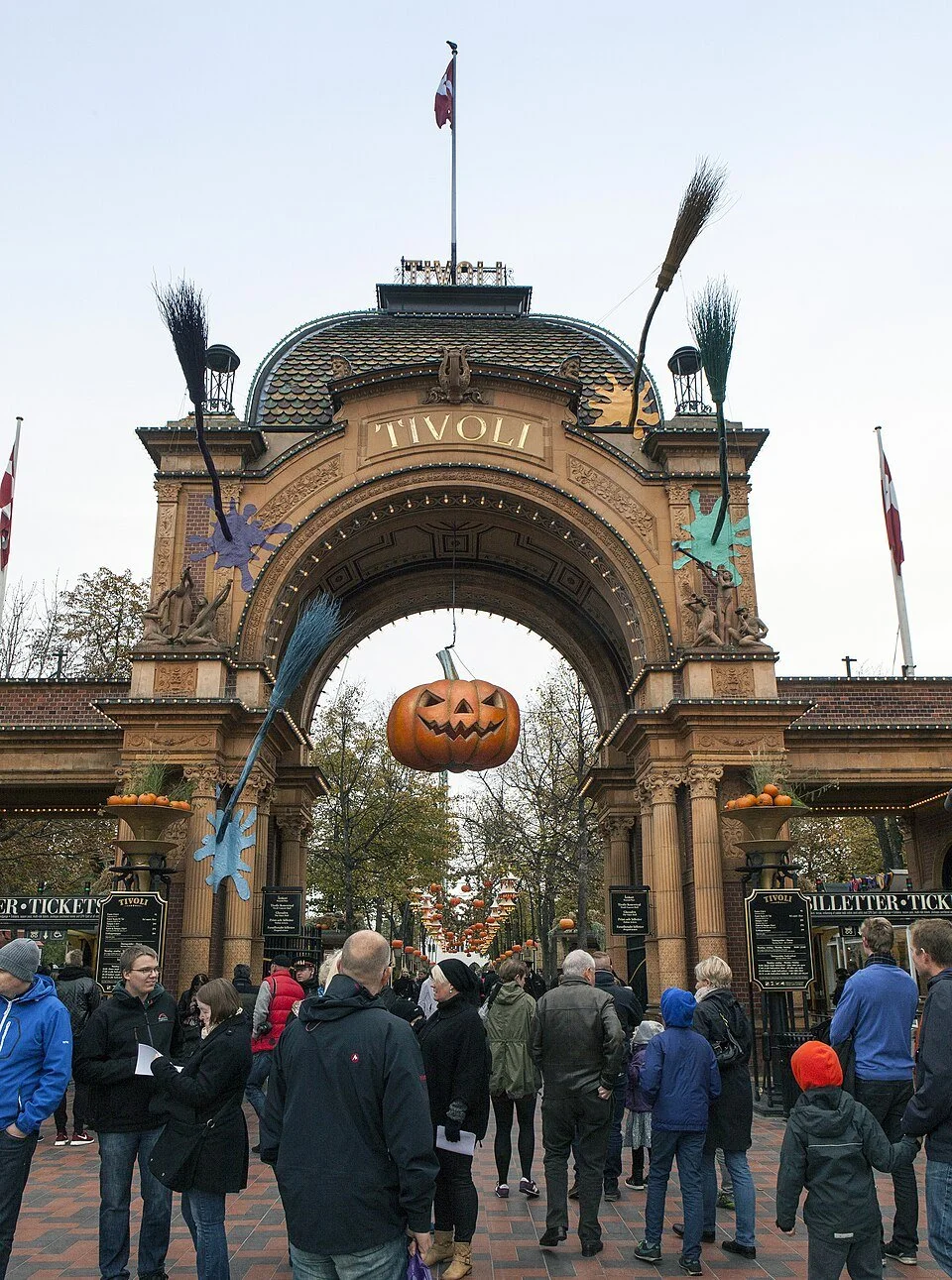
This year, Alla helgons dag falls on Saturday, October 31, the same day as Halloween. The overlap can make the Swedish cemetery lights seem like part of the modern Halloween season, particularly to visitors encountering them for the first time. Nordiska museet records earlier Halloween parties involving American visitors at Swedish universities in the 1950s. American-style celebrations became more visible in Sweden from the late 1980s and expanded especially during the 1990s, decades after grave candles had become established at All Saints’ time.
At Skogskyrkogården, the candles in the 2010 photograph were lit on November 6. Halloween had fallen on October 31, almost a week earlier. The cemetery was illuminated for Sweden’s All Saints’ Day.


In the late nineteenth century, when candles began appearing on graves in some Swedish towns, they were more likely to be lit at Christmas than in November. Some of the recorded examples were at children’s graves.