
How New Iceland Governed Itself
The Governmental Regulations of 1878

A Dominion Department of the Interior map from 1875 shows Manitoba and the surrounding North-West Territory shortly before the establishment of New Iceland on Lake Winnipeg.
Source: Dominion Lands Branch, Department of the Interior / William C. Wonders Map Collection, University of Alberta Libraries. Public domain.
By the time Lord Dufferin left Gimli in September 1877, New Iceland had already spent months governing many of its local affairs under rules its residents had adopted themselves.
New Iceland lay within Canadian territory, and its residents remained subject to Canadian authority. Yet the District of Keewatin offered no statutory route to the kind of elected municipal government the settlers wanted. Roads had to be maintained, public money accounted for and assistance organized for people who could not support themselves, while communities extending along the shore of Lake Winnipeg needed a way to make decisions together.
The settlers began constructing that machinery themselves.
Their work culminated in January 1878 with Stjórnarlög Nýja Íslands, translated by Professor Skuli Johnson as the Governmental Regulations of New Iceland. The document established elected district committees and a regional council, set voting rules and assigned responsibility for roads, public health, local funds, record-keeping and relief.
Later accounts sometimes called New Iceland a republic and treated these regulations as the constitution of an independent political community. The contemporary record supports a different description: an unusually extensive system of local self-government created by settlers living within the Canadian political order, before Canadian law had provided their municipalities with formal standing.
New Iceland Had No Elected Municipal Framework
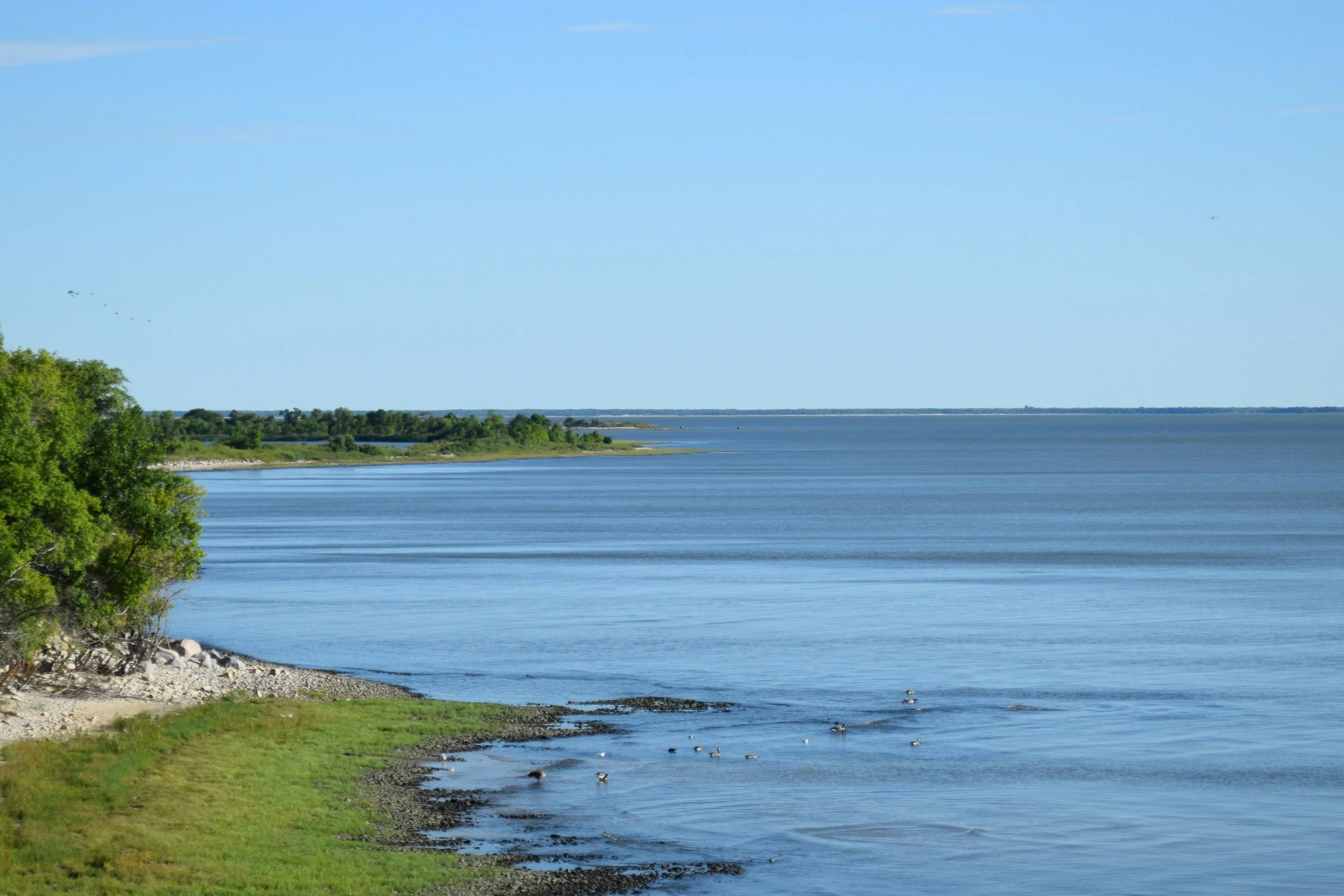
When the first Icelandic settlers reached Lake Winnipeg in October 1875, their reserve lay beyond Manitoba's northern boundary in the North-West Territories.
John Taylor, the Dominion government's agent among the Icelanders, helped establish an elected five-member village committee in January 1876. Chaired by Ólafur Ólafsson of Espihóll, it dealt with practical matters including the distribution of government supplies and the recording of homestead claims.
It did not last. As settlers moved away from Gimli to claim land elsewhere in New Iceland or left temporarily for paid work, the committee dissolved that spring.
The territorial setting then changed. Parliament had passed legislation creating the District of Keewatin, and the new arrangement came into force on October 7, 1876. The lieutenant-governor of Manitoba became ex officio governor of Keewatin, assisted by an appointed council. Unlike the wider North-West Territories legislation, the Keewatin system did not provide the same elective and representative machinery.
During the smallpox emergency of 1876–77, Lieutenant-Governor Alexander Morris convened a Keewatin council that also dealt with public-health measures. It did not become an elected municipal government for New Iceland.
The Icelandic settlement was therefore part of a Canadian territory with an appointed administration above it but no established route to the elected local institutions its residents wanted. New Iceland itself was also a Dominion colonization reserve established within a region already inhabited and used by Indigenous peoples; the government created by the Icelandic settlers governed their own settler community within that larger colonial framework.
The Settlers Created a Temporary Government in 1877
John Taylor and Sigtryggur Jónasson renewed the effort to organize local government during the winter of 1876–77.
Their correspondence with Ottawa helps establish what they were trying to do. In February 1877, Jónasson wrote to federal official John Lowe that local organization would encourage people to take responsibility for the settlement and help prepare them for citizenship under the government of their new country. He and Taylor were trying to build municipal institutions within Canada.
Public meetings were held at Gimli and Icelanders' River in January 1877. Each selected a committee to develop a proposed system, and the resulting plans were combined and adopted by majority vote at Gimli on February 5.
The temporary regulations divided New Iceland into four districts, each with an elected five-member committee. The committee chose a chairman, described in Johnson's translation as the District-Governor. District leaders then took part in a Regional Council dealing with matters affecting the settlement as a whole.
The regulations also made the relationship with Canadian authority visible. Among the Regional Governor's duties was carrying matters to the “Superior Government” and communicating that government's ordinances back to the districts.
The temporary rules were presented at district meetings on February 14, 1877, when the first elections under the new arrangement were also to be held.
Dufferin's Visit Came After Local Government Began
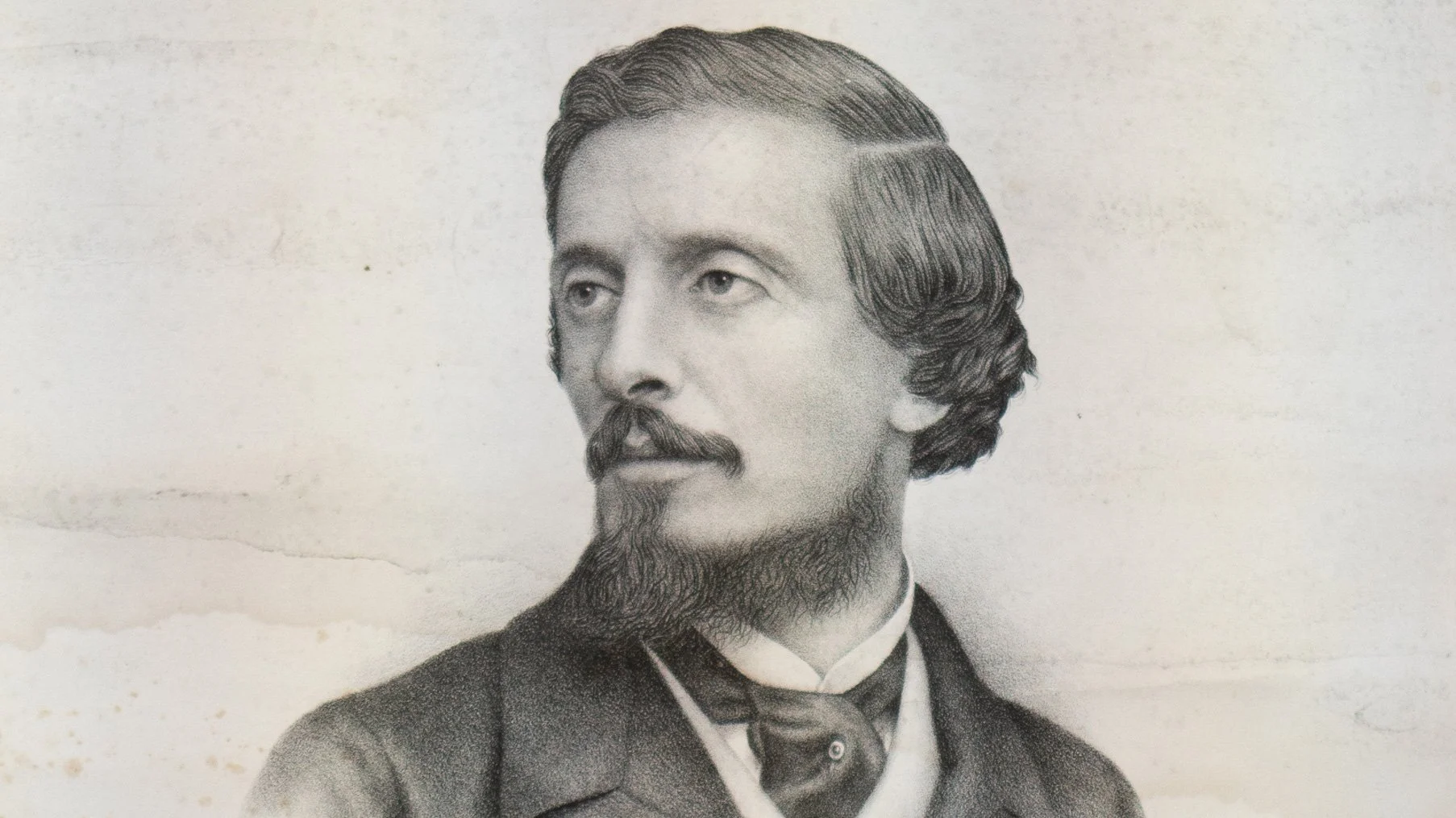
Lord Dufferin arrived at Gimli on September 14, seven months after New Iceland's first elections under the temporary system.
His visit still mattered. Historian Ryan Eyford connects Dufferin's favourable assessment of the settlement with renewed interest among federal officials after the smallpox crisis had cast doubt on New Iceland's future. Senior ministers and officials visited the colony during the months that followed.
The chronology, however, rules out Dufferin as the originator of New Iceland's government. The settlers had already drafted rules, divided the settlement administratively and held elections before he arrived, and there is no evidence that his visit conferred legal authority on the system.
A more direct federal connection developed through Interior Minister David Mills, who visited the Icelandic settlement later in 1877 and subsequently sought information about its voluntary municipal organization.
The 1878 Regulations Took Effect in Print
By late 1877, New Iceland also had Framfari, an Icelandic-language newspaper that could circulate governmental notices and political discussion through a settlement stretched along Lake Winnipeg.
The temporary regulations were published there on December 22, 1877. Further discussion produced a revised document, Stjórnarlög Nýja Íslands, which was approved at Sandvik on January 11, 1878.
The final section said the regulations would take effect when published in print. Framfari published them on January 14.
Under the settlers' own rules, publication brought the regulations into effect; it did not give them the force of Canadian law.
That distinction would become important almost immediately.
Four Districts Formed the Lake Region
The regulations called New Iceland as a whole the Lake Region and divided it into four districts corresponding largely to the Dominion survey.
Víðirnesbyggð, or Willow Point, covered Townships 18 and 19 in Ranges 3 and 4 East. Árnesbyggð, or River Point, covered Townships 20 and 21, while Fljótsbyggð, the River Settlement, covered Townships 22 and 23. Mikleyjarbyggð comprised Big Island, now Hecla Island.
Each district elected a five-member District Committee annually, along with two conciliators and a deputy conciliator. The committee selected its own District-Governor and vice-governor, treasurer and secretary.
Above them stood a five-member Regional Council made up of the four District-Governors and a Regional Governor. The twenty members of the four district committees elected the Regional Governor.
The resemblance to Ontario municipal government was deliberate. Jónasson told John Lowe that he and Taylor had tried to organize the settlement according to Canadian municipal practice, and the relationship between local districts and the larger Lake Region closely resembled the township-and-county model used in Ontario.
Icelandic experience also mattered. Some settlers had firsthand knowledge of the local-government system developing in nineteenth-century Iceland; Ólafur Ólafsson, for example, had served as a communal official there. New Iceland's structure emerged from both political traditions rather than reproducing either one exactly.
District Committees Managed Local Affairs
The regulations gave district committees responsibility for much of the work that made local government tangible.
They supervised local road construction and improvements, watched public-health conditions and could take measures against the spread of infectious disease. They administered assistance for widows, orphans and people unable to support themselves, while district officials maintained records of births, deaths and marriages and handled specified duties involving estates.
The financing was modest. Every person eligible to vote was required to contribute 25 cents annually to the district fund. Males aged 21 and older owed two ten-hour days of road labour each year or could pay two dollars into the road fund instead.
The specificity of those provisions helps explain why the regulations mattered. New Iceland's government was not simply a council that issued statements on behalf of the settlement. It organized road work, collected local money and assigned people responsibility for health, relief and public records.
Its weakness was enforcement. The settlers had created the machinery themselves before Canadian legislation had formally constituted their municipalities.
Voters Retained a Direct Role
The 1878 regulations also gave voters a substantial role between elections.
Skuli Johnson's translation says the franchise extended from age 18 to a person who met one of several qualifications involving residence, real estate, household status or permanent employment in the district, along with the regulations' character requirement. Officeholders had to be at least 21.
Naturalization as a British subject was not listed as a requirement. This allowed Icelandic immigrants who were not yet naturalized to participate in the local political system, even though their status excluded most of them from ordinary territorial political rights.
District committees could propose by-laws, but a proposal required approval from a majority of all eligible voters in the district. Regional proposals similarly went before voters across the four districts, and amendments to the Governmental Regulations themselves required approval by the Regional Council followed by a majority of eligible voters across the Lake Region.
There is one unresolved question in the franchise provision. Johnson translated the Icelandic word maður as “man,” but Eyford notes that the term can also mean a person without specifying gender. Elsewhere, the road-labour provision uses the explicitly male karlmaður. The surviving electoral records have not established that women voted, and no woman is known to have served on a New Iceland committee or council. The wording therefore remains ambiguous; it is not sufficient evidence for a claim of women's suffrage.
Conciliation Handled Private Disputes
Each district also elected conciliators whose responsibility was to try to settle private disputes.
If conciliation failed, either party could have the case placed before a five-person arbitration board. Each side selected two members, while the parties chose the fifth; if they could not agree, the Regional Governor or vice-governor filled the position. A majority of the arbitrators decided the issue under the local rules.
This procedure did not amount to an independent judiciary. Federal legislation in 1877 expressly extended the offence jurisdiction of Canadian stipendiary magistrates into Keewatin and allowed Manitoba Queen's Bench judges to try offences there in specified circumstances.
The conciliation system offered New Icelanders a local mechanism for handling private disagreements. Canadian criminal jurisdiction remained in place above it.
The Regional Council Connected New Iceland to Canadian Authority
The Regional Council handled matters extending beyond a single district. It was responsible for the settlement's main north-south road, inter-district roads and necessary bridges, audited local books and dealt with disagreements between districts.
Proposals affecting the whole Lake Region went back to voters for approval.
The Regional Governor maintained regional records and served as the link with the government outside New Iceland. The regulations instructed him to present matters requiring action by the “Superior Government” and to notify District-Governors of ordinances coming from that authority.
The document therefore contained its own acknowledgment of a governmental structure above New Iceland's elected councils.
Its scope also had limits. The regulations did not establish a general school system or a separate administration of justice. Those gaps became conspicuous when Ottawa considered how to place the settlers' municipalities on a statutory foundation.
Ottawa Tried to Give the Municipalities Legal Status
On February 22, 1878, little more than a month after the Governmental Regulations appeared in Framfari, David Mills introduced Bill No. 23, An Act to establish Township Municipalities in the District of Keewatin, in the House of Commons.
His explanation provides some of the clearest contemporary evidence for New Iceland's legal position.
Mills told Parliament that the Icelanders had voluntarily established municipal institutions similar to those in Ontario. Those municipalities, he said, had “no legal existence.”
His bill was intended to supply one.
It would not simply have ratified the Icelanders' regulations. The legislation retained four municipalities but replaced parts of the regional structure with more conventional municipal machinery. It raised the voting age from 18 to 21 and expressly defined eligible voters as male freeholders or householders. It also provided detailed rules for assessment, taxation, elections and school administration.
The differences are revealing. Ottawa treated New Iceland's system as a municipal problem requiring legislation, while also proposing substantial changes to the structure the settlers had devised.
The bill generated debate in March but did not pass before the parliamentary session ended. Alexander Mackenzie's Liberal government was defeated in the federal election later that year, and the incoming government of John A. Macdonald did not revive the measure.
New Iceland's locally created institutions therefore continued without the federal statute Mills had proposed.
The “Republic of New Iceland” Description Came Later
The language later attached to these events can make the political arrangement appear more sweeping than the contemporary documents support.
Twentieth-century histories sometimes described New Iceland as a republic, and the term survives in heritage retellings. Historian Ryan Eyford's examination of the original Icelandic regulations reaches a different conclusion. He notes that stjórnarskrá, the Icelandic term normally used for a state constitution, does not appear in the document, nor does lýðveldi, meaning republic.
In this context, he argues, Stjórnarlög is better understood as governmental laws or regulations. That reading is consistent with Skuli Johnson's translation, with Jónasson's correspondence about municipal organization and with the substance of the document itself.
Contemporary Canadian records point in the same direction. The regulations acknowledged a superior government, and Mills approached Parliament because the municipalities required Canadian legal standing.
New Iceland's elected councils exercised substantial authority over local affairs. Their powers remained municipal and regional rather than sovereign.
The System Changed During the 1880s
The end of the original system is less tidy than older accounts suggesting twelve uninterrupted years of self-government.
Framfari reported elections in January 1880, and surviving records from the Árnes committee continue through that year. Records for the other districts are incomplete.
Flooding in 1880 and 1881 accompanied a large departure of settlers from New Iceland. Eyford concludes cautiously that the Lake District government may have ceased functioning during this disruption.
The jurisdiction changed at the same time. Manitoba's boundaries expanded in 1881, bringing New Iceland into the province and making Manitoba's municipal law the relevant framework for local government.
The surviving institutional records do not produce a perfectly consistent chronology after that point. The Manitoba Historical Society's municipal database gives August 15, 1881, as the incorporation date of the Rural Municipality of Gimli. Eyford's archival reconstruction instead describes a revival of local government as the County of Gimli in 1883, followed by Manitoba's move away from the county model and the creation of the Rural Municipality of Gimli in 1887. Manitoba's statute index also records an 1887 act concerning the municipality.
Those accounts agree on the larger transition even though they differ over how its stages should be dated. The governmental system devised in 1877 and 1878 did not simply continue unchanged until 1887. During the 1880s, local administration was absorbed into Manitoba's statutory municipal system.
At no point did the Governmental Regulations govern an independent political entity. The uncertainty concerns the institutional transition from one form of local administration to another.
What New Iceland's Government Accomplished
The significance of the Governmental Regulations lies largely in the sequence in which New Iceland's institutions developed.
The settlers found themselves in a Canadian territory whose political structure gave their community no straightforward route to an elected municipality. They responded through public meetings, temporary regulations and elections, then revised the system as experience exposed what was needed. Ontario municipal practice provided an important model, while Icelandic administrative experience travelled with people who had known another form of local government before emigrating.
By January 1878, the result reached into the ordinary workings of the settlement. District committees maintained roads and public records, administered local funds and relief, while voters retained direct authority over many proposed rules. Conciliators offered a way to settle private disputes without creating a separate judicial system, and the Regional Council gave communities spread along Lake Winnipeg a means of dealing with matters that crossed district boundaries.
The federal government's response is part of what makes the experiment important. Within weeks of the regulations taking effect, Canada's minister of the Interior stood in Parliament acknowledging that the Icelanders had already established municipal institutions and asking Parliament to give those institutions a legal foundation.
His bill failed, but the local government did not disappear with it. Its institutions continued for at least several more years before the expansion of Manitoba and the municipal changes of the 1880s brought New Iceland into a more conventional provincial framework.
The Governmental Regulations record a community working out the mechanics of local government before the Canadian state had settled how that government should legally exist. That achievement is substantial enough without turning New Iceland into a country it never was.
Further Reading
Ryan Eyford, White Settler Reserve: New Iceland and the Colonization of the Canadian West. UBC Press, 2016/2017.
UBC Press — White Settler Reserve
Ryan Christopher Eyford, An Experiment in Immigrant Colonization: Canada and the Icelandic Reserve, 1875–1897. PhD dissertation, University of Manitoba, 2010.
University of Manitoba — Eyford dissertation
“Governmental Regulations of New Iceland,” translated by Professor Skuli Johnson, reproduced by the Manitoba Historical Society.
Manitoba Historical Society — translated 1877 and 1878 regulations
House of Commons Debates, February 22, 1878 — Keewatin Municipalities Bill.
Parliament of Canada — February 22, 1878 debates
Department of the Interior, Annual Report for 1876, Library and Archives Canada.
Library and Archives Canada — 1876 annual report
Jonas Thor, Icelanders in North America: The First Settlers. University of Manitoba Press, 2002.


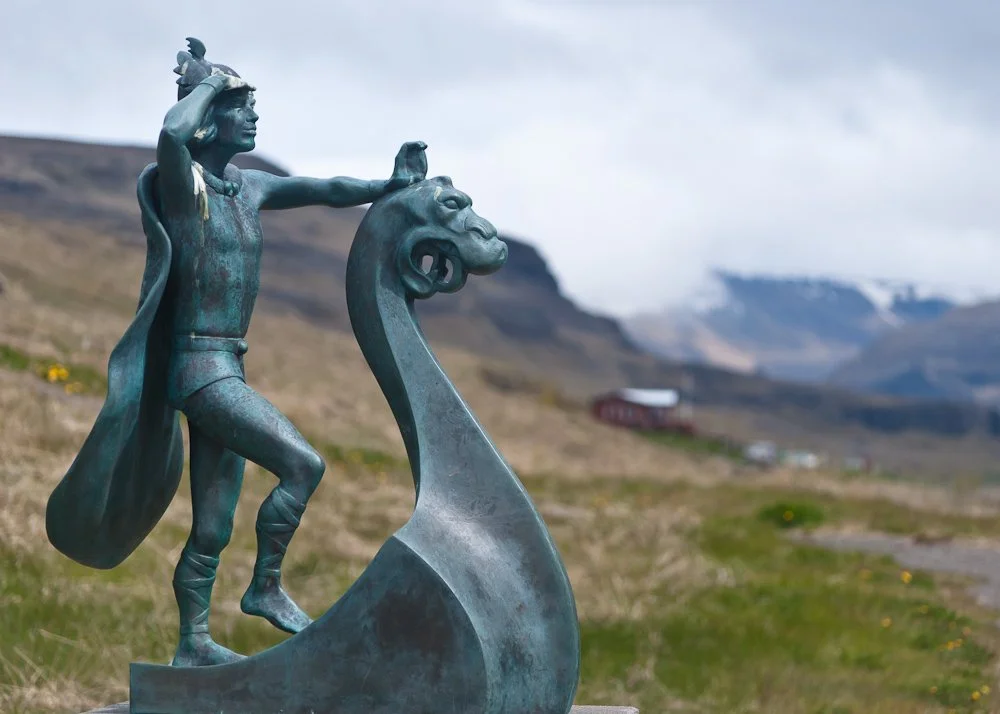

By the time Lord Dufferin left Gimli in September 1877, New Iceland had already spent months governing many of its local affairs under rules its residents had adopted themselves.