
The Catalyst of Starvation
How Volcanoes and Crop Failures Sparked the Nordic Exodus

The Scar of Askja: A Danish expedition sketch capturing the desolate volcanic landscape of the central highlands shortly after the catastrophic 1875 eruption. Drawn by Johannes Frederik Johnstrup (circa 1876)
For eight centuries, the rugged wilderness of Western Canada remained completely closed to the people of Scandinavia. As explored in our previous look at the 800-year silence, global ice ages, geopolitical pivots, and corporate monopolies combined to keep the Canadian Prairies off the global market.
Then came the late 19th century, and the sky fell.
The silence was shattered by a sequence of catastrophic environmental and economic crises that left millions of Scandinavians facing a binary choice: migrate or starve.
The Day the Sky Turned Black: The Askja Eruption of 1875
For the people of Iceland, the breaking point arrived on March 29, 1875. Deep within the central highlands, the active volcano Mount Askja suffered a massive, explosive phreatoplinian eruption. The volcano spewed millions of tonnes of silica-rich rhyolitic debris and toxic ash high into the atmosphere. The resulting plume blotted out the sun entirely, triggering total daytime darkness for 17 straight hours across northern and eastern Iceland.
The immediate fallout was apocalyptic for local agriculture:
Poisoned pastures: Over 5,000 square kilometres of land were blanketed by thick volcanic tephra.
Fluorine contamination: Toxic ash coated the grass and polluted the water tables.
Livestock decimation: The contamination killed roughly 2% of the island's sheep and over 6% of its cattle within a year.
Abandoned homesteads: At least 16 historic farms in the East Fjords were entirely ruined and abandoned.
The Askja eruption was the final straw for a population already reeling from a series of harsh winters, a measles outbreak, and sheep pestilence. The jet stream carried the fine, abrasive ash across the North Sea all the way to mainland Scandinavia. In the decades surrounding the blast, more than 14,000 to 16,000 Icelanders—roughly 20% of the island's entire population—fled their ancestral home.
"The Year of Great Weakness": Mainland Famine and Land Scarcity
While volcanic ash choked Iceland, a slower, equally devastating structural crisis gripped the Scandinavian mainland. In Sweden, Norway, and Denmark, a massive population boom fueled by medical advancements and the introduction of the potato collided with an outdated agrarian system. By 1867, the population of Sweden had more than doubled over the previous century, making viable farmland exceptionally scarce. Rural families found themselves dividing their family plots into tiny, unsustainable parcels.
Between 1867 and 1869, terrible crop failures and widespread famines struck the Nordic mainland, hitting northern regions like Småland and Norrland the hardest. The year 1867 became known in Swedish history as Storsvagåret—"The Year of Great Weakness".
Freezing summers: Snow remained on the ground well into June, delaying sowing until Midsummer.
Starvation diets: Peasants survived on bark bread made of pine and ground lichen, which caused severe illness in children.
Extreme weather: A brief, stunted growing season was followed by an early autumn freeze and a severe drought in 1868.
Economic displacement: Tenant farmers lived exactly one bad harvest away from eviction by wealthy landlords.
Lacking any modern state safety net, families starved while emergency grain shipments were blocked by early winter pack ice. Simultaneously, the introduction of large transatlantic steamships made mass migration safer and more affordable than ever before.
The Horizon of Hope: The Flight and the Building of Gimli
As hunger spread across Northern Europe, the Canadian government was aggressively looking for experienced, cold-hardy farmers to populate its newly acquired western territories. Canadian immigration agents and British recruiters used the Askja disaster and continental famines as recruitment leverage. They pitched Western Canada as a "poor man's paradise" where land was practically free.
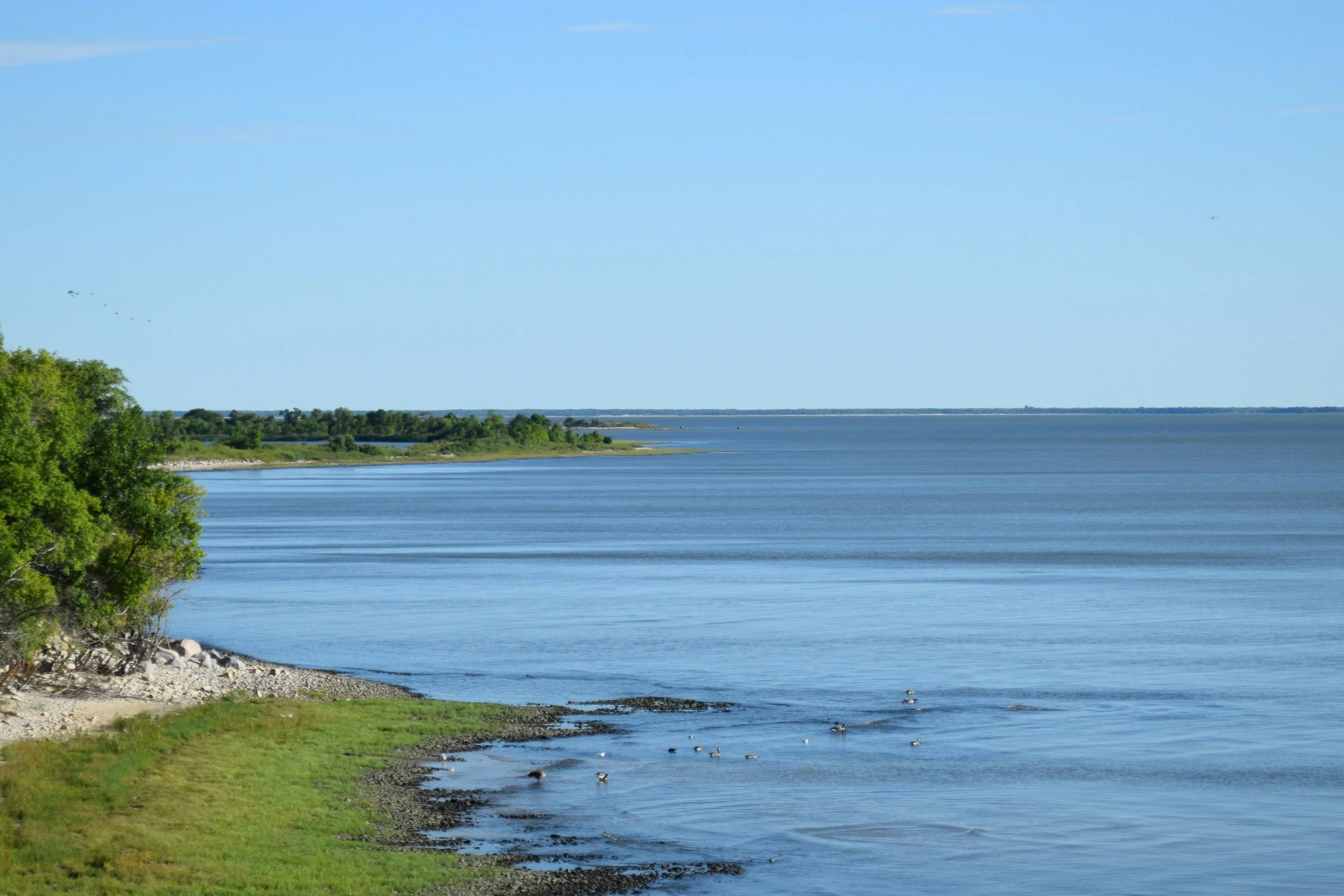
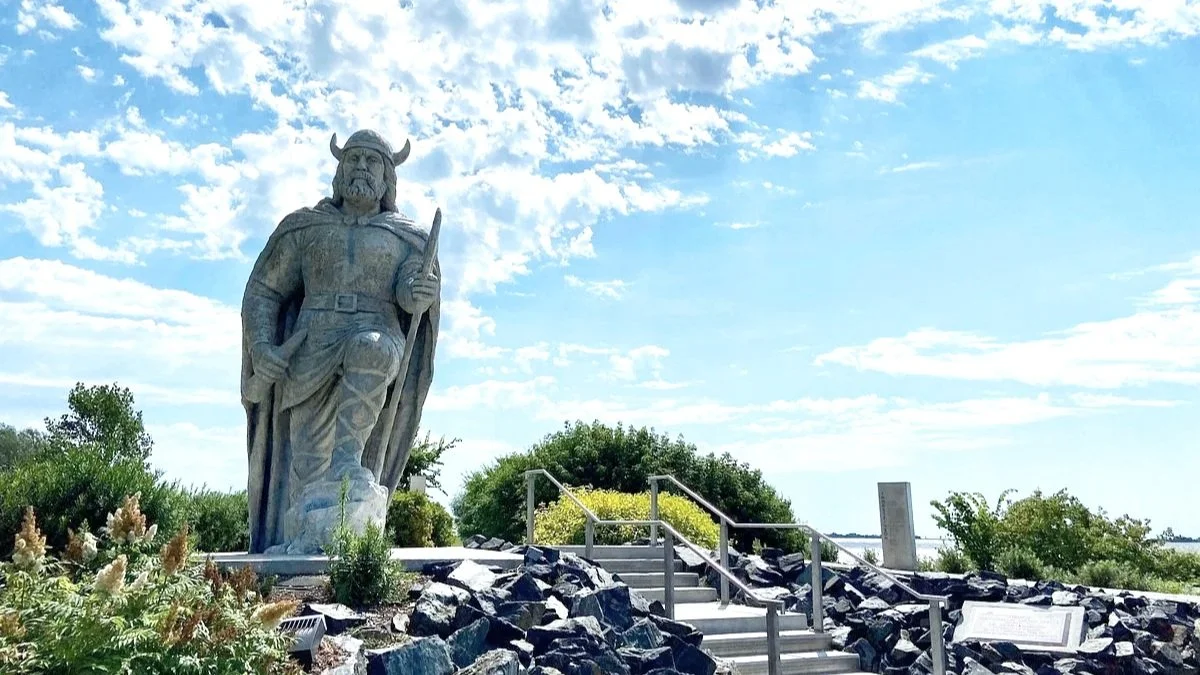
In October 1875, just months after Askja's devastating blast, a pioneering group of 235 Icelandic immigrants traveled north by flatboat along the Red River. They had originally intended to settle further north along the Whitemud River. However, with winter freezing the waterways early, the captain of their transport vessel cut the tow ropes out of fear of getting trapped in the ice. They were forced to drift into Willow Point on the western shore of Lake Winnipeg on October 21, 1875. Stranded on the beach with winter closing in, the new settlers had no choice but to build a town overnight. They named the site Gimli, after the hall of the gods in Norse mythology—a place of paradise surviving the destruction of the old world.
The raw physical struggle of building Gimli began immediately:
The Log Shanties: Using axes for the first time, the settlers cleared the thick forest and hastily built 30 log shanties, each measuring just 12 by 16 feet.
Overcrowded Shelters: Because time was short, two to three families packed into every single cabin to share body heat through the freezing winter.
Erecting Infrastructure: Despite having almost no resources, they managed to complete a small schoolhouse by January 1876 to educate 30 pupils.
Driven by the memory of starvation back home, these refugees cleared the dense Canadian timber and struggled to learn the basics of winter survival on the prairie ocean. They had successfully laid the physical bricks of what would become the largest permanent Scandinavian cultural anchor outside of Europe.Coming Next
Coming Next
Before these desperate families could settle the West, they had to move through a completely different historical pipeline. In our next chapter, we step back slightly to examine Article 4: The Quebec Stopover, uncovering the forgotten story of early Scandinavian transit through eastern ports before the West was fully opened.
Further Reading
Eyford, Ryan.White Settler Reserve: New Iceland and the Colonization of the Canadian West. UBC Press, 2016. (An in-depth academic look at the political and social structures of the Gimli reserve).
Nelson, Marie C.Bitter Bread: The Famine in Norrland 1867–1868. University of Uppsala, 1988. (A definitive demographic and economic study of the Swedish crop failures).
Thor, Jonas.Icelanders in North America: The First Generations. University of Manitoba Press, 2002. (Traces the specific migratory routes of the volcanic refugees from the East Fjords to Winnipeg).

By the time Lord Dufferin left Gimli in September 1877, New Iceland had already spent months governing many of its local affairs under rules its residents had adopted themselves.