
The Quebec Stopover
The Forgotten Story of Early Scandinavian Transit Through Eastern Ports
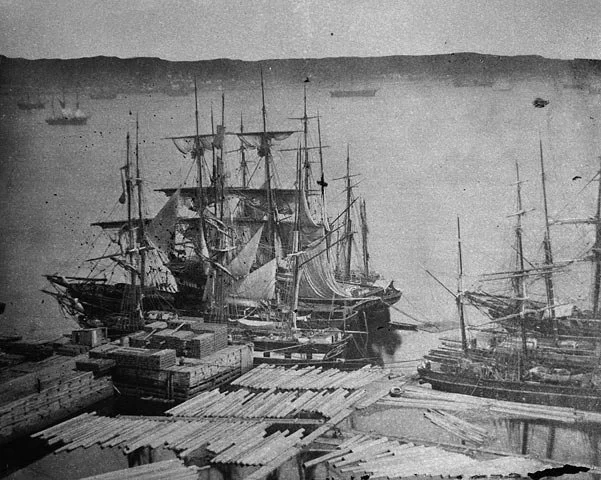
The Quebec City harbour in 1860s.
This article is part of the Nordic Prairie Life series: Era 1 — The Pre-Prairie Prologue & Early Failures (1000–1870). Previous articles in this series include:
When we picture the arrival of Scandinavian immigrants in Canada, our minds almost instinctively leap to the sweeping grasslands of the prairies, the establishing of homesteads under the Dominion Lands Act of 1872, or the fishing boats navigating Lake Winnipeg. We envision families arriving by train directly into a vast, open territory waiting to be broken by the plow. Yet long before the West was fully opened or structurally organized for mass European settlement, an earlier, massive wave of Scandinavian travelers encountered Canada through a radically different landscape: the historic Port of Quebec.
From the 1850s through the late 1860s, Quebec City and the surrounding waters of the St. Lawrence River served as the primary gateway to North America for tens of thousands of Nordic migrants. During much of the 1850s and early 1860s, the overwhelming majority of Norwegian emigrants—estimated at roughly 90 percent or more in several years—first landed at Quebec before continuing into the United States. This early transit remains a largely forgotten chapter of our collective narrative—a complex stopover where Canadian geography served not as a permanent home, but as a transitional corridor.
The Timber and Passenger Trade
The reason behind this unexpected Canadian detour was rooted in transatlantic maritime economics rather than federal immigration policy. Following the repeal of the British Navigation Acts in 1849, international trade routes opened rapidly. Norwegian shipowners recognized a highly lucrative opportunity: they could load their heavy sailing vessels with Canadian timber at the Port of Quebec, sail east to supply the booming industrial cities of the British Isles, and then retrofit those same cargo holds with rudimentary passenger berths for the westbound return journey.
This symbiotic relationship between raw materials and human migration dramatically reduced the cost of transatlantic travel. Because the timber trade itself generated substantial profits, shipping companies could offer exceptionally cheap, affordable fares to families escaping small, unsustainable farms and economic hardships in northern Europe. As a result, Quebec swiftly bypassed traditional ports like New York to become the busiest entryway for Scandinavian crowds seeking a fresh start.
The Grosse Île Gateway
Before these early travelers could set foot on the cobblestone wharves of Quebec City, they had to face the rigorous reality of the Grosse Île quarantine station. Situated in the middle of the St. Lawrence River, this secluded island was established by the colonial government to inspect incoming ships and control the spread of deadly infectious diseases like cholera and smallpox.
For families who had spent up to two grueling months confined to the cramped, dark steerage quarters of a sailing ship, Grosse Île was a site of immense anxiety. While history rightly remembers the island for the unspeakable tragedies endured by Irish famine refugees, thousands of Scandinavian economic refugees also walked its shores. Ships were thoroughly inspected, the healthy were placed under strict observation, and those showing symptoms of ship fever were removed to the island’s vernacular wooden lazarettos and hospitals. While the vast majority survived the inspection, hundreds of early Nordic travelers succumbed to disease and were buried alongside thousands of others in the island's mass graves—a sobering reminder of the true human cost of migration.
A Corridor to the American Midwest
The most striking paradox of the Quebec stopover is how few of these early travelers actually remained in Canada. During the 1850s and 1860s, the vast, fertile expanses of Western Canada were not yet integrated into the Canadian Confederation, and the infrastructure to support large-scale agricultural colonies did not exist. Consequently, Canada functioned primarily as a geographical bridge.
Upon clearing quarantine at Grosse Île and arriving at the docks of Quebec, Scandinavian passengers were promptly shepherded onto inland transportation networks. For a cheap steerage fare of less than nine dollars, families boarded steamships heading up the St. Lawrence River toward Montreal and Toronto. From Ontario, many traveled by rail to ports like Collingwood on Lake Huron, where connecting steamers carried them across the Great Lakes to booming Midwestern hubs like Chicago and Milwaukee. This efficient transport route allowed hundreds of thousands of Norwegians and Swedes to settle the newly opened lands of Wisconsin, Minnesota, and the Dakotas.
The Gaspé Experiment
In the late autumn of 1860, a small, hopeful contingent of Norwegian families attempted to break away from this transit loop. Stepping off a St. Lawrence River steamer, they landed on the rugged, wind-whipped shores of Quebec’s Gaspé Peninsula. They had been persuaded to stay in Canada by Christopher Closter, a visionary Norwegian-born immigration agent appointed by the colonial government. Closter looked upon the dramatic cliffs, sheltered coves, and dense forests of Gaspé and saw a striking, familiar reflection of the Norwegian fjords. He believed that if his compatriots were given free Crown land in a landscape that matched their homeland, they would establish a permanent, prosperous Nordic colony on Canadian soil.
The government aggressively backed Closter’s vision, granting location tickets for land located a few miles inland near Malbay and Coin du Banc. On paper, the geography seemed ideal for a population accustomed to a dual lifestyle of coastal fishing and small-scale forestry. Yet, the reality of the Gaspé wilderness in 1860 was an unforgiving shock to the new arrivals.
The primary undoing of the Gaspé colony was the sheer physical density of the Canadian old-growth forest. Unlike the open valleys or easily clearable coastal patches of Norway, the acreage assigned to the immigrants along the Malbaie River was an impenetrable wall of massive timber and thick underbrush. To families lacking heavy clearing equipment, oxen, or experience with North American hardwoods, simply carving out enough space for a small cabin and a garden patch was a grueling, month-long battle.
Furthermore, the regional economy was completely dominated by the Jersey island cod fisheries, leaving very little room for independent agricultural commerce. The isolated colony was bypassed by major roads, and during the long, brutal winter months, the deep snow effectively severed the settlers from the rest of the province. Instead of finding a prosperous new home, the families faced starvation, deep isolation, and a total lack of localized support.
The Great Abandonment and Its Legacy
By the spring of 1861, disillusionment had hardened into desperation. Letters written by the settlers back to Norway warned others to avoid Canada at all costs, describing the Gaspé plots as an unlivable prison of wood and rock. Realizing that the Canadian government could not provide the immediate infrastructure or agricultural viability found south of the border, the colony quickly collapsed.
One by one, the families packed up their few remaining belongings, abandoned their half-cleared log huts, and boarded ships heading back up the St. Lawrence River. They joined the very transit corridor they had tried to step away from, moving through Montreal and across the Great Lakes to join established Norwegian communities in Wisconsin and Minnesota. By 1862, virtually no trace of the Norwegian experiment remained in Gaspé, and the land was slowly reclaimed by the dense forest.
Reflecting on the Quebec stopover forces us to expand our understanding of how our ancestors interacted with the Canadian landscape. The history of Scandinavian migration is not a simple, linear timeline that begins with a homestead grid on the prairies. Instead, it is an international story of shifting borders, economic patterns, and step-migration. Many of the families who eventually established the iconic Nordic enclaves of Alberta and Saskatchewan in the late nineteenth and early twentieth centuries were actually returning to Canada. They were the children or grandchildren of those very travelers who had viewed the cliffs of Quebec from the deck of a timber ship decades prior.
This brief, tragic prelude proved to both immigrant organizations and Canadian officials that European settlers could not be successfully anchored to the country without open, accessible agricultural land and robust transportation networks. It was an early failure that fundamentally reshaped how the Canadian government eventually approached the successful settlement of the Western Prairies thirty years later.
When the Icelandic emigrants finally left Quebec behind, their journey across the Great Lakes and into the Canadian interior was almost over. At the end of the route lay a place few Europeans had ever heard of: a narrow strip of forested shoreline on the western edge of Lake Winnipeg that would soon become New Iceland.
It was an ambitious experiment—part refugee settlement, part nation-building project. But before the colony could establish itself, it faced a crisis that nearly ended the dream before it began.
Up next in this series: The Icelandic Exodus & “New Iceland” (1872–1885)
The next chapter follows the rapid expansion of Icelandic settlement along Lake Winnipeg and the pressures that emerged as migration accelerated into the 1870s. In The Great Settlement & the Smallpox Winter (1876), around 1,200 Stóra Landnám refugees arrive in the colony at Gimli, Manitoba, overwhelming local capacity and contributing to a severe quarantine crisis. The episode traces how overcrowding, limited infrastructure, and disease control failures reshaped the early trajectory of “New Iceland.”
Further Reading
Lovoll, Odd S. Across the Deep Blue Sea: The Saga of Early Norwegian Immigrants. Minnesota Historical Society Press, 2015.
Bernier, André. Le Vieux-Sillery. Les Cahiers du Patrimoine, 1977.
Archives Canada. Grosse Île Quarantine Station Registry Records (1832–1937). Government of Canada Cultural Heritage Portals.
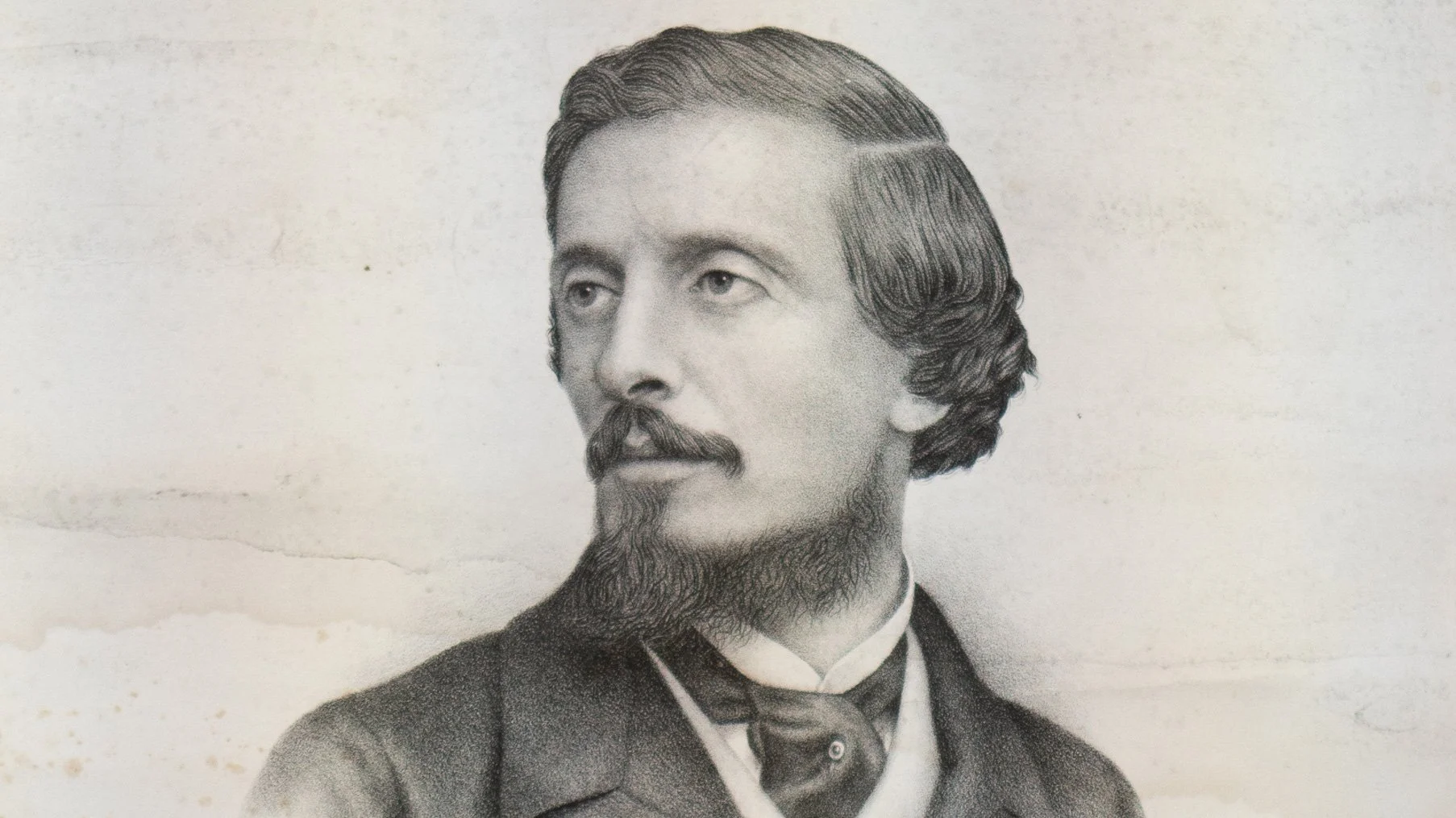
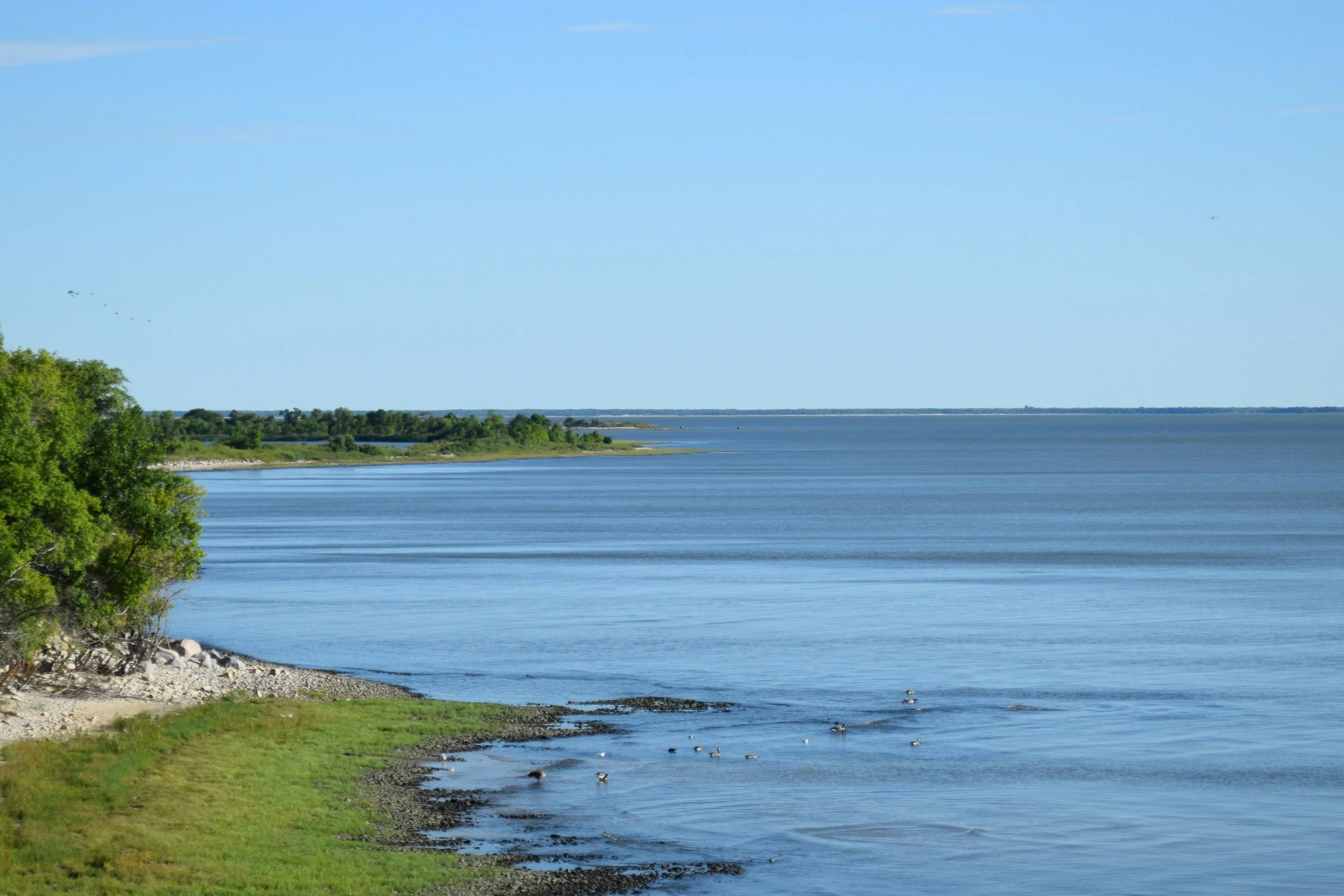



By the time Lord Dufferin left Gimli in September 1877, New Iceland had already spent months governing many of its local affairs under rules its residents had adopted themselves.