
Returning to the Root
Why the Land Back Movement is a Path Forward for All of Us
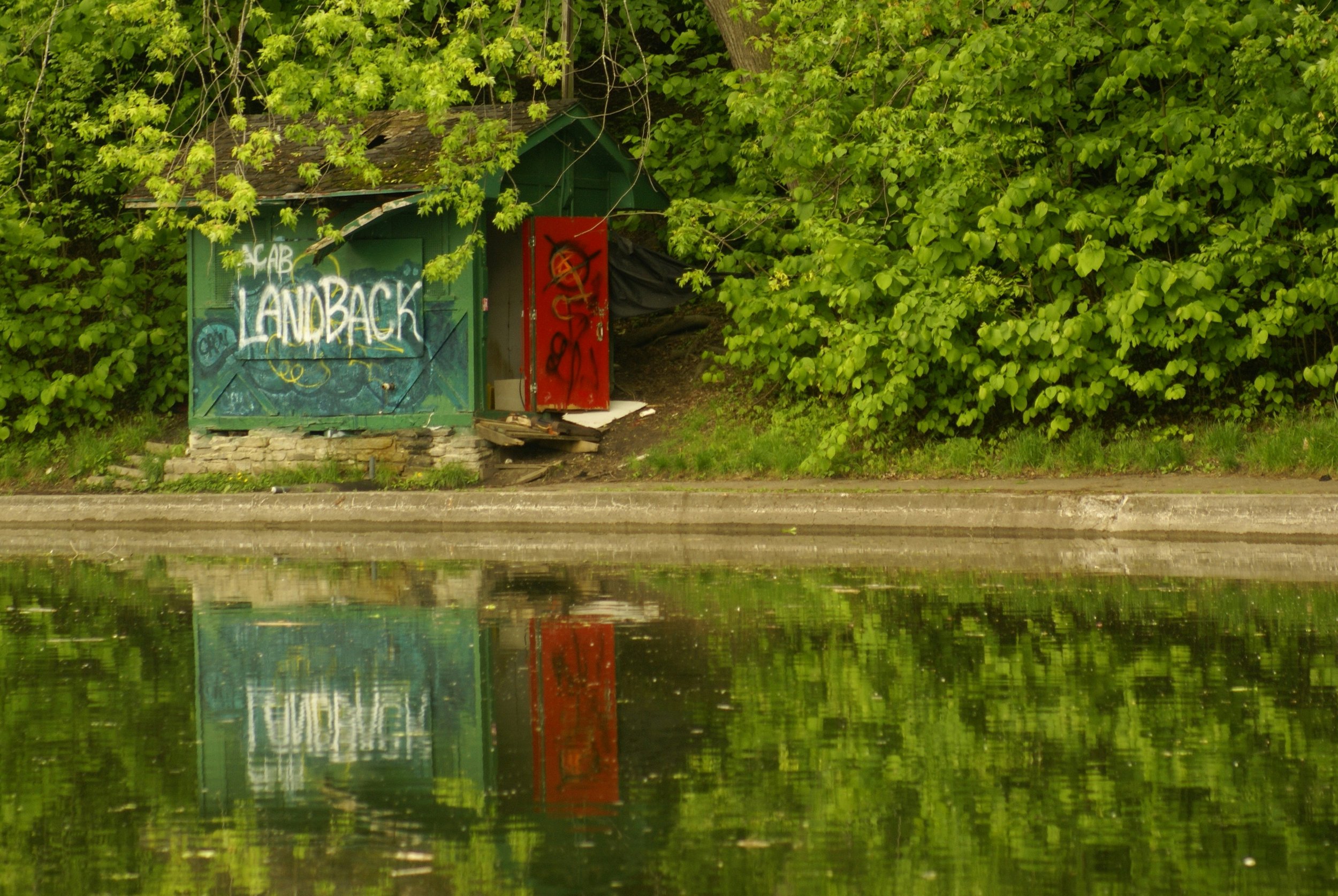
Land Back protest art. Photo by Sandra Mouafo on Unsplash
For generations, the narrative of the Canadian Prairies has been celebrated through a single, foundational lens: the arrival of the hardy settler, the breaking of the ancient sod, and the building of tight-knit agricultural communities across Manitoba, Saskatchewan, and Alberta. As descendants of Scandinavian immigrants, many of our families found their footing in Western Canada through federal initiatives like the Dominion Lands Act of 1872, which partitioned nearly 80 million hectares of land into 160-acre homestead grids to draw mass European migration. This policy offered our ancestors a vital lifeline—a way to escape economic hardship, crop failures, and starvation in northern Europe, and to construct a prosperous future in a new world.
But history is rarely a solitary thread, and the prosperity of one group cannot be separated from the displacement of another. The very grasslands that gave Scandinavian settlers a fresh start were made available through the systematic, state-enforced removal of Indigenous nations. Before the first plow touched the soil, the Canadian government enacted policies designed to clear the prairies: the targeted destruction of bison herds, the forced relocation of communities onto reserves, the implementation of the patriarchal Indian Act, and the restriction of legal rights. In effect, the homesteads our families built were established on the traditional and unceded territories of sovereign nations.
Today, a profound grassroots movement is sweeping across Turtle Island, urging all ifus to re-examine our historical relationship with this landscape. It is called Land Back. While the phrase can initially provoke defensive reactions or uncertainty among settler communities, a examination reveals that Land Back is not a threat to modern homeowners. Instead, it is a legally grounded, ecologically vital pathway toward structural justice, environmental sustainability, and a healthier future for everyone who shares these prairie lands.
Understanding Jurisdiction and Public Space
One of the most persistent misconceptions about the Land Back movement is that it calls for the wholesale eviction of non-Indigenous residents or the seizure of private backyards. Factual policy analysis shows that the movement focuses primarily on systemic jurisdiction, public resources, and the management of Crown lands. In Canada, approximately 89% of the land mass is designated as Crown land, meaning it is held and managed by federal and provincial governments rather than private individuals.
The core objective of Land Back is to transfer the decision-making authority over these public tracts back to the traditional nations who never legally relinquished their inherent jurisdiction. In a June 2021 article published by the David Suzuki Foundation, Jesse Wente, an Anishinaabe arts journalist and the chair of the Canada Council for the Arts, clarified that Land Back is deeply misunderstood when viewed through a lens of fear. He explained that the movement is really about decision-making power and self-determination for Indigenous Peoples, which includes gaining equitable access to territories and resources, and establishing control over how those spaces are managed.
Under current provincial and federal governance systems, Indigenous nations are routinely excluded from the tables where industrial, agricultural, and urban developments are approved. This exclusion has historically allowed external corporations to prioritize short-term extraction over long-term environmental health. Restoring stewardship to traditional caretakers ensures that local ecosystems are managed with institutional accountability, honoring the spirit of the original Treaties which were intended to be agreements of sharing, not of complete surrender.
Confronting Colonialism at the Root
To comprehend why Land Back is necessary for true reconciliation, we must look at how deeply identity, language, and culture are intertwined with geography. For Indigenous communities, the land is not merely a commodity or an economic asset to be subdivided and sold; it is a living entity tied to ancestral history, traditional knowledge, and spiritual practice. The deliberate separation of people from their territories was a tool used by colonial administrations to accelerate forced assimilation.
In a foundational essay written for the 4Rs Youth Movement, Ronald Gamblin, an Anishinaabe-Ininew community coordinator, detailed the profound scope of the campaign. He emphasized that when youth chant for Land Back, or when elders pray for the territory, they are advocating for something much larger than real estate. He noted that Land Back is about Indigenous peoples confronting colonialism at the root and asserting their right to a meaningful relationship with the earth.
Supporting this reclamation is a vital step for non-Indigenous Canadians who want to move past performative acknowledgments and enter into concrete structural reform. Generations of settlers have been taught an incomplete history that sanitizes how land was acquired. Recognizing that historical reality allows us to support grassroots efforts that rebuild Indigenous governance systems, languages, and family structures, all of which rely on having a secure physical connection to traditional territories.
An Ecological Imperative for Global Survival
As the Canadian Prairies face the intensifying realities of the climate crisis—characterized by severe seasonal droughts, depleting groundwater tables, erratic weather, and shifting biodiversity—western scientific circles are increasingly recognizing the value of Indigenous land management. Indigenous communities make up less than 5% of the world's population, yet they successfully protect over 80% of the planet's remaining biodiversity. This is not a coincidence; it is the result of thousands of years of localized, empirical observations and sustainable land practices.
In an October 2021 feature interview with Teen Vogue, Nick Tilsen, an Oglala Lakota activist and the president of the NDN Collective, framed the movement as a matter of survival for all people. He stated plainly that Land Back is a war cry for the liberation of Indigenous people and their land, serving as a critical pathway forward. He later expanded on this concept by highlighting that land theft systematically dismantled Indigenous education, food, and economic systems. Reclaiming that land is a method of restoring power and balance.
When environmental stewardship is returned to Indigenous nations, the focus shifts from aggressive resource depletion to ecological reciprocity. Traditional practices, such as controlled cultural burns, rotational harvesting, and the protection of natural wetlands, create resilient ecosystems. Because air, water, and wildlife do not recognize colonial borders, the environmental restoration achieved through Land Back directly benefits every resident of the prairies, securing clean water and stable ecosystems for future generations.
Restoring Balance and Moving Forward Together
Reflecting on our own ancestral migration helps us understand the profound human desire for a home, safety, and a sense of belonging. The Scandinavian settlers who arrived on the prairies were searching for a place to put down roots and thrive. However, true belonging cannot be fully achieved if it permanently relies on the ongoing dispossession and marginalization of the land's original caretakers.
The Land Back movement invites all of us to envision a mature, honest future for Western Canada. It asks us to transition from a mindset of absolute ownership and resource extraction to one of shared stewardship and mutual respect. By listening to Indigenous leadership, honoring the legal obligations of the Treaties, and advocating for the return of Crown lands, we are not giving up our place on the prairies. Rather, we are finally participating in a system of governance that respects the earth, rights historical wrongs, and ensures a sustainable home for everyone.
Indigenous Leaders and Creators to Follow
Listening to modern Indigenous voices directly is an essential component of moving beyond theory and into active learning. To expand your understanding of land defense, cultural preservation, and environmental policy, consider following these leaders and creators who are sharing their vital work on digital platforms:
Nick Tilsen (@ndncollective) – Oglala Lakota organizer and CEO of the NDN Collective. His organization serves as a major driving force behind the political, legal, and systemic framework of the global Land Back campaign.
Jesse Wente (@jesse.wente) – Anishinaabe broadcaster, storyteller, and author. Based in Canada, his public commentary offers essential insights into narrative sovereignty, structural justice, and indigenous arts representation.
Autumn Peltier (@autumn.peltier) – Anishinaabe advocate and Chief Water Commissioner for the Anishinabek Nation. She uses her global platform to advocate for clean water protection, environmental justice, and treaty-driven stewardship for First Nations.
Sarain Fox (@sarainfox) – Anishinaabe activist, filmmaker, and artist. Her digital platforms seamlessly bridge the gap between anti-colonial education, youth empowerment, and practical steps for day-to-day allyship.
Michelle Chubb (@indigenous_baddie) – Swampy Cree content creator and author originally from Winnipeg. She creates highly accessible digital media breaking down treaty rights, intergenerational healing, and contemporary prairie culture for a diverse audience.
Further Reading
Manuel, Arthur, and Grand Chief Ronald Derrickson. The Reconciliation Manifesto: Recovering the Land, Reclaiming the Power. Lorimer, 2017.
Wente, Jesse. Unreconciled: From Our Past, Together in Our Future. Allen Lane, 2021.
NDN Collective. LANDBACK Manifesto. NDN Collective Organizing and Narrative Framework, 2020.
David Suzuki Foundation. "What is Land Back? Indigenous Land Back movement charts better way forward." David Suzuki Foundation Insights, 2021.
Borrows, John. Freedom and Indigenous Constitutionalism. University of Toronto Press, 2016.


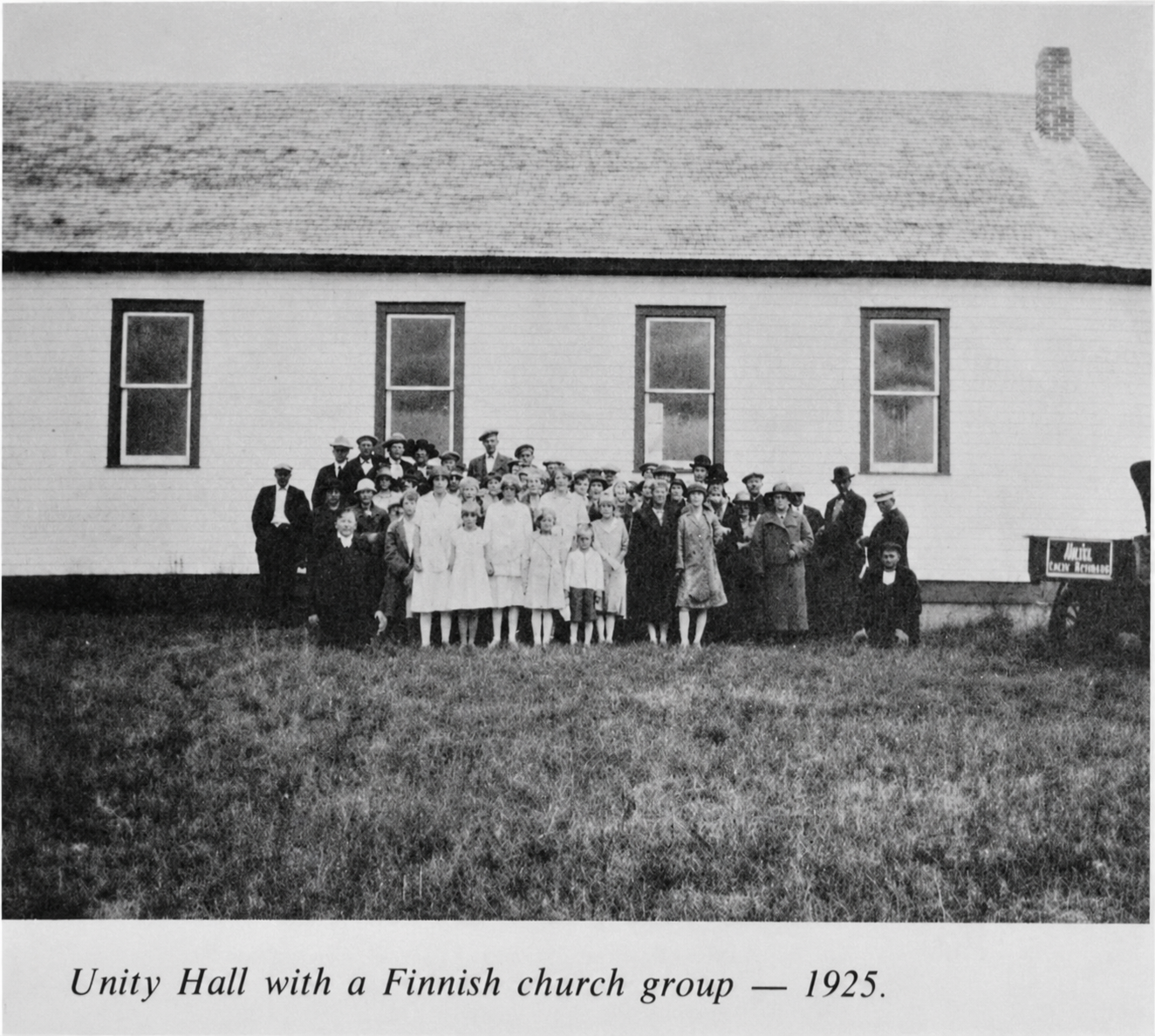

In August 1924, the Finnish-language newspaper Canadan Uutiset carried a report from Strongfield, Saskatchewan, about a dispute over a library.