
How Halloween Took Hold in the Nordic Countries
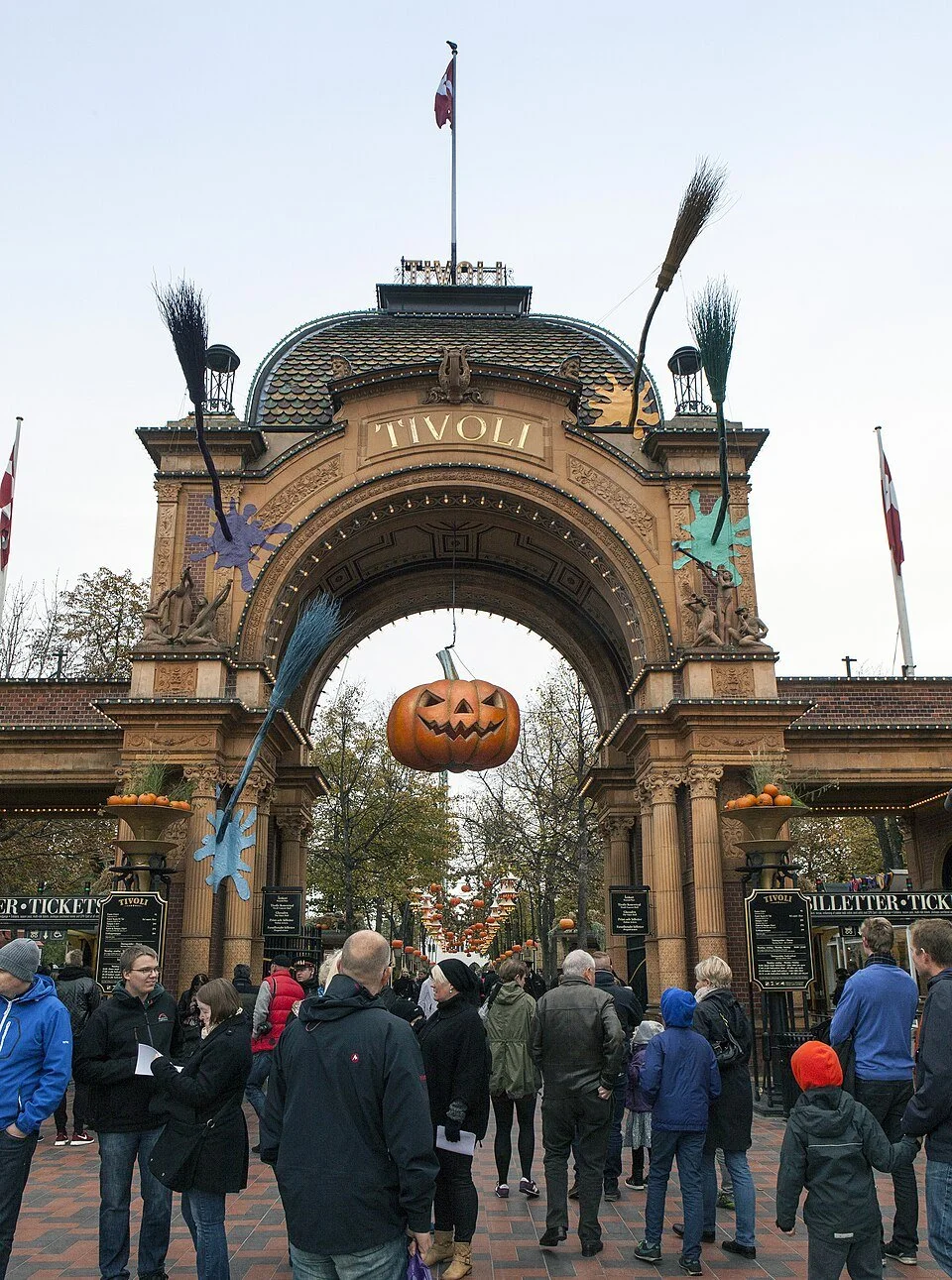
Halloween decorations at Tivoli Gardens in Copenhagen, photographed October 19, 2013. The image shows an earlier Halloween season, not the 2026 programme.
Photo credit
Johan Wessman / News Øresund
How Halloween Took Hold in the Nordic Countries
On November 1, 1992, the Danish newspaper Berlingske Tidende reported on costumed children carving pumpkins at a restaurant in Hellerup, outside Copenhagen. They had celebrated Halloween the evening before. The Royal Danish Library now cites the report in its account of the holiday’s arrival in Denmark, where children already had a well-established reason to dress up: fastelavn, the traditional pre-Lenten celebration.
By 2026, Copenhagen’s Tivoli Gardens is devoting a month-long Halloween season to Halloween, and celebrations take place in Sweden, Norway, Denmark, Finland and Iceland. Canadians will recognize the pumpkins, costumes and children asking for sweets. In the Nordic countries, these relatively recent October activities have found room on calendars that already included children’s masquerades, harvest customs and days set aside to remember the dead. Their spread can be traced through parties, school events, shops and individual neighbourhoods.
From student parties to neighbourhood streets
The earliest documented celebrations often involved people who already knew Halloween from abroad. Nordiska museet traces university parties in Sweden to visiting American students in the early 1950s. In a retrospective account, the Finnish broadcaster Yle found awareness of the holiday among students returning from the United States in the 1970s. In Norway, Halloween remained largely associated with international schools and English-speaking communities before the 1990s. None of these early examples establishes widespread participation; the custom initially belonged to particular social circles.
The change became more visible as the celebration moved beyond those circles. Swedish restaurants began hosting Halloween evenings in the late 1980s, and children and teenagers took it up more widely in the 1990s. Youth parties appeared in Oslo around the same period. American television, films and popular entertainment helped make Halloween imagery familiar, while local organizers supplied the parties, decorated venues and opportunities for children to participate.
Reykjavík offers a particularly well-documented example. University of Iceland folklorist Terry Gunnell traces an important stage to Hamrahlíð Grammar School around 1998. School authorities were trying to replace an annual late-autumn dance in the countryside, an outing that had acquired a reputation for unruly behaviour. A Halloween-themed costume dance at school offered an alternative. The event helped establish a new date on Reykjavík’s social calendar. Gunnell’s account concerns the capital; it does not demonstrate that every Icelandic community adopted Halloween at the same time.
The move from organized parties to house visits took longer and was less even. Folklorist Audun Kjus of Norsk Folkemuseum describes Halloween becoming familiar to Norwegian children around the turn of the millennium. The museum later collected adults' recollections of their first Halloween, revealing how differently generations had encountered it. Swedish children now go bus eller godis; Norwegian children say knask eller knep. The Royal Danish Library also describes neighbourhoods where door-knocking and decorated houses have become customary, though that experience cannot stand for the country as a whole.
Finland shows why the dates of older reports matter. In 2012, Yle described door-to-door trick-or-treating as uncommon. Later local reporting recorded children doing precisely that in places including Jyväskylä and Muurame. In Reykjavík, Gunnell's account similarly follows Halloween from student parties to treat visits at shops and, later, children's routes through neighbourhoods. Neither account establishes national participation rates. Both document the less visible work by which a borrowed activity becomes something families organize for themselves.
Shops and entertainment businesses made pumpkins and costumes more visible, but family participation grew through local arrangements: a school event, an invitation to neighbours or an understanding that certain doors would be open to costumed children. Even today, the experience varies considerably between households, generations and communities.
Nordic children already had reasons to dress up
Halloween entered a region that already had its own costume days. In Denmark, children dress up for fastelavn before Lent and strike decorated barrels containing treats. In Sweden, Easter witches, or påskkärringar, have springtime visiting customs of their own. The Royal Danish Library records the question raised by the newcomer in the 1990s: why introduce another occasion for dressing up when fastelavn was already part of the calendar? The two celebrations have separate histories and dates.
Iceland has an especially close-looking comparison. On Öskudagur, Ash Wednesday, children dress up and sing for sweets, a custom with a history separate from October Halloween. It is associated particularly with places where children visit shops and businesses to perform. When Halloween activities spread in Reykjavík, they joined a calendar that already had an occasion for children to go out in costume. The holidays have distinct origins, but Gunnell documents children adapting Öskudagur’s custom of singing for sweets at shops to Halloween visits in Reykjavík in 2009.
Finland's older seasonal customs raise a different question. Kekri marked the close of the agricultural year, with feasting and, in recorded traditions, disguised visitors seeking hospitality. Its dates and practices varied, and contemporary interest includes revivals. It can be tempting to turn these features into proof of an ancient Finnish Halloween. The evidence supports an older harvest celebration whose history should be told separately. Similarities between costumes or visits are no substitute for a documented line of descent.
When two autumn observances share a date
In 2026, the calendar makes these distinctions especially important. Halloween falls on Saturday, October 31, the same day as Alla helgons dag in Sweden and pyhäinpäivä in Finland. Both are associated with remembrance of the dead. In Norway, churches mark the All Saints’ remembrance weekend on October 31 and November 1, while Denmark observes All Saints’ Day on Sunday, November 1. Church services and cemetery visits will share the weekend with Halloween gatherings and children’s parties.
At Swedish cemeteries, grave candles are a familiar part of All Saints' observance. Nordiska museet dates the widespread growth of the modern candle-lighting custom mainly to the period after the Second World War. Visitors may see cemetery paths and graves illuminated by families remembering people they have lost. Finnish families also light candles at graves. Those practices have their own religious and social significance, regardless of whether nearby streets have pumpkins in their windows.
The English name Halloween comes from All Hallows’ Eve, the evening before All Saints’ Day. That connection in the Christian calendar helps explain why the observances fall together. Modern trick-or-treating, however, developed along a different path from the remembrance practices seen in Nordic cemeteries. The Swedish and Finnish grave-candle traditions should not be presented as surviving Viking versions of Halloween.
Public programmes make Halloween’s present-day visibility clear. Copenhagen’s Tivoli Gardens has scheduled a season from October 2 to November 1, including decorations and entertainment. Stockholm’s Gröna Lund is running themed attractions from October 9 into November. In Oslo, Norsk Folkemuseum has planned family activities and staged scares for October 31 and November 1. These are substantial local events, though they tell us little about how many households elsewhere take part.
The programmes sometimes draw on local settings and stories. At Puotila Manor in Helsinki, Halloweeks runs from October 2 to November 1 with more than a thousand illuminated pumpkins. Reykjavík’s Family and Farm Animal Park is advertising activities on October 24 and 31, including a costume disco and a ghost-and-monster programme. The costumes and pumpkins are internationally recognizable; the locations and accompanying stories give the celebrations their local character.
The 1992 report from Hellerup captures a time when Halloween was still unfamiliar enough to explain in a Danish newspaper. Tivoli’s month-long programme in 2026 shows how visible it has become. Elsewhere across the Nordic countries, its place in family and community life remains varied, while fastelavn, Öskudagur and All Saints’ observances continue on their own dates.


In the medieval Icelandic Ynglinga saga, King Vanlandi has been asleep only a short time when he cries out that a mara is treading on him.