
The Fjords to the Flatlands
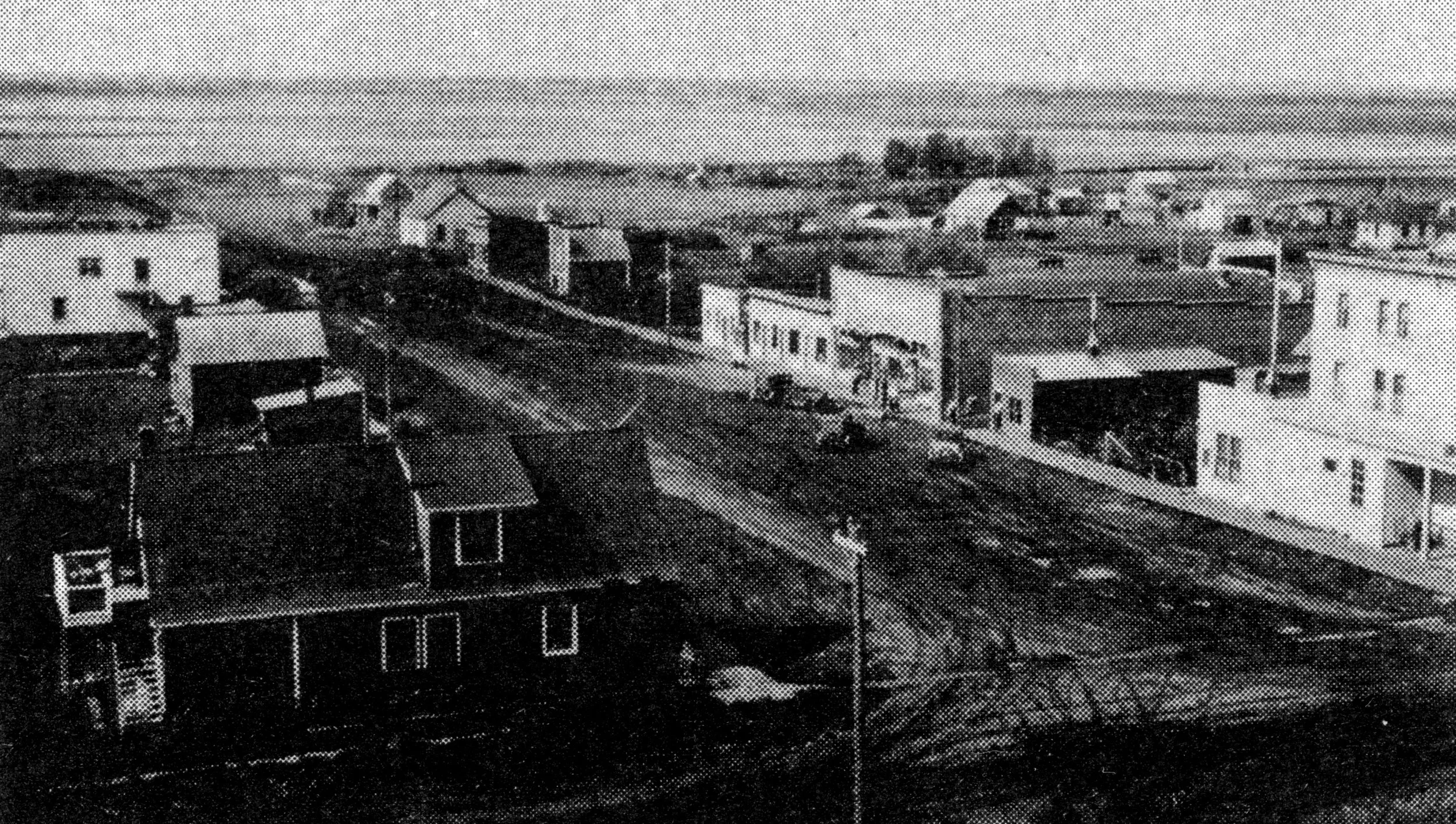
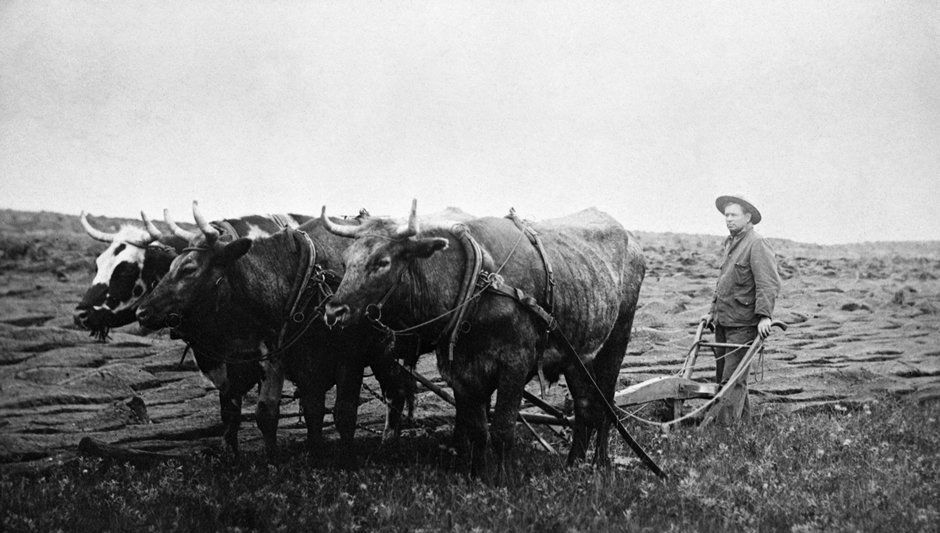
New Norway, Alberta, circa 1915. Norwegian settlement in central Alberta developed through both immigration from Norway and migration north from the American Midwest.
Photo credit
Photographer unknown
In the spring of 1893, Martin Finseth, Nels Jevning, Andrew Malmberg and John Wallerbeck travelled north from Minnesota to inspect Canadian farmland. Their favourable report helped persuade a larger party of twenty Norwegian-American men from Crookston to make the roughly 1,100-mile journey to Alberta in May 1894. At Wetaskiwin the group reconsidered a plan to settle near New Norway, where other Norwegian-American families had arrived the previous year, and sent four scouts toward Beaverhill Lake.
The scouts found prairie openings with grass, wooded hills, soil that interested them and a lake known for fish. Historian Odd S. Lovoll traces the decision to settle there through emigrant records and the community's later history. According to the 1944 account Pioneer Days in Bardo, Alberta, 44 men, women and children came north from the Crookston area in 1894 to establish the community later known as Bardo.
The land seemed to invite a familiar comparison: Norwegian farmers exchanging small cultivated fields for Canadian quarter-sections. Yet the people who selected Bardo had already been working North American land for close to two decades, which changes the story of what they brought with them.
Their journey to Alberta had passed through several agricultural landscapes. The Norwegian home district of Bardu, from which the community took its name, had itself received farmers moving north from Østerdalen, Gudbrandsdalen and Trøndelag from the late eighteenth century. Descendants went to Minnesota's Red River Valley in the 1870s; some moved onward to Alberta in the 1890s.
Norwegian immigrants arrived on the Prairies with different occupations and degrees of farming experience. Some came directly from Norway. Others had already grown crops and kept livestock for years in Minnesota or the Dakotas. Those earlier moves affected their choices of land, crops, buildings and markets in Canada.
The farms left behind
The agricultural scale was one point of difference, although the surviving statistics require care. Norway's geography and farming systems varied sharply between districts, and the total area of a surveyed Canadian homestead cannot be set beside Norwegian cultivated acreage as if the two measured the same land.
In its adjusted figures for Norway's rural districts, the 1907 agricultural census counted 248,494 holdings, after setting aside 10,858 woodland, hayfield and similar entries. Of the adjusted total, 22,699 holdings (9.13 per cent) had no cultivated land, while 142,930 (57.52 per cent) had up to 20 decares of cultivated land—two hectares or less. Another 65,904 (26.52 per cent) had more than 20 and up to 100 decares. A Canadian homestead quarter-section, by comparison, comprised about 65 hectares of surveyed land.
Norwegian holdings could also include woodland, grazing land and outlying hayfields beyond the cultivated area counted in these categories. A quarter-section likewise was not necessarily all ploughed or even all arable. The figures indicate different systems of landholding and farming, but they do not establish that every Norwegian newcomer exchanged a tiny farm for 65 hectares of productive soil.
The crops themselves were less foreign. Norwegian farmers knew oats, barley, potatoes and hay, as well as livestock production. Wheat and rye were also grown, with substantial regional differences. Norway's agricultural censuses recorded horses, cattle, sheep, goats and pigs alongside crops and machinery, while fodder production and summer grazing remained important parts of the rural economy.
Such experience helps explain what the Bardo scouts examined. They paid attention to timber for fuel and construction, water for households and livestock, and grass that might feed animals through winter. The things they noticed were working requirements for a farm.
Bardu before Bardo
Bardu lies inland in northern Norway, far from the coastal fjords that the article's title might suggest. Farmers moved into its valleys from southern and central Norwegian districts beginning in the 1790s, taking up agriculture in a region also used for fishing, forestry and other rural work.
Historian Odd S. Lovoll, drawing on Norwegian emigrant material assembled by archivist Jan Dybdal, counted 476 people leaving Bardu for North America between 1867 and 1914; roughly two-thirds travelled in family groups or accompanied by children. Their backgrounds were varied. Lovoll identifies Bersvend Anderson, later a key figure in Bardo's migration, as a man who made his living by farming and fishing in Norway. Anderson and Nels Jevning also appear as farmers in Norwegian emigration records.
In Bardu and neighbouring Målselv, agricultural settlement expanded from the 1790s into areas used for seasonal, cross-border reindeer grazing by Sámi herders. A Norwegian government review of reindeer-husbandry history traces disputes over grazing and farmland as clearing increased. That record documents particular herding routes and land-use conflicts; it does not establish a single experience for all Sámi communities in inner Troms.
When descendants of some of those farming families moved to Alberta, they entered a different history of land and treaty relationships. A history of the wider Beaver Hills drawing on Indigenous knowledge records longstanding Cree, Blackfoot and Nakota connections to the region, among others. Bardo lay within Treaty 6 territory. First concluded between the Crown and First Nations in 1876, with later adhesions, Treaty 6 remains a source of rights and obligations for Treaty Six First Nations. Dominion surveys and homestead allocations opened parcels to settlers without extinguishing Indigenous presence or the treaty and inherent rights First Nations continue to uphold.
The Sámi reindeer-grazing disputes in northern Norway and the Crown's treaties and land surveys in Canada involved different peoples, laws and political relationships. They cannot be treated as the same history. In both places, descriptions of land newly available to newcomers omitted people who already had relationships with those landscapes. Those connections continued in the Beaver Hills after the homestead parcels were surveyed.
Minnesota before Alberta
The Anderson, Finseth and Jevning families left Norway for the United States in 1876 and settled near Crookston in Minnesota's Red River Valley. There they farmed for almost twenty years before Canada entered the story.
The smaller Crookston reconnaissance in 1893 did not select the later Bardo site. In May 1894 the larger party initially considered New Norway, where Gullik Iverson and other Norwegian-American settlers had selected homesteads the previous year, before scouts reported favourably on land farther northeast near Beaverhill Lake. These were separate journeys.
By the time the Crookston group reached Alberta, its farmers knew North American land surveys, crop cycles and a continental climate. Bardo still presented unfamiliar soils, roads and distances to markets. Their earlier years in Minnesota help explain both their confidence in undertaking the move and the adjustments that followed.
Other Norwegian communities reached the Canadian Prairies by more than one route. Some newcomers came through Minnesota or the Dakotas and others travelled directly from Norway. The wider routes, and the reasons families moved more than once, belong to the next migration-series case studies; the important fact here is that Bardo's settlers did not all arrive with the same experience.
Bardo also began attracting newcomers directly from Bardu. Letters to relatives and prepaid tickets helped sustain those connections. In 1901, Norwegian emigration records summarized by Lovoll recorded approximately 44 people leaving Bardu: nineteen listed Wetaskiwin as their destination, while ten were bound for Minnesota's Red River Valley. Migration into Canada and the American Midwest continued side by side.
A transfer of skills
Livestock experience was among the skills many Norwegian farmers could put to use. They knew the labour of haymaking and winter feeding, and could judge the advantages of grass and sheltered land for animals. For the Bardo scouts, access to fodder and water was part of the appraisal that made the Beaverhill Lake district attractive.
Log construction provides another example, though the surviving evidence has limits. Alberta's historic-resource register describes an early log house associated with the Iverson farmstead near New Norway. Gullik Iverson had arrived from Minnesota in June 1893. The register identifies Norwegian-derived building techniques in the district, including dovetail joins, but explicitly says that the surviving house and summer kitchen cannot be dated exactly. The form of Iverson's first dwelling is also unknown.
Around Bardo, settlers had access to timber in the Beaver Hills. Early buildings included log cabins and structures with sod roofs, although suitable logs sometimes had to be hauled several miles.
That experience could not be reproduced everywhere. Norwegian settlers moving onto more open sections of the southern Prairies faced a different material environment. The usefulness of an inherited building technique depended on having trees within reach.
Fishing belonged to Bersvend Anderson's livelihood in Norway, according to Lovoll. Fish in Beaverhill Lake were one of the resources the 1894 scouts noticed, although their presence alone cannot tell us how much fishing the new Alberta families actually did. For a farmer assessing the district, the lake was part of the wider working landscape.
What had to change
The size of a quarter-section offered room for cultivation, grazing and building, but farmers had to determine which acres would actually produce a crop. Grain production required equipment, dependable transport and varieties that could mature within the local season. Familiarity with oats, barley or wheat did not remove the need to learn what worked in a particular Alberta field.
Lovoll's reconstruction of Bardo's early years describes settlers working with limited equipment while they learned what could be grown reliably. Wheat, oats and barley were familiar crops, but familiarity with a plant did not guarantee familiarity with its behaviour on a particular Alberta quarter-section.
Access was another constraint. The Calgary–Edmonton railway brought settlers to Wetaskiwin, but their farms were still some distance from the tracks. Roads around lakes, streams and wet ground could be slow or difficult, and a crop had little value unless a farmer could get it to a market.
Railway expansion gradually altered that calculation. Towns such as Camrose became agricultural service centres, while new lines connected previously isolated districts to grain markets and supplies.
Not everyone who had joined the Crookston movement remained. Lovoll records that some of the migrants returned to Minnesota after judging the move a mistake. Their decision belongs in the account alongside the families who stayed, because the success remembered by a surviving community was not the experience of every household.
Different routes onto the Prairies
Across Alberta and Saskatchewan, Norwegian communities formed through direct migration and through earlier settlement in the American Midwest. The histories of individual districts differed, as did the agricultural backgrounds of the people arriving there.
Central Alberta's Norwegian communities included Wetaskiwin, New Norway and Bardo, with later concentrations around Camrose. In Saskatchewan, Norwegian settlements appeared around Glen Mary and Birch Hills, Outlook and Hanley, Shellbrook and Parkside, and other districts. These were distinct communities with their own settlement histories.
A settler from Norway might bring the skills of a farm labourer, tenant or owner, while a Norwegian-American farmer arriving from Minnesota could bring years of experience with North American acreage, machinery and markets. Available savings and family help also varied, even within one settlement.
Broad ethnic labels in a census or promotional brochure concealed those differences. They also encourage an inflated image of Scandinavians as naturally equipped for northern farming, when the documented advantages often came from practical experience and community connections.
From Bardu to Bardo
Between 1900 and 1904, the incomplete settler list examined by Lovoll records 113 newcomers to Bardo, 68 of them from Bardu. That was a different arrival pattern from the initial 1894 movement out of the Crookston area.
People travelling directly from northern Norway could join a community where neighbours already knew the land, crop seasons, timber supplies and roads. Family connections could help a newcomer choose a parcel, find shelter and learn which methods worked. The Norwegian skills they carried still mattered, as did this locally accumulated knowledge.
Bardo's records allow several different migrations to be seen within one district. The earliest settler families had links to eighteenth-century movement within Norway and the Red River Valley in the 1870s; their move into Alberta in 1894 later opened a route for people who travelled directly from Bardu.




In the spring of 1893, Martin Finseth, Nels Jevning, Andrew Malmberg and John Wallerbeck travelled north from Minnesota to inspect Canadian farmland.