
Why Every Finnish Farm Had a Sauna
The History of Finnish Saunas in Alberta
Drive through the older farming districts of central Alberta and you may notice small log buildings that seem out of place. They are too small to be barns and too substantial to be sheds. At first glance, they might look like old root cellars. Sometimes they are. But if the farm once belonged to a Finnish family, there is a good chance you are looking at a sauna.
For many Finnish families, the sauna was one of the most practical buildings on the farm. Long before rural homes had electricity, running water, or indoor plumbing, it provided a dependable place to wash, heat water, clean clothing, and recover after long days of physical work. While the sauna is often associated with relaxation today, its place in everyday life began with necessity.
The Sauna in Finland
By the nineteenth century, saunas were common across rural Finland. Most were small wooden buildings heated by a wood-burning stove. Water was carried by hand, heated inside the building, and poured over hot stones to produce steam.
The sauna served purposes that extended well beyond bathing. It was one of the cleanest buildings on many farms, making it suitable for washing clothes, treating illness, and, in some regions, childbirth. Families gathered there regularly, often once a week, following routines that changed little from one generation to the next.
Building and maintaining a sauna required work, but it answered practical needs throughout the year.
Building Saunas in Alberta
When Finnish immigrants settled in Alberta, they brought the tradition with them.
Many farms lacked indoor plumbing for decades, making a separate bathhouse as useful on the prairies as it had been in Finland. A wood-fired stove, nearby water, and timber from the surrounding forest provided everything needed to build and heat a sauna.
Construction methods also transferred easily. Finnish families were accustomed to working with logs, and central Alberta supplied suitable building materials close at hand. A modest sauna could often be completed with timber cut on the farm itself.
The building usually stood a short distance from the house, reducing the risk of fire while leaving enough room to carry water and firewood without difficulty.
Many Finnish men spent the winter working in logging camps, mines, or railway construction, sending wages home to support the family farm. Wherever enough Finns gathered, they often built a sauna, enabling them to bathe, rest sore muscles, and warm up. Contemporary accounts describe Finnish camps where the sauna became a point of curiosity because regular winter bathing was uncommon among many other workers.
Many of these camps were located in the same wooded districts where Finnish families later established farms. You can read more about those communities in my article on Finns in Alberta.
Saturday Evening
On many Finnish farms, the sauna became part of the weekly routine.
Firewood was split earlier in the day, water carried inside, and the stove lit well before anyone planned to bathe. As the room warmed, family members prepared towels, clean clothes, and soap.
People entered one household at a time, washing before the next group came in. Afterwards, they stepped back into the cool evening air before returning to the house.
More Than a Bathhouse
Neighbours sometimes shared a sauna after helping with farm work or community projects. Relatives visiting from another district often expected to be offered one. Visitors were often invited to the sauna before sitting down to a meal, a gesture of hospitality that continued after Finnish families settled in Canada. Conversation continued there much as it did around the kitchen table, although the purpose of the building remained practical first.
Growing up near Red Deer, I never questioned the sauna inside our family home. It seemed as ordinary as the garage or a closet. Only later did I realize that many Albertans had never seen one outside a recreation centre or spa. What I accepted as part of everyday life had travelled across the Atlantic with earlier generations of Finnish immigrants.
The Sauna Today
Many of Alberta's original farm saunas have disappeared as older buildings reached the end of their lives or indoor plumbing changed daily routines. Others remain in regular use, heated with wood just as they were decades ago.
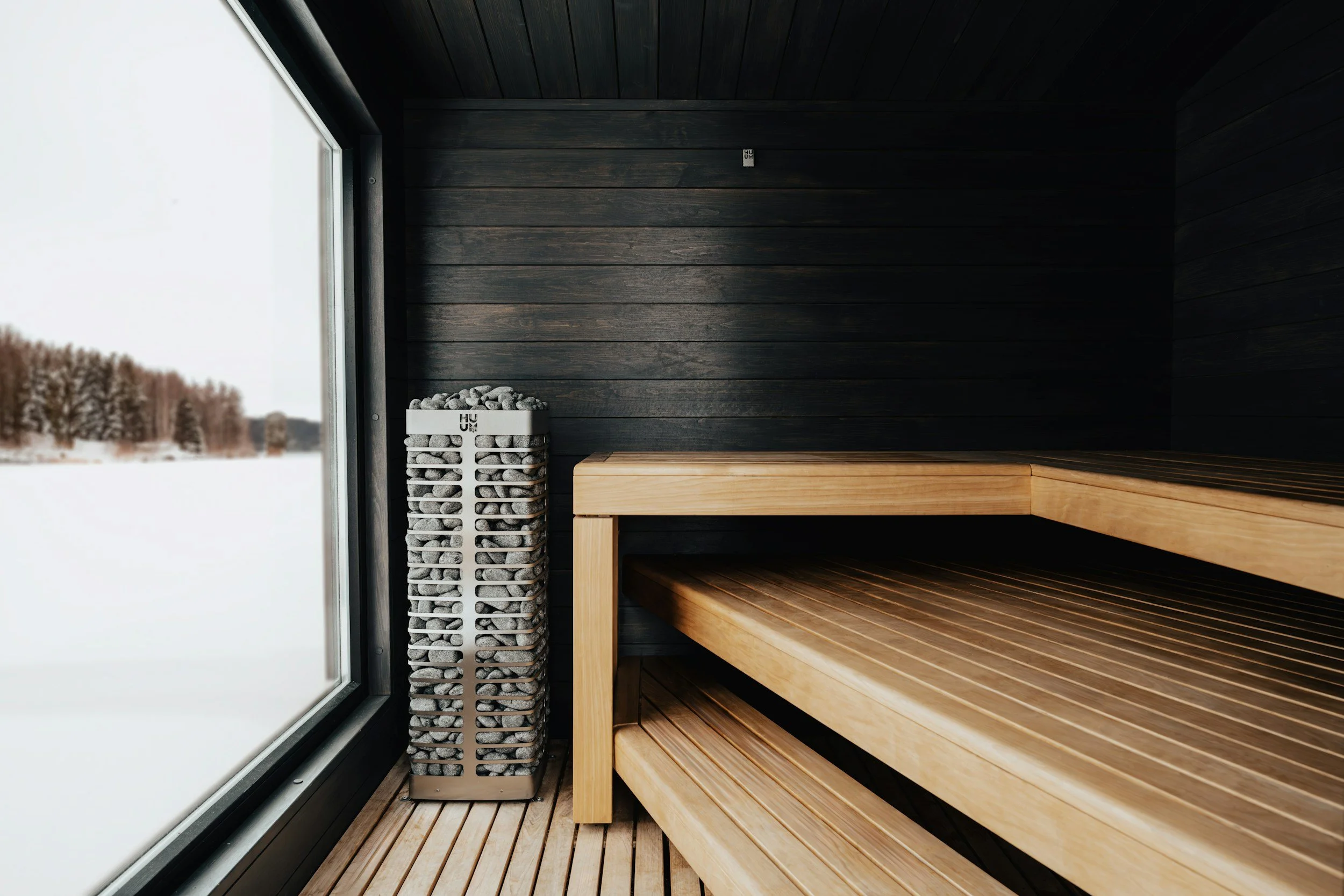
New saunas continue to be built across the province by Finnish families and by people who have come to appreciate the tradition. Some stand beside lakes, others on acreages or in backyards, but their purpose remains much the same. They offer a place to wash, warm up after outdoor work, and continue a practice that has connected Finnish households for generations.
Across central Alberta, the small buildings that once stood beside so many farms tell part of the story of Finnish settlement. It also carried practical ways of living that found a place in another northern landscape.
Further Reading
Beaulieu, Michel S., David K. Ratz, and Ronald N. Harpelle, eds. Hard Work Conquers All: Building the Finnish Community in Canada. UBC Press, 2018.
Viherjuuri, H. J. Sauna: The Finnish Bath. Helsinki: Otava, 1952. Later North American editions were published by Stephen Greene Press.
Hoglund, A. William. Finnish Immigrants in America, 1880–1920. University of Wisconsin Press, 1960.
Kostiainen, Auvo, ed. Finns in the United States: A History of Settlement, Dissent, and Integration. Michigan State University Press, 2014.
UNESCO. Sauna Culture in Finland: Nomination File for the Representative List of the Intangible Cultural Heritage of Humanity. 2020.

The beams are too heavy for one family to lift. The roof cannot be finished before winter comes. Livestock will need shelter before the snow arrives. Waiting until enough money has been saved to hire workers means it might never be finished.