
Wild Food in Greenland
Gathering Beyond Hunting and Fishing
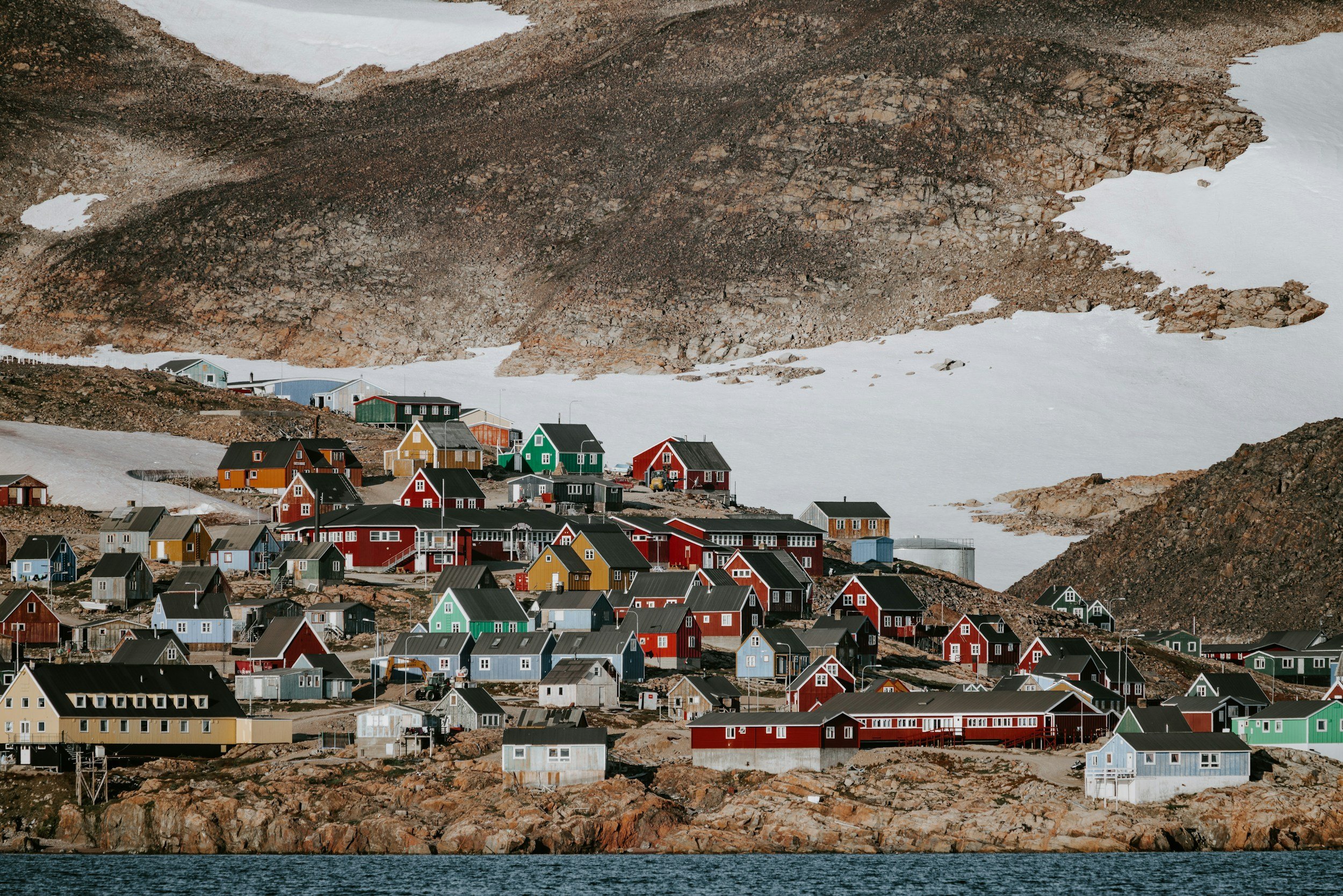
In August 2011, plants appeared on tables in Qassiarsuk and Nanortalik. Some had been dried and stored for personal use. Others had been gathered fresh before researchers arrived to ask residents what grew nearby, what it was called, and how it entered household life.
The first answers had suggested there would be little to record. Several residents said Greenlanders no longer used wild plants, or described gathering as something older generations had done. Yet the ten adults who took part in the southern Greenland study could name plants, distinguish useful parts, and explain how leaves, stems, berries, seeds, roots, fungi, and seaweeds might be prepared or stored. The researchers documented more than fifty taxa and 205 reported uses.
Greenlandic food is more readily described through seal, whale, fish, seabirds, caribou, muskox, and lamb. These foods carried far more of the caloric burden than gathered plants and remained central to the category of kalaalimernit, foods associated with Greenlanders. Even a national dietary survey conducted in 1993–94 concentrated on animal-based foods when measuring “traditional” consumption, although it included crowberries among the foods respondents rated.
The plants placed before the researchers belonged to a different part of the food system. They supplied berries eaten fresh, leaves steeped for tea, stems preserved with sugar or vinegar, and seasonings used with fish or meat. They also entered homes as dried decorations, household materials, and recorded remedies, though a reported medicinal use does not establish either safety or effectiveness. Food, beverages, and herbs or condiments together accounted for nearly half of the uses recorded in the study. The jars and dried bundles did not replace the animals through which Greenlandic diets are usually told. They sat beside them.
Fjords, Heaths, and Shorelines
Qassiarsuk and Nanortalik offered the researchers two points within southern Greenland, not a national sample. Qassiarsuk is a sheep-farming settlement in the inner fjords, while Nanortalik is a town farther south among islands and fjord systems. The communities also belong to a dialect region distinct from the western Greenlandic varieties on which standard Kalaallisut is based. The study’s ten consultants cannot speak for the plant knowledge of western towns, eastern settlements, or northern hunting communities.
Even within the south, gathering does not take place in one uniformly productive landscape. Angelica grows in moist, sunny places along streams and brooks, on herb-covered slopes, and in sheltered thickets. Crowberry spreads across dwarf-shrub heath. Bog bilberry occupies heaths and wetter ground, sometimes growing with crowberry, while wild thyme favours dry heath, rocks, and thickets. Seaweeds belong to the tidal edge rather than the hills above it. A household seeking several plants might move among ground with different moisture and exposure, each supporting its own vegetation.
Those differences matter because availability is local. One consultant reported travelling by boat for bog bilberries because sheep ate the berries near home. The study recorded seaweeds that consultants called edible, but also warnings against eating other kinds and reports that some identified species were not consumed. Knowledge of edibility did not always lead to gathering, and a plant present in southern Greenland did not necessarily belong to every household’s food.
Season also altered what could be kept. Crowberries could be frozen for winter. Bog bilberries were eaten fresh or frozen, and their leaves were dried for tea. Angelica leaves and seeds were dried whole or ground. Wild thyme was stored without its stems, sometimes with a few flowers remaining. The edible landscape extended into the cupboard because households preserved selected parts rather than trying to preserve the summer whole.
Names at the Kitchen Table
The interviews moved between plant specimens, photographs, household stores, and language. Consultants spoke Kalaallisut as their preferred language, but the names they supplied did not form a single fixed list. Standard forms approved by the Greenland Language Secretariat existed beside southern dialect pronunciations, singular and plural forms, and Danish terms learned through books, shops, or other settings. Only twelve of the plants shown during the detailed interviews were identified by every participant.
Angelica was kuanneq. Crowberry appeared as paarnaq or paarnat. Bog bilberry, often called Arctic blueberry in English, was kigutaarnaq; lingonberry or cowberry was kimmernaq. Labrador tea was qajaasaq. The researchers also recorded variation in pronunciation and number, including names supplied in a singular form by one speaker and a plural form by another. A Kalaallisut name establishes that speakers had a name for a plant. It does not by itself date the name or show when a particular preparation began.
Kuanneq has drawn particular attention because one comparative dictionary proposed that it came from an Old Norse term for angelica. The resemblance has never settled the question. Related Inuit words elsewhere in the Arctic can refer to angelica, kelp, or another edible seaweed, raising the possibility that the Greenlandic term travelled east with Inuit languages rather than entering through Norse contact. The surviving linguistic evidence permits more than one history.
The plants themselves present another problem. Pollen research from fourteen sites in the former Norse Eastern Settlement supports the introduction of some species during the Norse period. Earlier botanists had accepted only a small number of proposed introductions, and the 2011 study cautioned against treating every plant near a Norse farm as evidence of Norse transport. A plant may have arrived with settlers while its current name came from another source; a name may have crossed a cultural boundary without the plant doing so. Neither route can be reconstructed from resemblance alone.
Danish names carried their own complications. One consultant used timian, the Danish name for thyme, even though the plant also has a Kalaallisut name, tupaarnaq. Imported thyme was sold in Greenlandic shops, and Danish guidebooks were present in several consultants’ homes. Other plants were recognized by Danish names after information about them had arrived through European herbal writing. A Danish word could point to the route by which a person learned a use, but it could not establish that the species had been unknown in Greenland before Danish colonization.
Berries, Stems, Leaves, and Seeds
Angelica received the largest number of recorded uses in the southern study. Its range explains why it is such a strong entry into Greenlandic plant food without making it the foundation of the diet. Consultants described tender stems eaten raw, stems preserved with sugar or pickled, leaves and seeds dried for tea, and dried plant material ground for seasoning. Roots were also reported as food by one consultant. Other preparations placed angelica in salmon salad, creamy fish soup, meat dishes, cookies, and marmalade served with minke whale. One account combined fresh stalk with seal fat and stored it in a seal stomach to eat with dried fish.
These uses did not all belong to one period or one line of inheritance. Some may have been learned in childhood; others came from books, culinary classes, experimentation, or people of the same generation. The study counted each reported preparation separately, so its twenty-one angelica uses measure the range found among the consultants rather than the age or frequency of each practice. A separate history of kuanneq can follow its names, botanical identity, disputed etymology, and culinary record in greater detail. Here, it is enough to see one plant moving among tea, seasoning, fresh food, and preserves.
Berries formed a broader and more familiar group. Crowberry, paarnaq or paarnat, was eaten when ripe, frozen for later use, and mixed with bog bilberry, apple, and rhubarb in marmalade. The national food survey found crowberries among the best-liked foods it asked respondents to rate, especially among women, but it did not measure household gathering in detail. In the southern interviews, berry use appeared at the scale of the freezer, preserving pot, and meal.
Bog bilberry, kigutaarnaq, was eaten fresh and frozen. Its leaves were dried for tea, while the fruit entered the same mixed marmalade as crowberries. Lingonberry, kimmernaq, was recognized by all participants in the detailed interviews, though the table of uses recorded only a medicinal application for its leaves. Recognition, edibility, and regular consumption remained separate categories. The evidence does not support turning every named berry into a staple.
Other plants appeared in briefer but revealing uses. Labrador tea, qajaasaq, was dried and steeped. Wild thyme became tea or a seasoning for roasted lamb, trout, and peas. Mountain sorrel was mixed with seal fat and eaten with dried fish. Greenland mountain ash berries were eaten or made into jelly, while the leaves could be dried and ground as a spice. Flowers from harebell and broad-leaved willowherb were made into jellies or frozen into water for cake decoration. These records show plants entering meals through acidity, aroma, colour, and preservation rather than through bulk.
The shoreline broadened the inventory without producing a simple account of seaweed eating. One consultant described dulse as a preferred seaweed; other species were identified as edible. Another seaweed came with a warning, and the researchers noted that mushrooms and seaweeds were often recognized as foods without being consumed by the person naming them. The study preserved disagreement rather than converting every identification into a household habit.
Preservation also joined local and imported ingredients in the same jar or pot. Crowberries and bog bilberries were cooked with apple and rhubarb. Angelica marmalade could include apple, while salads paired the fresh plant with Napa cabbage, raisins, or lemon. Packaged soup received wild thyme. These combinations belong to Greenlandic household practice as surely as a berry eaten directly from the heath. They also resist a division between an untouched Indigenous past and a foreign present.
Books Beside the Dried Plants
One consultant had gathered plant knowledge by interviewing residents of a nursing home. A married couple drew on relatives from both sides of the family and on books in Kalaallisut and Danish. Another participant described devising new uses, especially teas. Several people consulted Danish field guides during the interviews. The person who reported the largest number of uses had assembled much of her information through earlier interviews rather than receiving it through one uninterrupted household line.
A Danish-language scrapbook circulated within one of the communities. Compiled in the 1980s, it gathered illustrations and text from a Greenlandic-Danish field guide along with photographs, recipes, clippings, and handwritten notes. One consultant inherited a copy through her family. Another had childhood memories of gathering and later renewed her interest after a class taught by Anne Sofie Hardenberg, who promoted Greenlandic ingredients through cooking and public education. The manuscript, the class, and remembered household practice occupied the same network of knowledge.
Colonial regulation had already made food access a matter of law and trade. After the Danish mission and colonial administration were established in 1721, authorities restricted the sale of European foods to Kalaallit. Coffee and grain nonetheless circulated through barter with foreign whalers and illicit trade with Danish employees. In 1860, coffee, tea, bread, and grain could be sold more freely, and later nineteenth-century wage work enlarged the cash market. These records do not show how often a household gathered angelica or berries. They do explain some of the routes by which Danish commodities and preparation habits entered a food system whose local foods continued to move through households and kin networks.
In the consultants’ accounts, printed and imported materials appeared beside plants gathered nearby. Qajaasaq was still dried for tea, and wild thyme was stored for seasoning even within a food system supplied by shops. A Danish-language recipe cannot establish that its Greenlandic ingredient had no earlier use. The 2011 consultants inherited a setting in which colonial access rules, retail trade, schooling, printed guides, and household experimentation had overlapped across generations. The sources of a preparation could be mixed even when the plant itself grew within walking or boating distance of home.
Danish colonial power had altered far more than plant vocabulary. Imported goods arrived in Danish packaging, formal education often used Danish, and stores sold foods comparable to those available in Denmark at higher prices. The 1993–94 national survey found potatoes, cheese, and fruit syrup eaten frequently, while consumption of selected traditional foods varied with age, upbringing, region, and whether respondents lived in a town or village. Imported foods were used more often in towns; traditional animal foods were consumed more often in villages and northern regions.
The survey cannot be used as a measure of plant gathering’s decline. Its traditional-food index consisted of seal, whale, fish, birds, and terrestrial animals, and its questionnaire included only a small selection of foods. Crowberries appeared in preference ratings, but tea leaves, preserved angelica, household jellies, and dried seasonings did not. Plant practices could continue below the level at which a national nutrition survey was designed to see them.
Imported food also did not enter every region or household in the same way. In 1993–94, residence, childhood, language background, gender, and age were associated with different patterns of consumption. Supply conditions differed between towns and remote communities, particularly where sea ice restricted shipping for part of the year. A shop shelf could contribute to the same household diet as a family freezer or a gathering place.
Local Ingredients in a Changing Food System
By the time Whitecloud and Grenoble published their study in 2014, they described plant knowledge in southern Greenland as held by a small group while also expanding through newer culinary practice. Hardenberg’s classes and public cooking work formed part of that movement. Current tourism materials likewise present angelica, crowberries, bog bilberries, Labrador tea, and wild thyme as Greenlandic ingredients, bringing household plants into commercial accounts of the country’s food. Such promotion does not mean the ingredients had vanished before chefs or tourism businesses began using them.
The newer language of food sovereignty places these choices within a larger argument. Aviaja Lyberth Hauptmann has argued that Kalaallit foods remain marginalized within public institutions while imported foods receive authority through Danish nutritional assumptions and administrative systems. Her analysis centres mainly on animal foods and public policy rather than household botany. Plant gathering occupies a smaller place, but it raises a related question: whether locally available ingredients and Kalaallit knowledge are treated as part of a living food system or as decorative heritage.
For home cooks, the practical scale remained modest in the 2011 record. A freezer held berries while a guidebook lay open during an interview. Leaves and seeds dried for later use. Some knowledge came from elders and relatives; some had been gathered from printed pages or tested in the kitchen. The study did not find a single body of practice surviving unchanged. It found households assembling usable knowledge from the sources available to them.
Among the materials shown to the researchers were dried leaves and seeds of kuanneq. They had been kept for tea, ground seasoning, or later cooking.
Further Reading
Simone S. Whitecloud and Lenore A. Grenoble, “An Interdisciplinary Approach to Documenting Knowledge: Plants and Their Uses in Southern Greenland,” Arctic 67, no. 1 (2014): 57–70.
Tine Pars, Merete Osler, and Peter Bjerregaard, “Contemporary Use of Traditional and Imported Food among Greenlandic Inuit,” Arctic 54, no. 1 (2001): 22–31.
Aviaja Lyberth Hauptmann, “Food Sovereignty in Kalaallit Nunaat,” Food and Foodways 32, no. 4 (2024): 279–301.
Th. Foersom, F. O. Kapel, and O. Svarre, Nunatta Naasui: Grønlands Flora i Farver (Nuuk: Atuakkiorfik Ilinniusiorfik, 1997).
Flemming Rune, Wild Flowers of Greenland: Grønlands Vilde Planter (Copenhagen: Gyldenlund Naturforlag, 2011).
J. Edward Schofield, Kevin J. Edwards, Egill Erlendsson, and Paul M. Ledger, “Palynology Supports ‘Old Norse’ Introductions to the Flora of Greenland,” Journal of Biogeography 40, no. 6 (2013): 1119–1130.



Nearly five centuries before Christopher Columbus crossed the Atlantic, another group of Europeans had already reached North America.
Around the year 1000 CE, Norse sailors from Greenland steered their longships west across the North Atlantic and landed on the northern tip of what is now Newfoundland. Led by Leif Erikson, son of Erik the Red, they established a small settlement that modern archaeology identifies as L'Anse aux Meadows.