Reindeer vs Caribou
One Northern Animal, Two Histories
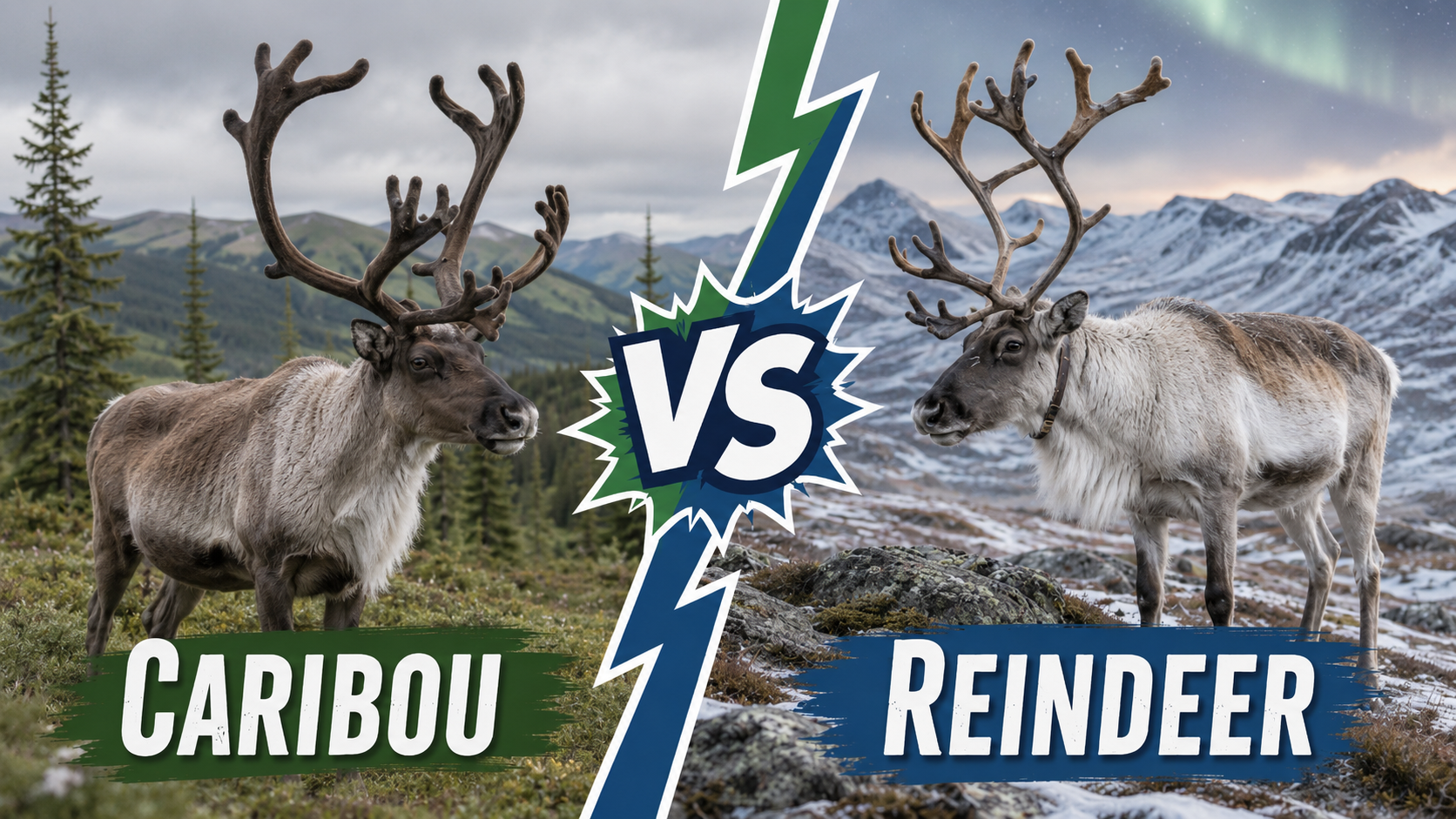
Reindeer and caribou are generally classified as the same species, Rangifer tarandus. In ordinary usage, caribou refers to wild North American populations, while reindeer refers to Eurasian populations and to herded Rangifer. A 2022 taxonomic review proposed recognizing several Rangifer species, but that revision has not been universally adopted.
The two names also carry different human histories.
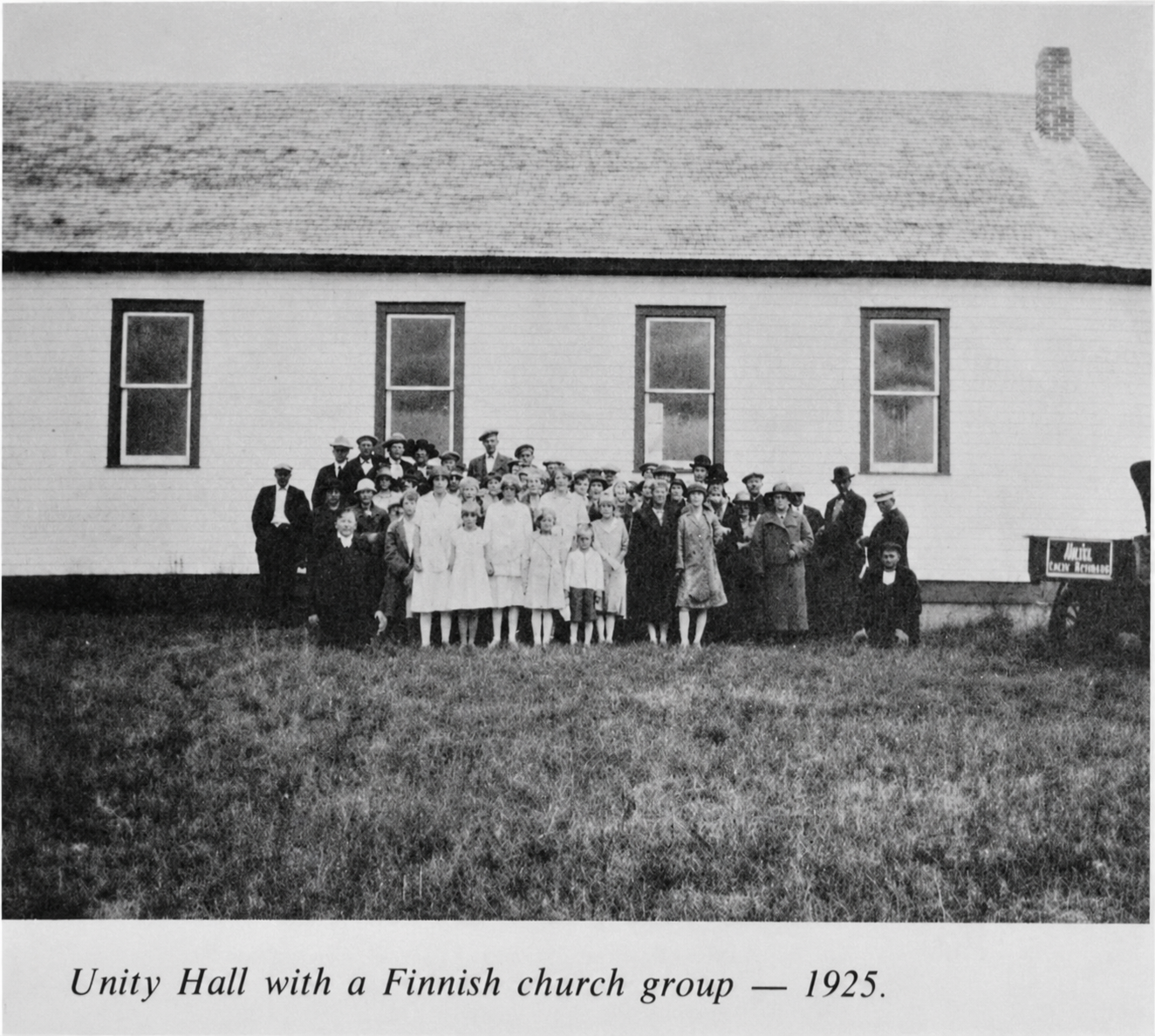
Across Sápmi, reindeer have lived within Indigenous Sámi hunting and herding systems. In what is now northern Canada, particular caribou herds have long been connected to Indigenous laws, harvesting practices and routes of travel. During the great period of Nordic emigration, people crossed the Atlantic carrying their own experiences of land, work and authority. Canada offered many of them the possibility of a farm. The land being surveyed for those farms already held other nations, other laws and other patterns of movement.
Wild reindeer also lived in Eurasia. Herded animals travelled across extensive seasonal ranges rather than remaining confined to farms. In Canada, caribou moved through cultural landscapes named, used and governed by Indigenous peoples.
How Different Are Reindeer and Caribou?
Across their circumpolar range, Rangifer populations vary substantially in size, movement, habitat and ancestry. The number and status of species, subspecies and ecotypes remain disputed, and a simple comparison can conceal major differences among tundra, woodland, mountain and island populations.
Reindeer vs Caribou: Quick Answers
Are reindeer and caribou the same species?
Most zoological and conservation sources still group them under Rangifer tarandus, although a 2022 taxonomic review proposed recognizing several species.
Why are there two names?
Caribou is generally used for wild North American populations. Reindeer is used for Eurasian populations and for herded Rangifer.
Are all reindeer domesticated?
No. Eurasia has both wild reindeer and herded populations.
Are caribou domesticated?
In standard North American usage, caribou are wild. Herded Rangifer introduced to North America are generally called reindeer.
Can appearance settle the question?
No single physical feature distinguishes every caribou from every reindeer. Body size, leg length, coat and antlers vary according to ancestry, environment, nutrition, movement and selective breeding.
Researchers have found that even a trait as apparently straightforward as leg length reflects several pressures, including winter conditions, nutrition, migration and predation. Herded reindeer may differ from migratory caribou, but a universal checklist of size, coat or antlers will produce exceptions.
The clearest difference lies in usage and human history. The word reindeer can include animals hunted as wildlife and animals identified, tended and owned within herding systems. Caribou generally identifies wild North American populations that are neither domesticated nor managed within a herding system. Their wild status does not place them outside human relationships, knowledge or governance.
Reindeer Across Sápmi
Any historical account of northern European reindeer has to begin with Sápmi. The Sámi homeland crosses the present borders of Norway, Sweden, Finland and Russia. Sámi reindeer herding belongs to particular communities and knowledge systems. It cannot represent Scandinavian rural life as a whole or the experiences of Nordic emigrants generally.
Archaeologist Anna-Kaisa Salmi describes reindeer domestication in northern Fennoscandia as a long process built through repeated contact between people and animals. Evidence points to smaller-scale keeping before pastoral herding expanded from about the fifteenth century onward. Domestication developed through a gradual and varied set of relationships between people and animals.
Research by Inger Marie Gaup Eira, Ellen Inga Turi and Johan Mathis Turi documents how Sámi herders in Guovdageaidnu, or Kautokeino, make decisions according to snow, weather, grazing conditions and the animals’ yearly cycles. Their herding calendar follows migration, calving and rutting. Movement remains central even when animals are owned and tended.
This history also complicates the Europe that emigrants left. Nordic states had old farms, property systems and densely settled districts, while their authority was asserted unevenly and contested across northern lands. In Sweden, settlement policy and resource extraction advanced into Sápmi over centuries. Historian Åsa Össbo traces Swedish settler-colonial measures from the seventeenth-century Lappmark Proclamation through later mining, forestry and hydropower development, often at the expense of Sámi land rights.
Reindeer therefore cannot serve as a symbol of a settled, orderly Scandinavia. Their history includes Indigenous mobility, state borders and contests over land.
Caribou Across Tłı̨chǫ Lands
Caribou create the opposite risk. Calling them wild can suggest an animal roaming beyond human history. Tłı̨chǫ accounts from the Northwest Territories show how misleading that suggestion would be.
Wekweètì lies near a route used by the Bathurst caribou herd. Tłı̨chǫ researchers describe caribou as a foundation of culture, language and a way of life. The community’s history is tied to seasonal travel toward the barren grounds and to the herd’s movements through the region. The title of a community research report states the relationship in five words: “We live here for caribou.”
That relationship did not domesticate the herd. It produced knowledge about routes, weather, harvesting and responsibility. Caribou remained self-directed animals whose movements people observed and followed across Tłı̨chǫ lands.
The same research records cumulative pressures from resource extraction, commercial outfitting camps and disrespectful harvesting. A peer-reviewed study by Brenda Parlee, John Sandlos and David Natcher argues that industrial development across the ranges of barren-ground caribou has imposed costs on northern Indigenous communities whose food systems depend on the herds.
The distinction matters. A wild animal may live within an enduring human relationship. A herded animal may spend much of the year moving across broad country. The distinction between wild and herded tells only part of the story.
Why Nordic Emigrants Left
Large-scale Nordic emigration accelerated after the middle of the nineteenth century and continued into the early twentieth. The reasons differed by country, region and household. Population growth increased pressure in some farming districts. Rural economic change affected tenants, labourers and households with limited prospects of acquiring viable farms. Wages, inheritance, family networks, letters from earlier emigrants and recruitment campaigns also entered individual decisions.
For people with little chance of acquiring a viable farm, Canada could appear to widen the possible future. The promise of land was real, although the country described in recruitment material was already occupied and governed.
The emigrant moved from one system of land into another. In Scandinavia and Finland, farms, estates, forests, commons and state lands carried established rules. In Canada, the federal government used survey lines and homestead law to create a new property regime across the West. A standard Dominion Lands Act homestead contained 160 acres, laid out as a quarter-section within the rectangular survey.
The grid made land legible to officials and available to approved settlers. It did not erase the Indigenous territories beneath it.
The Canadian Homestead Promise
Canadian homestead policy offered an extraordinary opportunity to many immigrants. A family that had little prospect of owning land in Norway, Sweden, Denmark or Finland might acquire a farm after meeting the state’s residence and cultivation requirements. The resulting security could transform a household’s prospects.
That opportunity formed part of Canada’s colonial expansion. Treaties, reserves, surveys and land legislation asserted Canadian control over territories governed and used by Indigenous nations. Canada claimed and administered these territories as Dominion lands, then surveyed and distributed parcels to railways, companies and approved settlers. Historian Sarah Carter places homesteading within this larger project of British colonialism on the Canadian Prairies.
A migrant could arrive after years of economic insecurity and still gain from the Canadian land regime. Depending on their circumstances, Finns could carry experiences of marginality while becoming settlers who benefited from North American control of Indigenous land.
The animal names expose the transfer. Passage across the Atlantic moved people between political systems, each with rules about land and mobility. A tenant with little chance of acquiring a farm at home could receive acreage in Canada through a system that denied the prior authority of the Indigenous nation whose territory had been surveyed.
What Reindeer and Caribou Reveal
A direct metaphor would flatten the history. Reindeer cannot stand for confined Europeans, because wild reindeer exist and Sámi herding depends on seasonal movement. Caribou cannot stand for settler freedom, because their ranges are Indigenous homelands and their movements increasingly intersect with state regulation and industrial development.
The useful parallel lies in classification.
People applied different names to Rangifer across the Atlantic. Governments also applied categories to land: grazing district, Crown land, reserve, township and homestead. Those terms carried consequences. They affected who could move and whose claims became recognized property. They also determined whether Indigenous knowledge entered official decisions.
The comparison also exposes the limits of the word freedom. Nordic emigrants could acquire land after leaving restricted economic circumstances. Sámi communities faced state settlement and extraction in their own homelands. In Canada, surveys and settlement policy reduced Indigenous nations’ authority over their territories. These experiences belong in the same historical frame, but they are not equivalent.
Reindeer and caribou help hold those differences in view. Across the circumpolar north, Rangifer populations moved through territories organized by different languages, laws and relationships. On either side of the Atlantic, people understood those populations through different systems of ownership and responsibility.
Survey Lines and Migration Routes
So, what is the difference between reindeer and caribou? In ordinary usage, geography and human relationships provide the clearest answer. Caribou are the wild Rangifer of North America. Reindeer are the Eurasian populations, both wild and herded, as well as herded animals introduced elsewhere. Biology adds variation and an ongoing taxonomic debate.
The comparison also reaches into the history of Nordic emigration. During the age of Nordic emigration, people left lands where ownership and opportunity could be hard to obtain. Canada offered surveyed farms. That offer operated through a colonial land system imposed across Indigenous territories.
Across Sápmi, reindeer continued along seasonal ranges crossed by state borders and industrial claims. Around Wekweètì, caribou followed routes held in Tłı̨chǫ knowledge. Farther south, surveyors divided the Canadian West into quarter-sections. The names on the maps changed. The land already held histories.
Further Reading
Rangifer Biology and Taxonomy
L. E. Harding, “Available Names for Rangifer (Mammalia, Artiodactyla, Cervidae) Species and Subspecies,” ZooKeys 1119 (2022).
Knut H. Røed et al., “Genetic Analyses Reveal Independent Domestication Origins of Eurasian Reindeer,” Proceedings of the Royal Society B 275 (2008).
Sámi Reindeer Histories and Knowledge
Anna-Kaisa Salmi, “The Archaeology of Reindeer Domestication and Herding Practices in Northern Fennoscandia,” Journal of Archaeological Research 31 (2023).
Inger Marie Gaup Eira, Ellen Inga Turi and Johan Mathis Turi, “Sámi Traditional Reindeer Herding Knowledge Throughout a Year: Herding Periods on Snow-Covered Ground,” in Reindeer Husbandry (Springer, 2023).
Åsa Össbo, “On Colonial Past and Present in Sápmi: Considering Ideas of the Land of the Future in Northern Sweden,” Journal of Northern Studies 17, no. 1 (2025): 13–29.
Caribou and Tłı̨chǫ Knowledge
Dedats’eetsaa: Tłı̨chǫ Research and Training Institute, Ekwò zò gha dzô nats’êdè—“We Live Here for Caribou”: Cumulative Impacts Study on the Bathurst Caribou (Tłı̨chǫ Government, 2016).
Brenda L. Parlee, John Sandlos and David C. Natcher, “Undermining Subsistence: Barren-Ground Caribou in a ‘Tragedy of Open Access,’” Science Advances 4, no. 2 (2018): e1701611.
Emigration and Settler Colonialism
Lennart Limberg, “The Beginning of the Great Emigration,” in The Cambridge History of Scandinavia, vol. 2, 1520–1870 (Cambridge University Press, 2016).
Hans Norman and Harald Runblom, Transatlantic Connections: Nordic Migration to the New World After 1800 (Norwegian University Press, 1988).
Rani-Henrik Andersson and Janne Lahti, eds., Finnish Settler Colonialism in North America: Rethinking Finnish Experiences in Transnational Spaces (Helsinki University Press, 2022).
Sarah Carter, Imperial Plots: Women, Land, and the Spadework of British Colonialism on the Canadian Prairies (University of Manitoba Press, 2016; corrected reprint 2018).