
Finnish Women in Alberta
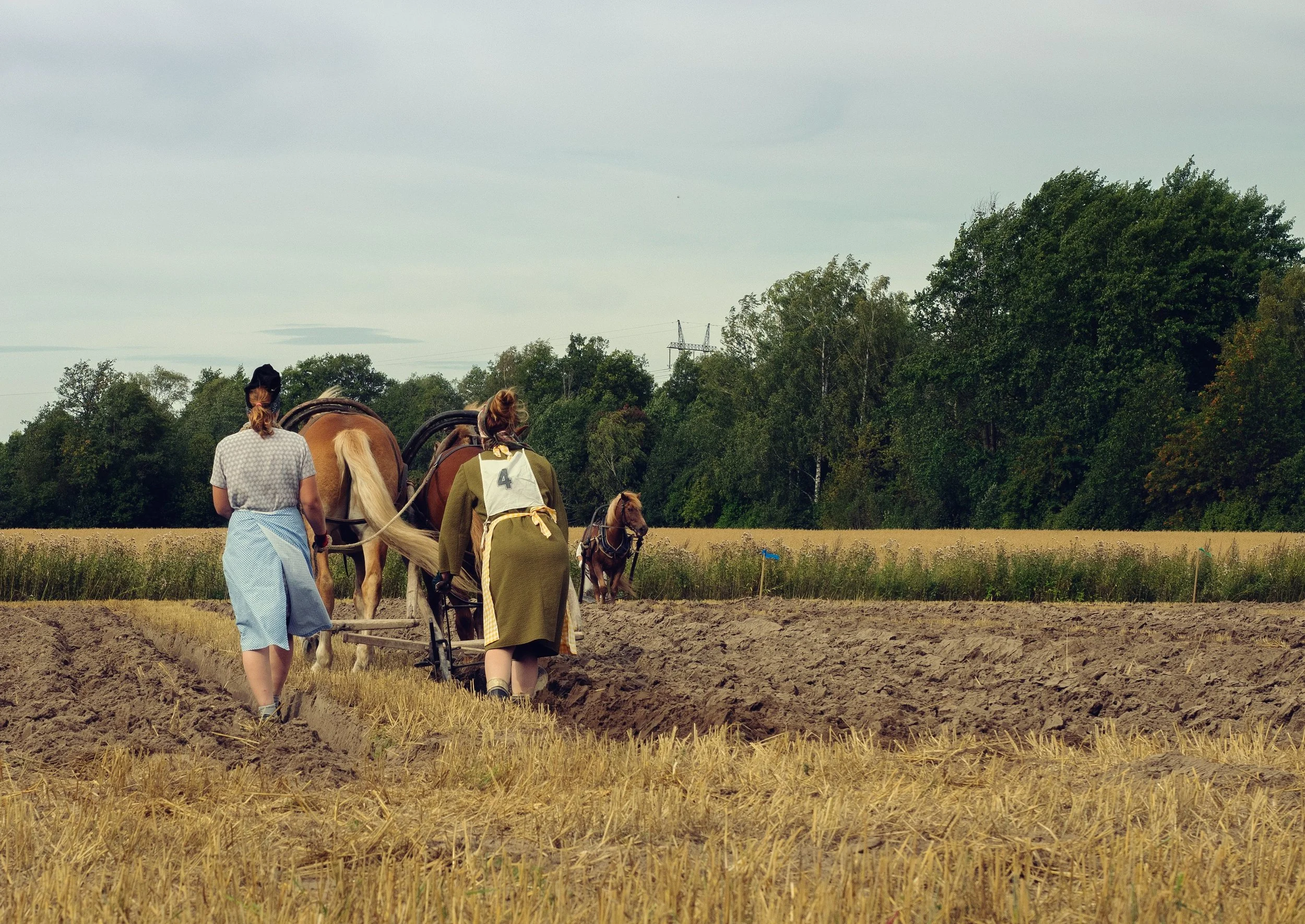
Horse plowing competition at Eurajoki, Finland. Photo by Miika Laaksonen on Unsplash
In 1927, Mary North explained why the Finnish Women’s Labor League in her Alberta mining community consisted largely of housewives.
“Naturally … we are housewives for jobs here are only in mining and are hardly even accessible to the man,” she wrote.
Women had few opportunities to earn wages in the coal towns of the Crowsnest Pass. That did not keep them outside public life.
North and other Finnish league members read The Woman Worker alongside Toveritar, a Finnish-American newspaper whose name meant “Woman Comrade.” The Crowsnest leagues raised money for the Labour Party of Alberta, supported the Mine Workers Union of Canada and organized union picnics and May Day dances. These gatherings brought mining families together while reinforcing the political relationships behind the labour movement.
North appears in the written record because she sent reports to a labour newspaper but many Finnish women in Alberta left fewer words behind.
Histories of Finnish settlement often follow homestead applications, mining jobs, railway work and the clearing of forest farms. Those sources tend to place men at the centre because governments recorded land ownership and paid occupations more consistently than household production or unpaid farm labour yet Finnish households depended on women’s work.
Some women came to Canada specifically to earn wages. Others worked on farms, maintained households through periods of uncertain income or became active in political and community organizations. Their experiences differed across the province.
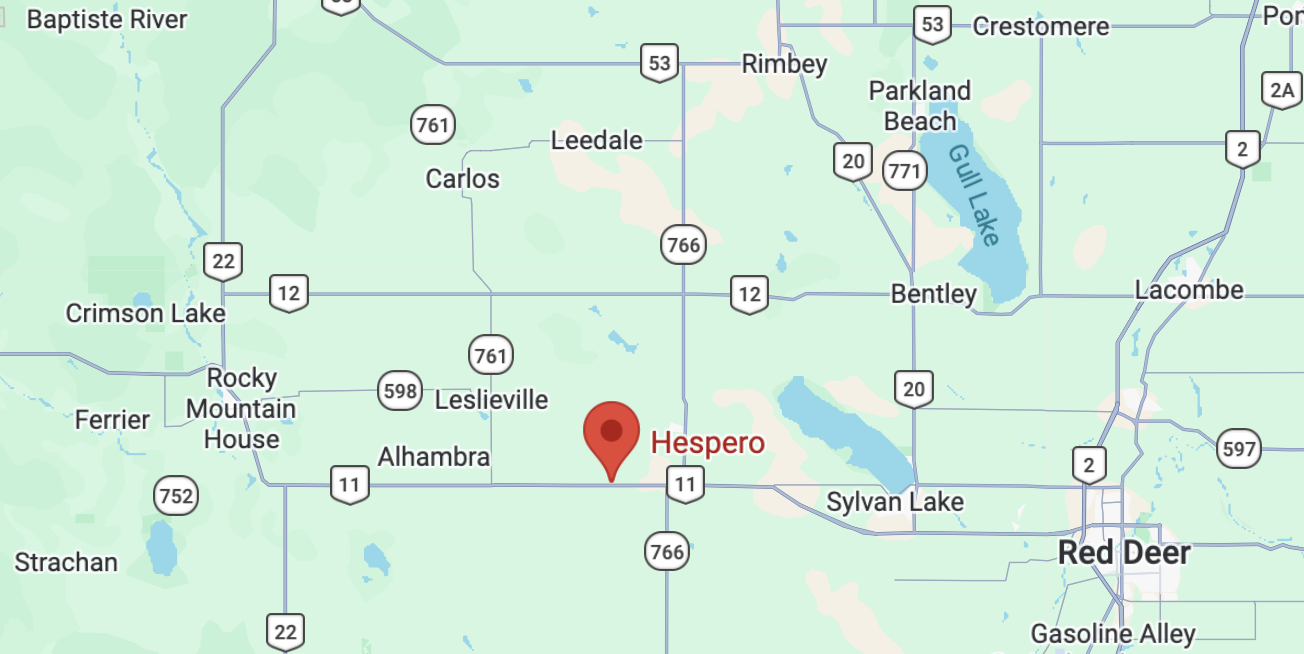
A woman living near Eckville or Sylvan Lake faced a different economy from a miner’s wife in the Crowsnest Pass. A single domestic worker had options that were unavailable to a woman caring for children on an isolated farm.
So what work did Finnish women perform, and how did it shape family and community life in Alberta?
Women Who Came to Work
Many Finnish women arrived in Canada as workers.
During the 1920s, a single woman emigrating from Finland was generally admitted under one of two categories: domestic servant or farm worker. Canadian officials made special arrangements for women who agreed to enter domestic service because households across the country were struggling to find servants.
In the fiscal year ending March 31, 1929, Canada admitted 1,618 adult women from Finland. Immigration officials classified 1,288 of them as domestic workers. Of course, that label did not always describe the woman herself.
Letters of recommendation identified some prospective domestics as seamstresses or masseuses. Others had skills that had little connection to household service. Declaring domestic work simply offered them a practical way to enter Canada.
Once they arrived, women could change employers, find another kind of work or move through Finnish family and community networks.
Love learning about Finnish history in Alberta? Clickhere.
Historian Varpu Lindström-Best found that at least 66 per cent of Finnish immigrant women employed outside the home in Toronto and Montreal during the 1920s worked as maids. Her interviews also documented Finnish women cooking in lumber camps and supporting themselves through other forms of paid work.
The figures come from central and eastern Canada. No comparable Finnish-specific count has been established for Alberta in the sources used here but the Alberta economy nevertheless offered many of the same jobs.
Domestic and personal service accounted for 46 per cent of employed women and girls in Alberta in 1911. The figure fell to 33.4 per cent in 1921 before rising to 37.8 per cent in 1931. Most domestic servants were young and unmarried, although married women also entered service when their families needed additional money. The work provided wages, food and somewhere to live.
It also placed women under the authority of their employers. Live-in servants worked long hours and had little privacy. Employers could control when they left the house, where they went and what time they returned.
Finnish communities in Toronto and Montreal eventually arranged activities around the servants’ limited time off. Halls opened for coffee, conversation and job information. Congregations scheduled services and reading rooms for the days when maids were free.
Whether Finnish organizations in Alberta followed the same pattern remains to be documented.
What is clear is that domestic workers in the province received little legal protection. When Alberta introduced a minimum wage for women in 1920, it excluded domestic and farm workers. Two of the occupations most accessible to immigrant women remained outside the law.
Farms Built on Women’s Work
Finnish settlement in central Alberta began around the turn of the twentieth century.
A group of delegates from Finland identified the Red Deer district as a possible settlement area in 1899. Three years later, the first Finnish immigrants began moving into the Sylvan Lake–Eckville district. Other families settled in scattered locations around Radway, Stettler, Foremost and the Three Hills–Trochu area.
These families entered an agricultural economy that depended on more than crops and livestock.
Alberta farm women cared for children, managed household health and produced much of what families used every day. Their work included vegetables, eggs, butter, bread, cloth, yarn, soap and candles. Some of these goods were also sold, giving women a way to bring money into the household.
The existing research describes Alberta farm women generally. It does not tell us exactly how work was divided within each Finnish household.
Still, it shows the economy in which Finnish women lived.
A garden reduced the amount of food that had to be purchased. Eggs and butter could be traded or sold. Sewing and mending extended the life of clothing. Household production became especially important when crops failed or wage work disappeared.
Finnish families settled within an Alberta agricultural economy that often combined farm production with other sources of income. The available provincial research shows how heavily farms depended on women’s unpaid work, although local records are still needed to document the arrangements within individual Finnish households.
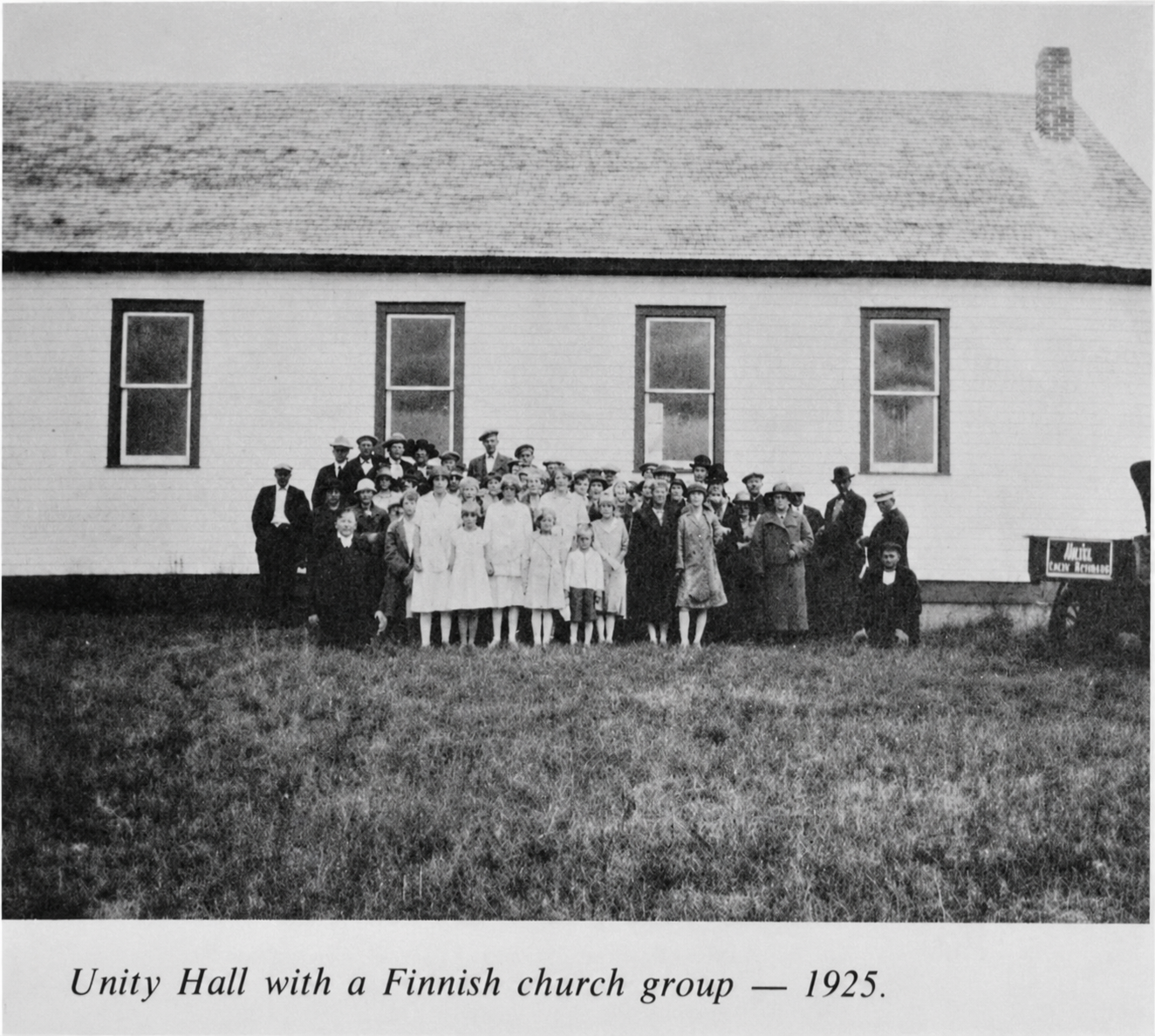
The Finnish Women of the Crowsnest Pass
The clearest published record of Finnish women’s public activity in Alberta comes from the coal towns of the Crowsnest Pass.
Women’s Labor Leagues expanded rapidly during the 1920s. By the end of 1927, there were 37 locals across Canada, including branches in Calgary, Edmonton, Lethbridge and communities in the Crowsnest Pass. Finnish leagues outnumbered their English-speaking counterparts.
The leagues were closely connected to the Communist movement, although only a minority of their members formally belonged to the Communist Party.
Their members campaigned for better wages and labour laws. They raised money and circulated newspapers. They also gave women a place to read, study politics and discuss the conditions affecting their families.
In the Crowsnest Pass, Finnish leagues worked closely with the Communist-led Mine Workers Union of Canada.
Miners’ wives and daughters made up much of the membership. The jobs available in the district gave them little opportunity to enter paid work, but the leagues allowed them to participate in the political life surrounding the mines.
The distinction between household work and political work was never as firm as male party leaders sometimes imagined.
Women prepared food for events, sold tickets, organized dances and created the social setting in which political relationships developed. Joan Sangster described this work as the “social glue” that helped sustain political loyalties in mining communities.
League members defended household labour as economically necessary even when it produced no wage. The national federation described cooking, sewing, washing and cleaning as work required by the wider system of production.
International Women’s Day in Alberta
International Women’s Day became an important event within the Canadian Communist movement during the 1920s.
Public meetings were held in communities ranging from Blairmore to Toronto. Across Canada, Finnish, Ukrainian, Jewish and English-speaking women organized programs that combined political speeches with music and messages from other labour organizations. Some events were conducted in more than one language.
Blairmore was among the Canadian communities where International Women’s Day meetings were held. The surviving account does not identify which language groups participated in that particular event, but it places the Alberta mining town within a national series of working-class women’s observances.
The Women’s Labor Leagues also gave women an organization separate from the male-dominated unions and political parties around them.
That independence remained limited. Communist leaders often criticized the leagues for attracting housewives instead of wage earners. Women’s concerns received less attention than mine organizing or other issues associated with male workers but league members continued anyway.
They read, wrote, debated and organized. Their activity challenged the assumption that a woman without a wage had no place in the labour movement.
Community Life Required Labour
Finnish communities were divided by politics, religion and the experiences of different immigration periods.
Some immigrants supported socialist or Communist organizations. Others gathered around churches, temperance societies or family connections. Many belonged to no formal organization at all.
These differences could produce bitter disputes, but they also created several routes into community life. A newcomer might find assistance through relatives, a congregation, a labour hall or people from the same district in Finland.
In the Crowsnest Pass, women’s fundraising and social events helped sustain labour organizations and political relationships. Across Canada, Finnish halls, congregations and temperance or socialist societies provided places to meet, read, organize and use the Finnish language. Alberta evidence outside the mining districts remains less complete.
Community organizations also helped women locate employment and meet other Finnish immigrants. Canadian research shows domestic workers using halls and congregations to hear about available jobs and spend time outside their employers’ homes.
In the Crowsnest Pass, political organizations served a similar purpose. They gave miners’ wives and daughters a social network connected to the economic struggles affecting their households.
Finnish community life rested on these repeated exchanges.
Its survival depended on people continuing to show up.
Language Across Generations
Finnish remained in use where people had regular opportunities to speak, read and write it. Families used it at home, while newspapers, letters, church services, meetings and social gatherings extended its use beyond the household. Those opportunities varied considerably from one community to another.
For my own story, a Finnish family member on my mom’s side lived in Canada for 62 years, having arrived as a 33-year-old woman and never spoke more than a few handful of English words.
Northern Ontario developed large Finnish institutions, including newspapers, halls and congregations. Alberta’s Finnish population was spread among rural districts, towns and mining communities, making regular access to Finnish-language organizations less certain.
A study by Tanya Tuohimaa shows how concerned Finnish Canadians became about language loss. Between 1945 and 1960, the newspaper Vapaus encouraged children to send letters to its Finnish-language youth page. Editors hoped that writing for the paper would strengthen the children’s connection to Finnish community life.
Tuohimaa’s study concerns northern Ontario, but it points to a question that also matters in Alberta: how Finnish use changed when children entered English-language schools. In some families, adults continued speaking Finnish while younger generations used English more often.
Women often spent much of the day with young children and older relatives, giving them an important role in everyday language use. The pattern varied by household and must be traced through letters, interviews and family records rather than assumed across the province.
A New Wave After the War
Finnish immigration increased again after the Second World War.
From 1951 to 1980, 26,706 Finnish immigrants arrived in Canada. Sixty-one per cent came during the 1950s. Many were seeking economic security after years of war, reconstruction, territorial loss and reparations in Finland.
These newcomers entered communities shaped by earlier Finnish immigrants.
They shared a language and national background, but they did not always share the same politics. Earlier immigrants included many socialists and Communists who had left Finland during periods of political conflict. Postwar arrivals often carried strong hostility toward the Soviet Union.
The result could be renewal and disagreement at the same time.
New immigrants strengthened the use of Finnish and restored direct family connections with Finland. They also created new organizations and developed different relationships with institutions established by previous arrivals.
The history of postwar Finnish women in Alberta remains scattered.
Their stories are likely to be found in passenger records, obituaries, hospital files, family photographs and the memories of people who knew them.
Those sources can answer questions that immigration totals cannot.
Who met a woman when she arrived? Where did she find her first job? Which language did she speak at home? How did she meet friends or a future husband?
This is where individual family stories become essential.
Finding the Women in the Records
Mary North appears in a labour newspaper, while many other Finnish women are documented only through scattered records. Census returns can establish residence and immigration dates, obituaries may identify employment or community involvement, and photographs can provide evidence of farms, halls and social gatherings. Oral histories can add information about daily work, language use and family relationships that official documents often omit.
It can identify the language spoken at home, the person who managed the farm during an absence or the woman everyone visited when they needed help.
These sources require care. Memories change, and obituaries often compress a complicated life into a few paragraphs. They can still restore women to a history that otherwise records them only through their relationship to a man.
Finnish women entered Canada through migration routes strongly connected to domestic and farm work. Alberta’s economy relied heavily on women’s service employment and unpaid farm production, although much of the Finnish-specific provincial evidence remains to be recovered. In the Crowsnest Pass, Finnish women organized around labour politics and supported mining communities through fundraising, education and social events.
Much of the Alberta history remains to be assembled. It waits in immigration files, censuses, local archives, family collections and conversations with the people who still remember.
Further Reading and Sources
Beaulieu, Michel S., David K. Ratz and Ronald N. Harpelle, eds. Hard Work Conquers All: Building the Finnish Community in Canada. UBC Press, 2018.
Lindström-Best, Varpu. “‘Going to Work in America’: Finnish Maids, 1911–30.” Polyphony 8, nos. 1–2, 1986.
Sangster, Joan. “The Communist Party and the Woman Question, 1922–1929.” Labour/Le Travail 15, 1985.
Schiebelbein, Joan. “Women, Labour, and the Labour Movement.” In Working People in Alberta: A History, edited by Alvin Finkel. Athabasca University Press, 2012.
Tuohimaa, Tanya. “‘Dear Jussi-setä’: Generation, Language, and Community in the Youth Page of Vapaus, 1945–60.” In Hard Work Conquers All. UBC Press, 2018.
North, Mary. Report in The Woman Worker, July 1927, quoted and analyzed by Joan Sangster.
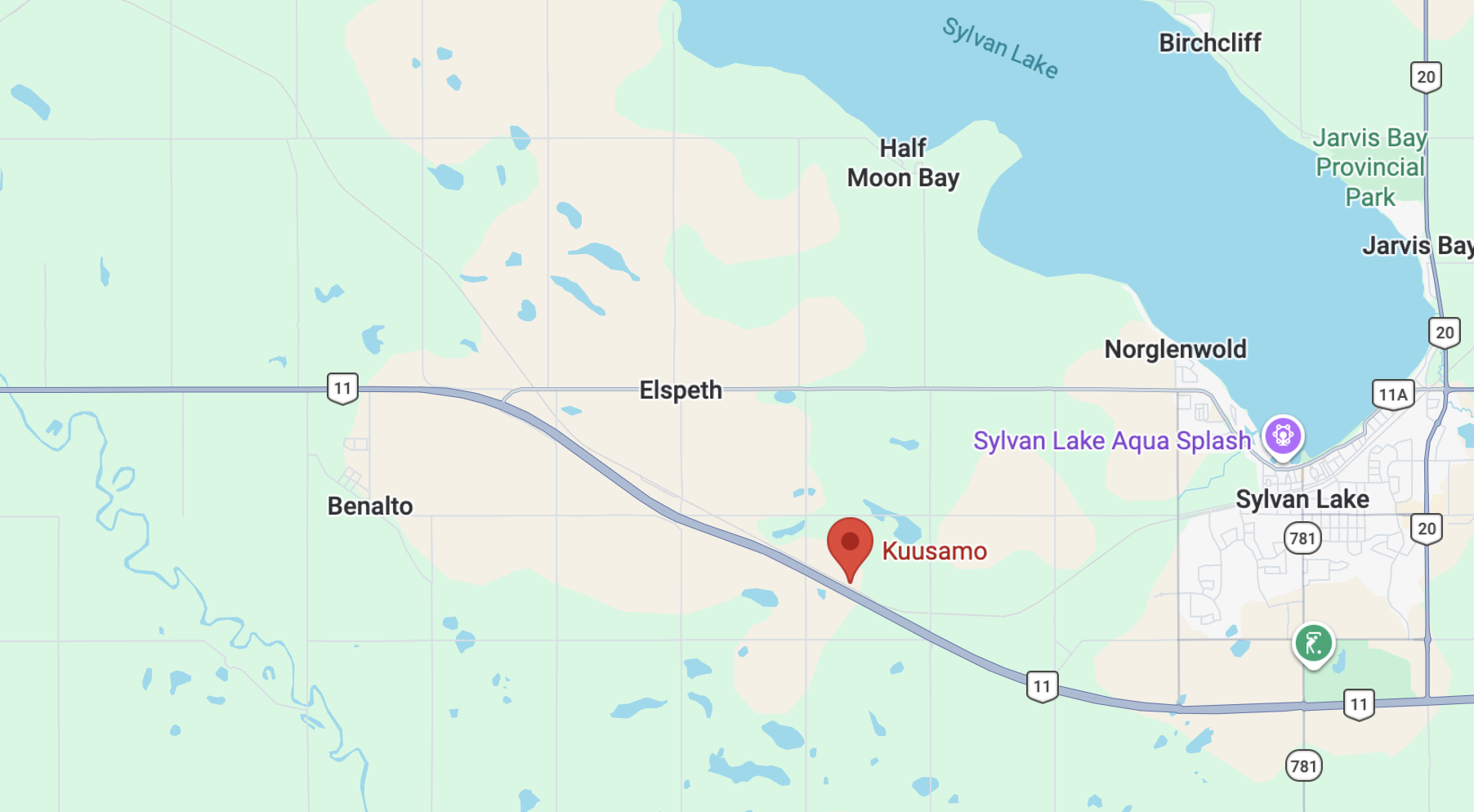


In 1888, David — or Taavetti — Kautonen registered a 160-acre quarter-section northeast of Whitewood, in the District of Assiniboia in what was then the North-West Territories. His claim, SW-36-17-1-W2, placed him within the Dominion survey grid that was reshaping the geography of settlement across the Prairies.