
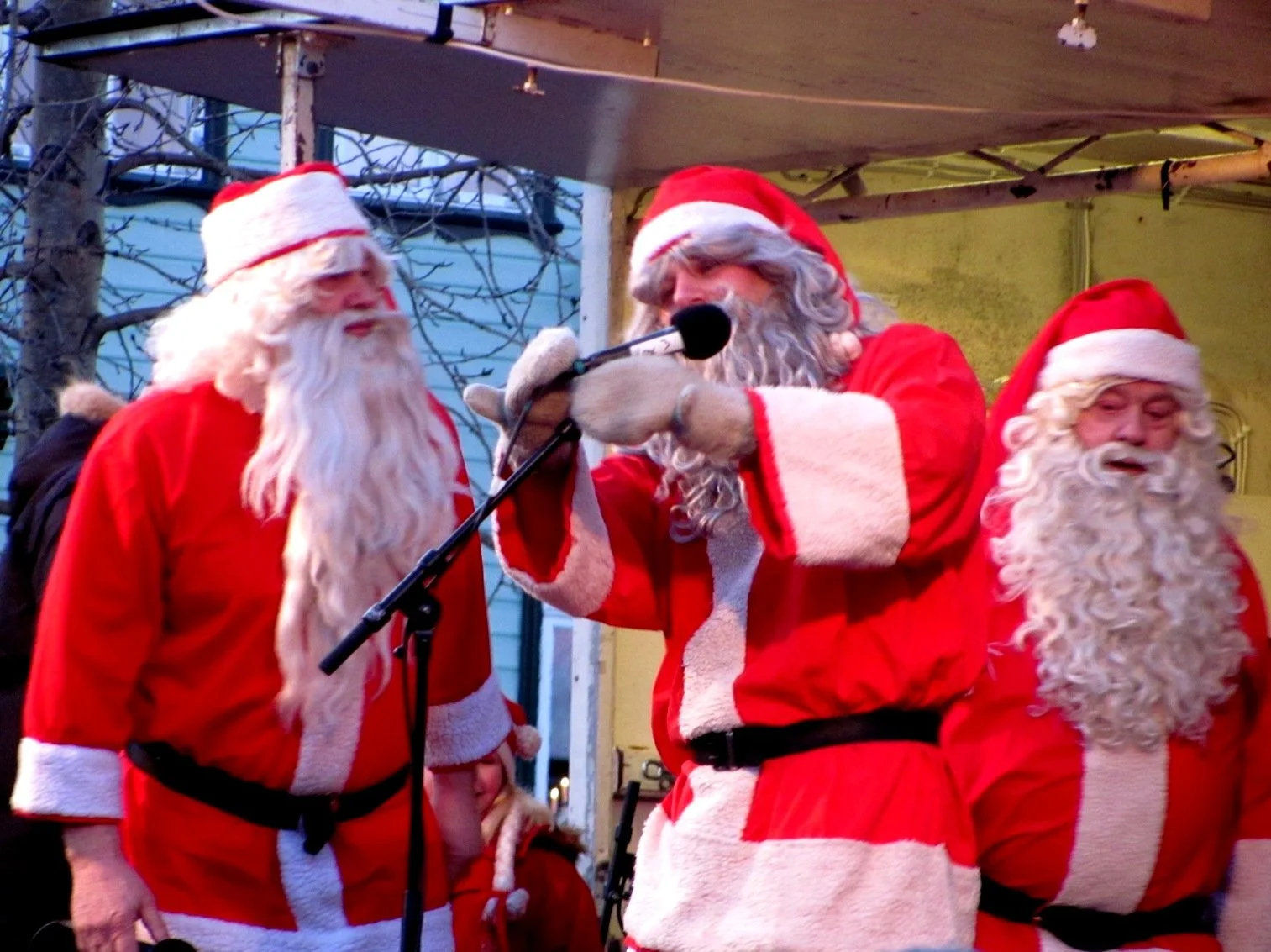
Costumed Yule Lads take part in a Christmas-tree lighting in Akureyri, Iceland. The photograph shows a modern celebration of the tradition.
Photo credit: Lusinemarg
Around 1850, in Aðalvík in Iceland’s Westfjords, the clergyman Jón Eyjólfsson recorded a Christmas verse from his wife, Sigríður Oddsdóttir, then 32. In her version, the Yule Lads walked across the floor carrying staffs while their mother swept the floor and struck them with a switch. None of the lads had an individual name in the verse, and there was no mention of gifts.
Jón preserved the words as Sigríður knew them. Other Icelanders remembered them differently. Some later versions described a golden staff or changed what the mother did with her switch. When folklorist Ólafur Davíðsson printed the verse at the turn of the twentieth century, he added the word “golden,” apparently to repair the line’s alliteration. Sigríður’s recorded version had specified only a staff.
Today, Iceland’s thirteen Yule Lads have names, personalities and a calendar. One arrives each day from December 12 until Christmas Eve, stealing sausages, licking pots or slamming doors before taking on the friendlier business of leaving gifts. But nineteenth-century collectors encountered competing lists. In the thirteen names published by Jón Árnason in 1862, the seventh visitor was Faldafeykir. The familiar seventh arrival today is Hurðaskellir, the Door-Slammer.
Grýla's crowded family
One verse in Jón Árnason’s folklore collection gives the ogress Grýla and her husband, Leppalúði, twenty children. His account then adds the Yule Lads to the family. Some informants disagreed about their father, saying Grýla had borne them before marrying Leppalúði. Others treated both as their parents. In the same collection, the lads came down from the mountains around Christmas and could be invoked to frighten children who cried or refused to behave.
Grýla was already an old name when these stories were collected. She appears among the troll-women named in the medieval Prose Edda; that reference says nothing about a fixed company of thirteen Christmas visitors. The earliest known written use of jólasveinn comes in a poem attributed to the seventeenth-century clergyman Stefán Ólafsson. There the Yule Lads are children of Grýla and Leppalúði, but their number and individual names are left unstated.
In 1746, a household-discipline ordinance issued for Iceland prohibited frightening children with Yule Lads or ghosts. Its Danish wording referred to a singular Christmas fellow, while the Icelandic text spoke of Yule Lads in the plural. The prohibition concerned using those figures to scare children; it did not outlaw telling their stories.
Which thirteen made the list?
In the material that reached folklore collector Jón Árnason around 1860, the Yule Lads had no agreed roll call. Páll Jónsson, a clergyman raised in Dalir in western Iceland, sent thirteen names. They began with Stekkjarstaur and Giljagaur and ended with Kertasníkir. Páll had been serving as a priest in northern Iceland for nearly twenty years when he passed along the names he knew.
Jón Norðmann, another clergyman raised in Skagafjörður, counted nine Yule Lads but named only eight. Three appeared on Páll’s list. Five others—Pönnuskuggi, Guttormur, Bandaleysir, Lampaskuggi and Klettaskora—were absent from it. Guðmundur Gísli Sigurðsson passed along two more versions from separate informants in the Westfjords. One gave thirteen names, the other fourteen, including such unfamiliar figures as Tútur and Steingrímur. Even the final three names differed between Guðmundur’s two versions.
Árnason printed Páll’s thirteen in the first volume of Íslenzkar þjóðsögur og æfintýri in 1862. He could publish only about half the material sent to him, and the competing lists took decades to reach print: Norðmann’s in 1946 and Guðmundur’s in a 1958 edition of Árnason’s tales. In 1970, folklorists recorded yet another version from Helga Jónsdóttir, born in 1898, with names including Baggalútur and Lunguslettir. Folklorist Árni Björnsson eventually identified roughly eighty Yule Lad names in the collected record. The 1862 book, meanwhile, gave readers a particular thirteen-day procession: the first visitor arrived thirteen days before Christmas, and the last left on January 6.
A farm's unwelcome visitors
In Jóhannes’s 1932 verses and later retellings, the first two visitors were after milk. Stekkjarstaur, the Sheep-Cote Clod, arrived on December 12, troubling the sheep despite the stiff legs that made him a poor thief. He wanted milk from the ewes. Giljagaur followed on December 13. His name is usually translated as Gully Gawk, and he was said to hide in gullies until he could slip into a cowshed for milk.
The next four went straight for the cooking utensils. Stúfur, or Stubby, came on December 14 looking for frying pans and the crusts left in them. December 15 belonged to Þvörusleikir, Spoon-Licker, a skinny visitor who licked the long wooden stirring spoon called a þvara. Pottasleikir, Pot-Licker, claimed the 16th and whatever remained in the cooking pots. He is also known as Pottaskefill, Pot-Scraper. Askasleikir arrived on December 17. He supposedly waited beneath beds for an askur, the lidded wooden bowl once used for meals, and seized it when its owner set it down.
December 18 brought a different nuisance: Hurðaskellir, Door-Slammer, who kept people awake by banging doors. Skyrgámur arrived the following day for skyr, the thick Icelandic cultured dairy food. Bjúgnakrækir, Sausage-Swiper, followed on December 20, reaching for sausages hung from the rafters. On the 21st, Gluggagægir, Window-Peeper, looked inside homes for something worth stealing.
Gáttaþefur, Doorway-Sniffer, came on December 22 with an enormous nose. In familiar retellings, he uses it to find laufabrauð, the thin, decorated Christmas bread. December 23 brought Ketkrókur, Meat-Hook, whose hook could pull down meat stored overhead. On Christmas Eve, Kertasníkir, Candle-Stealer, completed the procession by taking candles, sometimes from children. Candles offered light during the long Icelandic winter, and traditional ones were made from tallow. Children could receive them as Christmas gifts; Kertasníkir took those gifts away.
The seventh name in a Christmas book
In autumn 1932, the Icelandic children’s magazine Sunna announced a book arriving in time for Christmas. Jólin koma (Christmas Is Coming) was a 32-page collection of poems by Jóhannes úr Kötlum, illustrated by Tryggvi Magnússon. The magazine praised the collaboration and hoped children would receive the book as a Christmas present. Jóhannes had grown up in Dalir, the western Icelandic district where Páll Jónsson learned the Yule Lad names he later sent to Jón Árnason.
The names in Jóhannes’s verses closely matched Árnason’s 1862 list, with one conspicuous difference. The seventh Yule Lad in the 1862 collection was Faldafeykir. In Jóhannes’s book, that place belonged to Hurðaskellir, the Door-Slammer. Jóhannes had not invented him: the name appears in older collected material that reached print in 1934. Two other names differed: Jóhannes used Pottaskefill where Árnason had Pottasleikir, and Skyrjarmur where Árnason had Skyrgámur. Pottaskefill remains in use; the National Museum of Iceland listed it for December 16 in its 2025 programme.
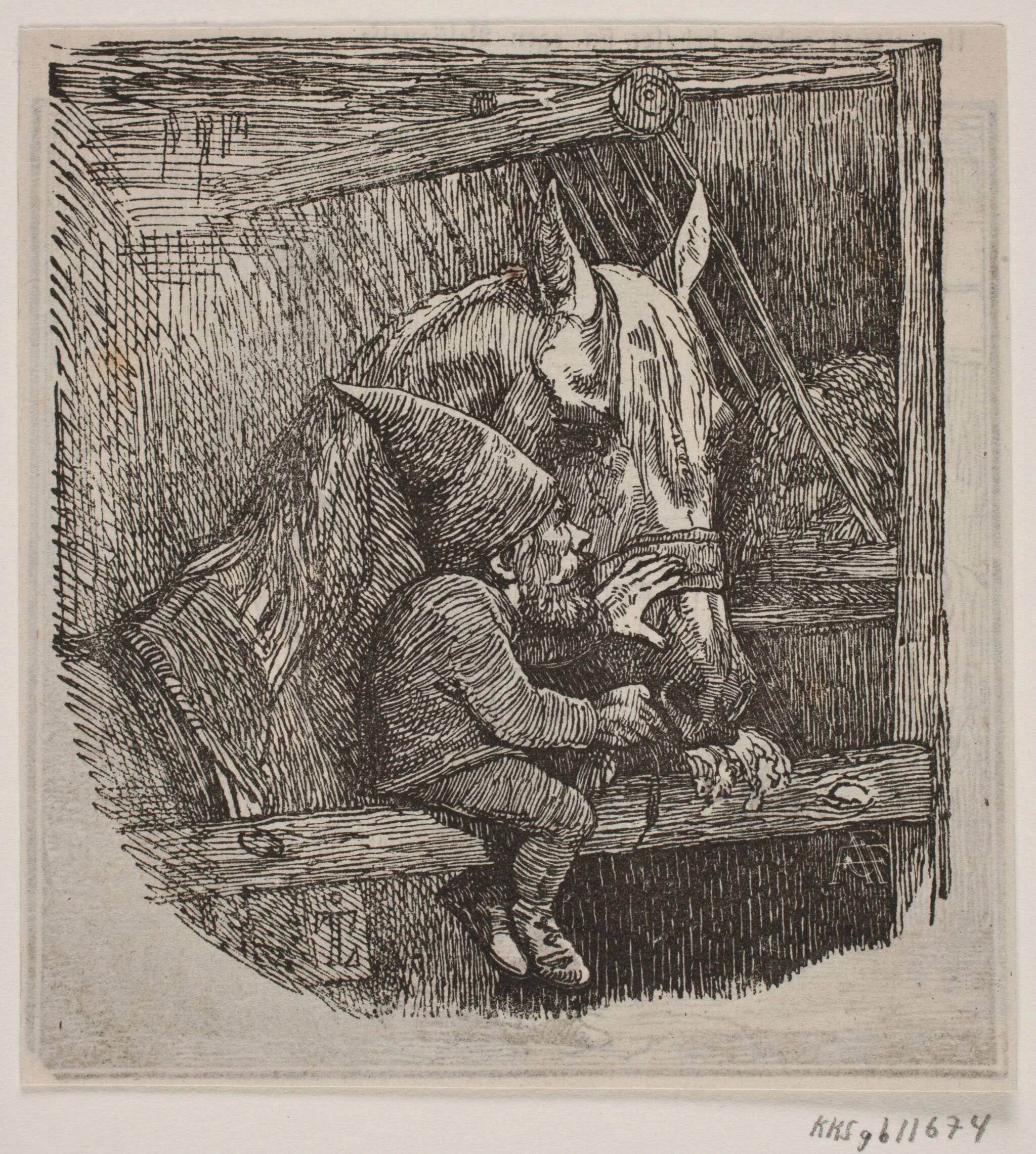
Jólin koma also included poems about Grýla and the Christmas Cat. Tryggvi’s pictures showed Yule Lads dressed like Icelandic country people, giving the old visitors recognizable faces to accompany the verses. The National and University Library of Iceland acquired his original drawings in 1989. For the eightieth-anniversary edition, the publisher had the drawings photographed anew, rather than reusing reproductions from earlier editions. Forlagið described that volume as the twenty-seventh printing.
The Yule Lads change clothes
Shops were also advertising Christmas presents with red-coated, white-bearded figures familiar from the international Santa Claus. Björnsson traces an accommodation to the arrival of Icelandic national radio around 1930: in children's programmes the old Yule Lads kept their names and number but acquired Santa-like costumes. They also began appearing at Christmas gatherings as entertainers and gift-bringers.
The presents eventually found their way into shoes. Children could place a shoe in a window and discover a small gift from the day's Yule Lad. Björnsson dates the custom's widespread adoption in Iceland to the 1960s.
In 1988, the National Museum of Iceland began inviting Yule Lads in old-fashioned farm clothing instead of Santa suits. Björnsson reports that some children considered the farm-clad visitors genuine and their red-coated counterparts impostors. The museum was still scheduling a different lad each day from December 12 to Christmas Eve in 2025. Weekend visits also featured Flotsokka, Taska or Leppatuska, one at a time, teasing their brother.

Around 1850, in Aðalvík in Iceland’s Westfjords, the clergyman Jón Eyjólfsson recorded a Christmas verse from his wife, Sigríður Oddsdóttir, then 32.