
In 1936, Ilmari Mannermaa sent a group of straw Christmas ornaments from Kestilä, in northern Finland, to the Dictionary Foundation. He was dissatisfied with their workmanship. Their maker, Aappo Junkkari, had poor eyesight, Mannermaa explained, and he considered the straw itself unsatisfactory. Born in 1862, Junkkari had made suns, a moon and stars from designs he remembered seeing in his childhood.
Junkkari recalled the decorations hanging high on the rear wall of the main room, behind the table and beyond children's reach. Individual straw suns sometimes hung above windows or doors. Some remained up until the household's spring cleaning.
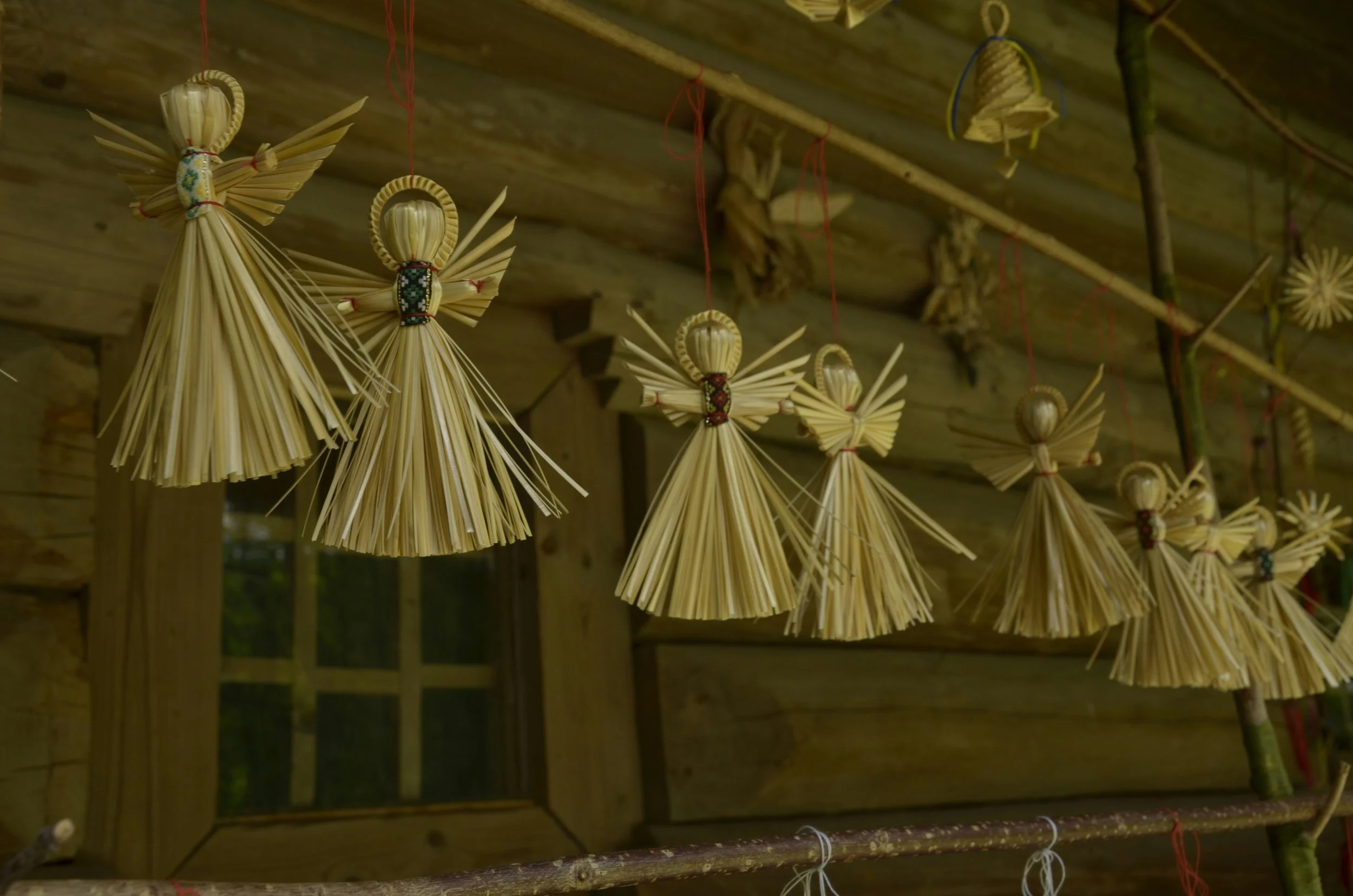
Straw was readily available in farming districts after the grain had been threshed. Its hollow stalks could be cut into lengths and joined into geometric or other decorative forms. They were light enough to hang on a wall or from the ceiling. In some Finnish households, preparing Christmas decorations from straw began in early autumn, when the harvest had supplied suitable material.
A recollection recorded in Viljakkala in 1936 singled out hard rye straw grown on slash-and-burn fields as especially suitable for a himmeli. The most elaborate versions were difficult enough that few makers could manage them; a village might have a craftsperson who did the work professionally. The account placed the work in women's hands. Some households made a new himmeli each Christmas, while others kept the same one for years. Suspended near the back of the main room, a large ornament could hang down to head height.

Straw also covered floors at Christmas. An account recorded in Parainen in 1924 described bundles carried indoors and laid across the rooms. Children and young people played on the straw, which caught on people's feet and travelled through the house. At New Year the old straw was taken to the pigs and fresh straw brought in; after Knut's Day, it was all cleared away. The writer remembered the pleasure of bringing it indoors and the even greater pleasure of getting rid of it. Dust was everywhere, as in a threshing barn. A 1935 recollection from Seinäjoki described Christmas preparations that included scrubbing the house, laying down clean rugs and spreading a white cloth over the table. A straw himmeli hung above it.
A Danish Christmas mobile from 1890 includes mice. Made in a smallholder’s home on the island of Zealand, it was tied together from straw, scraps of cloth and yarn. The National Museum of Denmark preserves it as object L.63.c. The museum record does not identify its maker.
In Dalsland, western Sweden, straw could become a bird or a crown suspended from the ceiling. Other seasonal figures were known as julgoppor. Vänersborg Museum describes these as anything from birds and humanlike forms to simple bundles of straw. Sometimes a julgoppa was a person dressed from head to foot in straw. The figures were used in games, attempts to read omens and practical jokes, although accounts of their uses differ between localities.
The Danish museum associates Christmas straw with the manger in Bethlehem. In Kestilä, people recalling older ornaments in the 1930s understood the stars through the story of Christ’s birth, but could no longer explain what the designs had meant to earlier generations.
In 1924, the Finnish magazine Emäntälehti urged readers to make Christmas decorations themselves rather than buy imported novelties, according to research by the National Museum of Finland. Fourteen years later, Kotiliesi reported brisk sales of straw ornaments at Christmas markets. During the 1930s, the Martta organization and home-industry groups also promoted straw crafts that were falling out of use in some households.
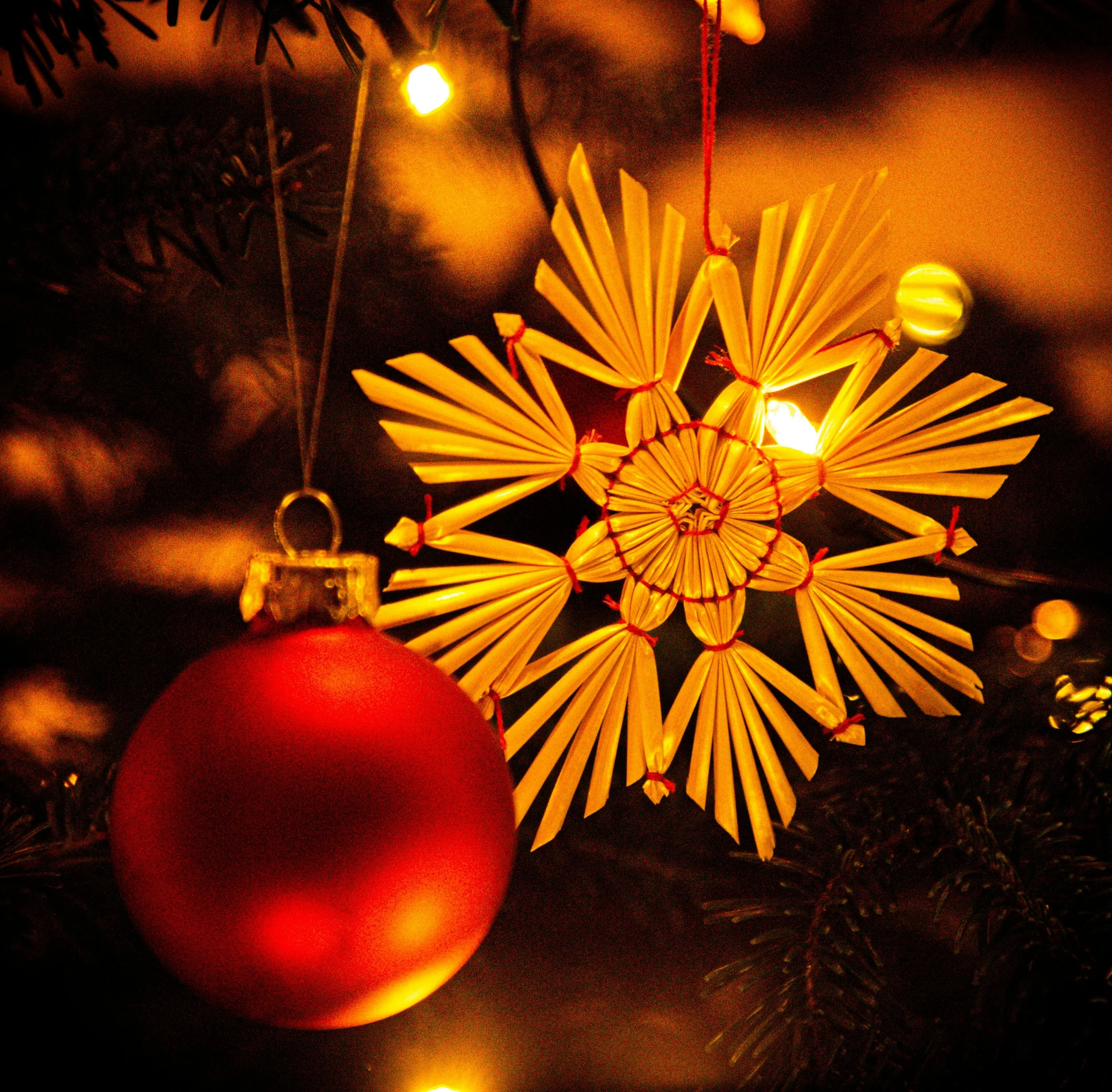
Naantali Museum notes that straw ornaments had been relatively uncommon on Finnish Christmas trees, but became popular especially through school handicraft lessons from the 1940s. Wartime and postwar shortages encouraged the use of materials families could obtain.
In 2003, as his family donated a separate collection of roughly a thousand objects to Kestilä’s local museum, Mannermaa’s daughter Kirsti Pajari recalled his Sunday collecting trips. He cycled through villages with a large black bag attached to his handlebars and returned with old objects. She remembered him cleaning and repairing his finds and building the storehouse in which they were kept.
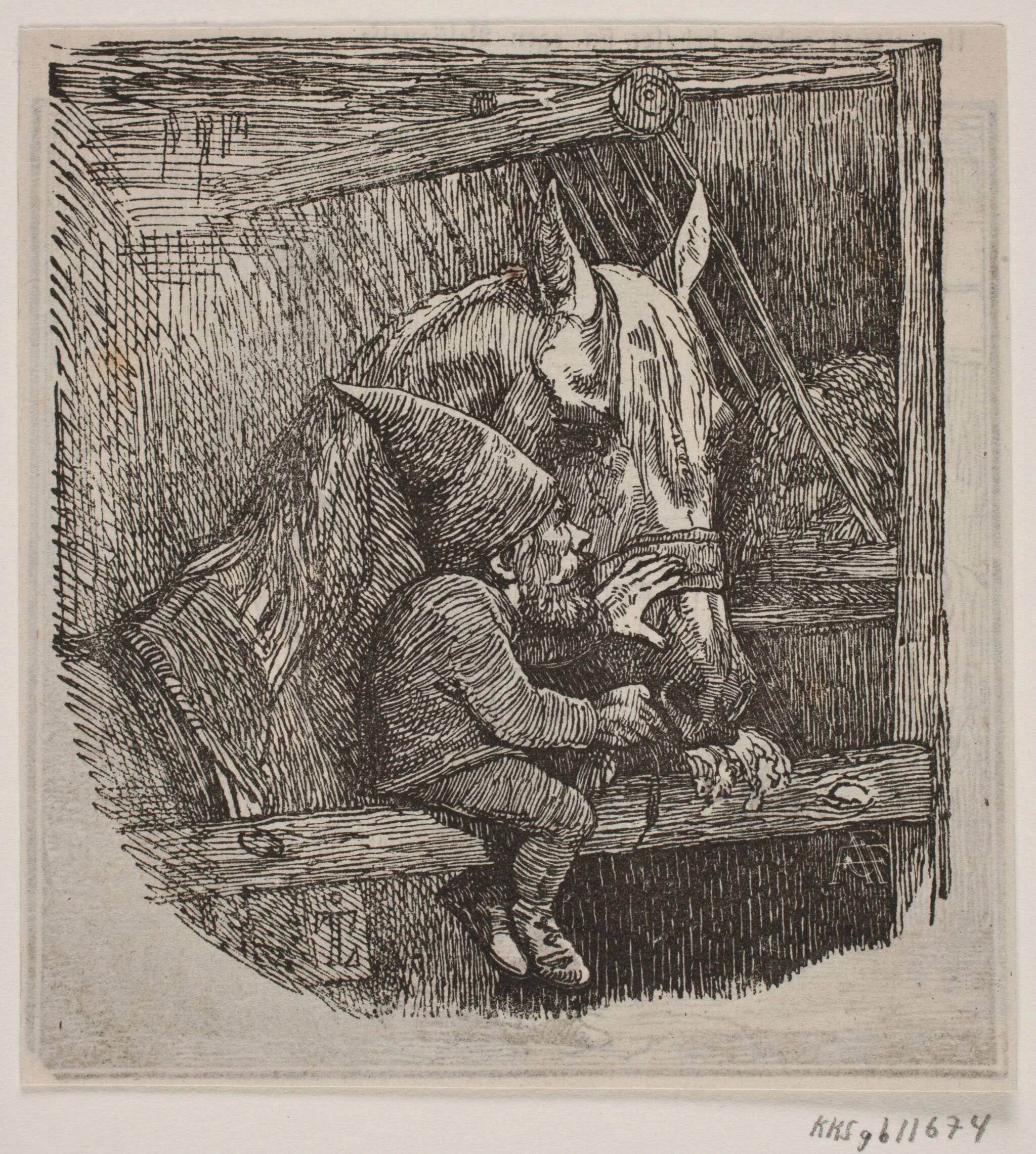


The bearded man on the cover of a Danish Christmas book in 1866 had no presents to hand out.